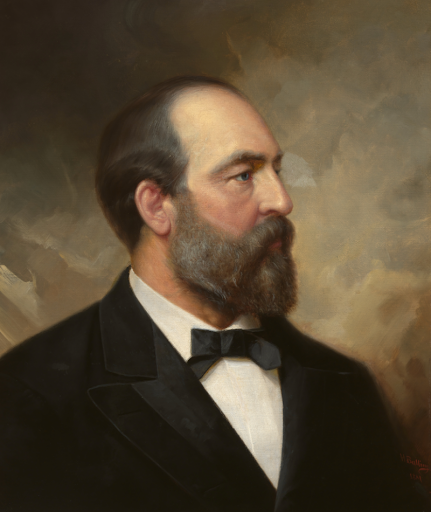

March 4, 1881–September 19, 1881 (He was the second president to be assassinated in office.)
Born: November 19, 1831, in Orange Township, Ohio
Died: September 19, 1881, in Elberon, New Jersey
Republican Party
James Garfield loathed oatmeal, which made it a cruel irony that it was one of the only foods he could keep down while dying of his gunshot wounds.
Raised on plain American fare, he grew into a man who still preferred milk, bread, and garden vegetables over anything resembling rich European cuisine—a diet that suited both his Ohio roots and, as it turned out, his health.
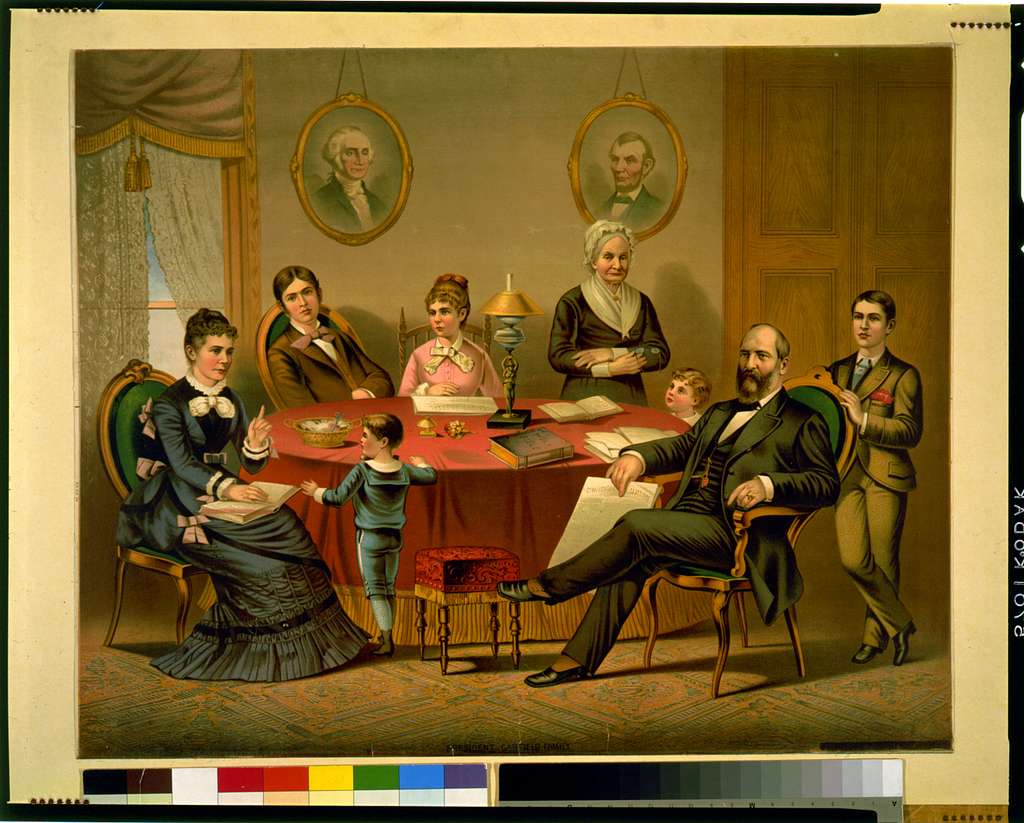
That health was more fragile than his résumé suggested. Garfield had struggled with chronic dysentery after the Civil War and later developed such severe stomach pain that his doctors sent the newly elected congressman to Washington with a prescribed lunch of raw beef on stale bread—whether he actually enjoyed eating it is, perhaps mercifully, lost to history. Friends described Garfield as the dominant presence at his own dinner table, where “fun, fact, fancy, reminiscence, quotation, anecdote flowed from his lips in variety and profusion.” A former classics professor and college president (at the age of 25!), Garfield ran his dinners the way he ran a lecture hall—purposeful, scholarly, and rarely short on conversation—while still keeping things warm and family-forward.
His wife, Lucretia, was an inspired baker who found genuine joy in the task, once writing that if she was going to be stuck making the family’s bread all summer, she might as well “see what perfect bread I can make.” Dinners leaned on steak, roast beef, pork chops, and chicken pies, rounded out with sliced tomatoes, cottage cheese, and sweet corn, some of which was grown on the family’s own Mentor, Ohio, farm. Sunday evenings brought hand-churned ice cream, cranked in a pail with rock salt until it set. Garfield’s own favorite indulgence, though, was a slice of tart apple pie, a dish so associated with him that there are versions known today simply as “Garfield Pie”.
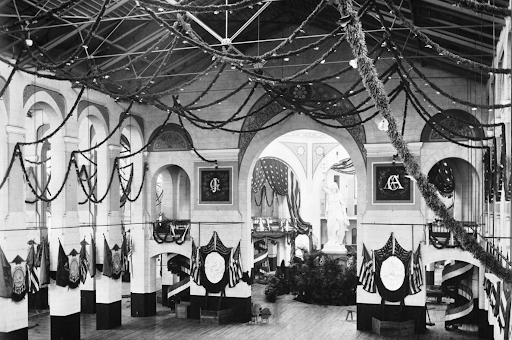
His inauguration reflected that same appetite for simple dining on a national scale: Seven thousand guests ate over one hundred gallons of oysters, fifteen hundred pounds of turkey, fifty hams, two hundred gallons of chicken salad, seven hundred loaves of bread, two thousand biscuits, one thousand rolls, one hundred fifty gallons of ice cream, fifteen thousand cakes, fifty gallons of ices, and two hundred fifty gallons of coffee.
Farming wasn’t just Garfield’s childhood backdrop—it stayed central to his life right up through his campaign for president. He owned a 120-acre farm in Mentor, where he grew grains, tended orchards, and raised livestock, and he kept meticulous diary records of crop yields and planting schedules. He believed farming built character and fervently wanted to pass that belief down to future generations. Whatever food policy might have emerged from that lifelong agricultural interest never got the chance to take shape.
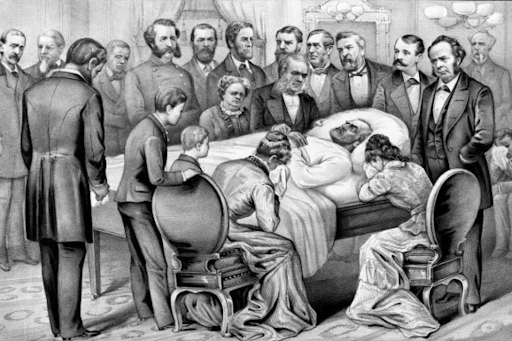
Garfield’s presidency, tragically, ended before it truly began. Shot by a job-seeking assassin in July of 1881, he spent eleven agonizing weeks fighting to recover, while his doctors grasped for anything that might help. As his condition worsened and he could no longer keep food down, his physician, Dr. D. W. Bliss, turned to an unusual last resort: feeding the president rectally, with a mixture of beef extract, whiskey, and opium administered every four hours, day and night.
When word got out that Garfield could barely eat but still loved milk, a Baltimore company sent a cow to graze on the White House lawn so he’d have the freshest supply possible, however little of it he could take in. His physicians learned he was fond of squirrel soup and had squirrels hunted nearby in hopes of preparing it for him. Garfield never recovered enough for the meal to be made.
President Garfield died that September, eighty days after being shot—taken out less by the bullets themselves than by the infection that followed. As his assassin, Charles Guiteau, reportedly (and self-servingly) said, “Yes, I shot the president, but his physicians killed him.” That conclusion has been endorsed by many modern-day historians.
A humble, one-crust, apple pie brightened with lemon juice and zest—this was Garfield’s favorite dessert, simple and unpretentious, exactly the kind of thing the farm-raised president loved best.
We use cookies to improve your experience on our site. By using our site, you consent to cookies.
Manage your cookie preferences below:
Essential cookies enable basic functions and are necessary for the proper function of the website.
Google reCAPTCHA helps protect websites from spam and abuse by verifying user interactions through challenges.
Statistics cookies collect information anonymously. This information helps us understand how visitors use our website.
Google Analytics is a powerful tool that tracks and analyzes website traffic for informed marketing decisions.
Service URL: policies.google.com (opens in a new window)
Marketing cookies are used to follow visitors to websites. The intention is to show ads that are relevant and engaging to the individual user.
A video-sharing platform for users to upload, view, and share videos across various genres and topics.
Service URL: www.youtube.com (opens in a new window)
You can find more information in our Cookie Policy and Private: Privacy Policy.
Please join our email list to occasionally hear our views on timely issues and learn about The National Food Museum’s progress. We promise we won’t clutter your inbox!