
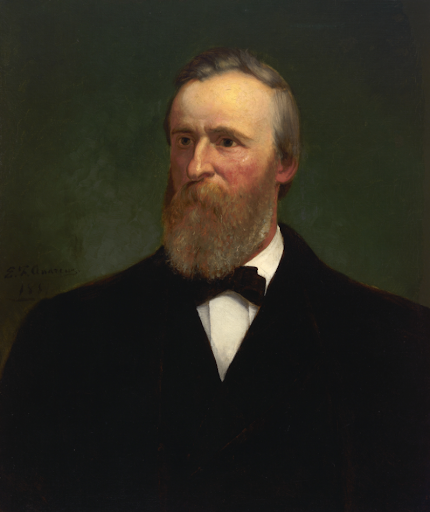
Time in office
March 4, 1877–March 4, 1881
Vital Statistics
Born: October 4, 1822, in Delaware, Ohio
Died: January 17, 1893, in Fremont, Ohio
Political Affiliation
Republican Party
First Bite
As Rutherford B. Hayes was entering the White House, a commentator quipped that “buttermilk will flow like water at the White House tonight”—a jab at just how joyless the booze-free celebration would be under the teetotaling president.
THE MAIN COURSE
Rutherford B. Hayes inherited the presidency from Ulysses S. Grant, who enjoyed extravagant, booze-tinged, European-influenced dinner parties.
President Hayes reversed that legacy by yanking the punch bowl off the table entirely. Hayes and his wife Lucy were committed teetotalers who banned alcoholic beverages from the White House, beer and wine included, along with dances, balls, and card parties for good measure. Could they have been trying to set an example of probity for their eight children? Critics dubbed it “the ice-water regime,” and Lucy herself picked up the nickname “Lemonade Lucy” for her trouble. One admirer put it more generously, declaring that under the Hayeses “virtue was at last fashionable.”
Temperance, however, did not mean thrift. The Hayeses kept Grant’s tradition of long, many-course dinners fully intact, serving a mid-meal sorbet just like their predecessors and spending as much as $3,000 on a single reception (over $100,000 today). It was a fortune for an administration otherwise known for its frugality. It was proof that Hayes could hold a moral line on liquor while still setting a genuinely impressive table.
The president’s table leaned heavily on ordinary midwestern dishes, even as it dressed itself up for company. Hayes brought Winnie Monroe, his family’s Ohio cook who had been enslaved before working for the Hayes Family, to run the White House kitchen. She cooked the way Ohio farm country always had—not spare, but hearty, and built around meat, cream, and butter rather than French sauces and imported delicacies. Her cornmeal batter cakes, a breakfast staple so delicate “they should not be stacked,” became a house favorite. Regular dinners leaned on roast beef and potatoes, oyster stew, fried veal or pork, and boiled vegetables—the kind of substantial, satisfying fare a Midwestern farmhouse would recognize, even served on a formal White House table.
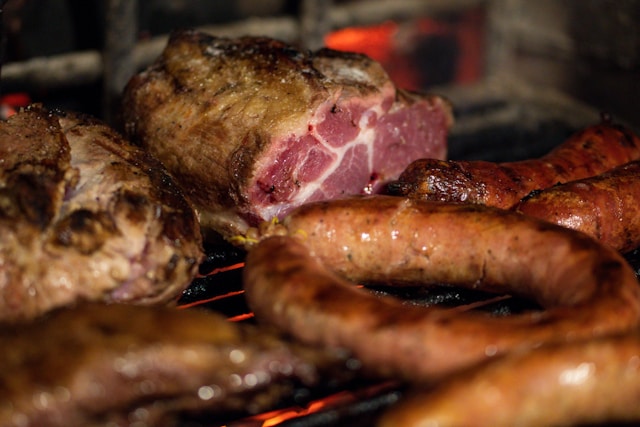
One guest still marveled that Monroe’s spread “groaned with delicacies which called forth admiration,” proof that homestyle cooking, done well, could hold its own against any European chef. Lucy, for her part, had a soft spot for angel food cake, and the couple’s daily rhythm stayed just as unpretentious: one cup of coffee at breakfast, one cup of tea at lunch, nothing more indulgent than that—Ohio through and through, even in the President’s House.
The 1876 presidential election that brought Hayes to the White House was one of the most disputed in American history. Although Democrat Samuel J. Tilden won the popular vote, disputed electoral returns from four states left the outcome uncertain. Congress created a special Electoral Commission to settle the contest, and just three days before Inauguration Day, it awarded the disputed electoral votes to Hayes, giving him a razor-thin Electoral College victory, 185–184.
Hayes’ victory arrived under a dark cloud. In the weeks before the Commission ruled, allies of Hayes are believed to have held private talks with Southern Democrats, and, soon after, Reconstruction-era Republican governments in the South gave way to control by former Democratic rebels. Federal troops withdrew, effectively ending Reconstruction and abandoning Black Americans to the rise of Jim Crow. Historians have long debated whether an explicit bargain was struck, but no written agreement has ever surfaced (of course, the agreement could have verbal). Some argue that the outcome was simply a matter of shifting political will rather than a deal—but the suspicious timing has kept the question alive for nearly 150 years.
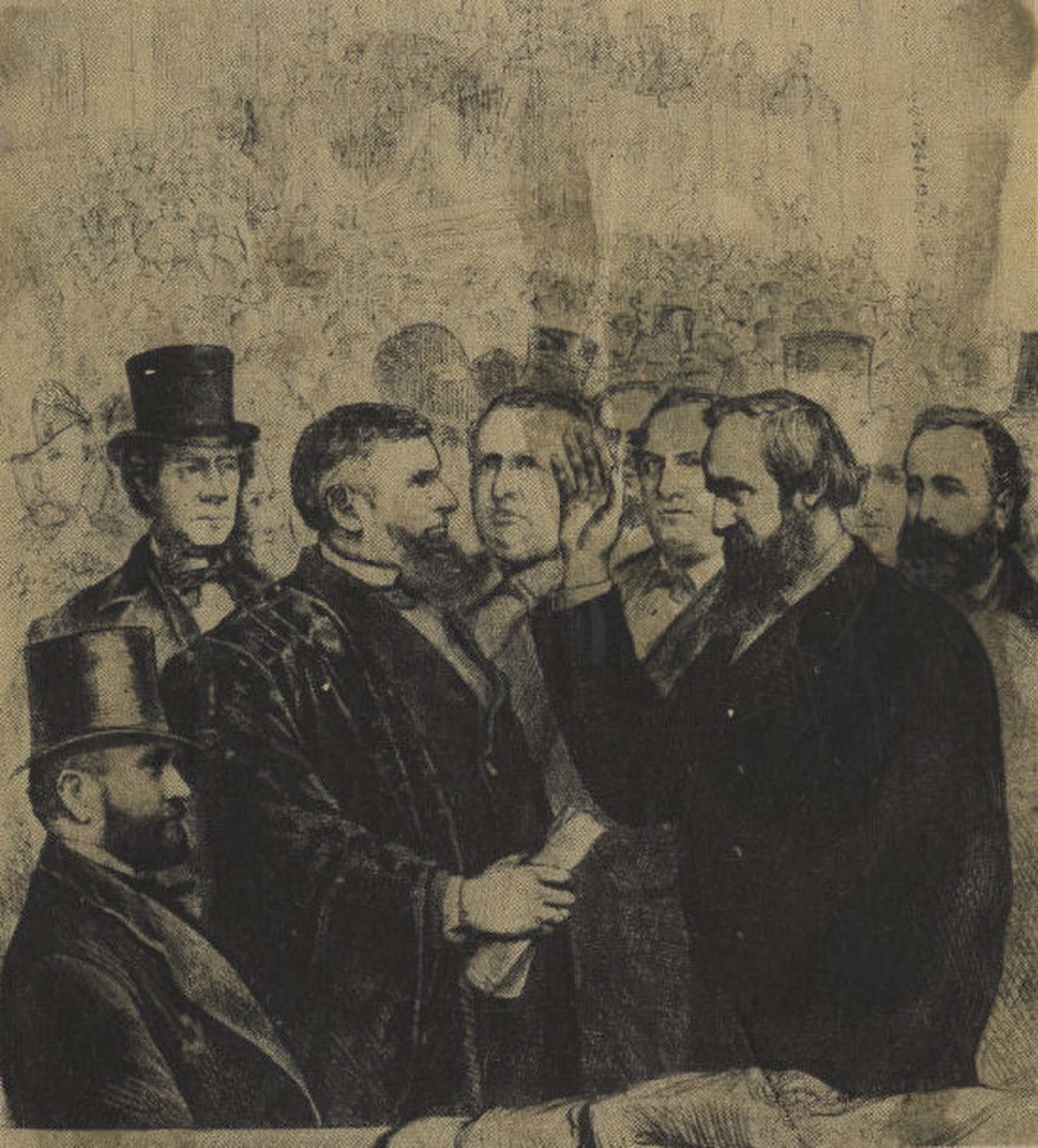
With the presidency unresolved until the last minute, fears of political unrest lingering after the bitterly contested election, and March 4—the official Inauguration Day—falling on a Sunday, outgoing President Ulysses S. Grant was determined that there be no gap in presidential authority. On Saturday, March 3, Grant invited Rutherford and Lucy Hayes to a farewell dinner at the White House. Amid thirty-six guests and a lavish meal, he quietly pulled Hayes aside with the Chief Justice and Secretary of State, where Hayes took the oath of office in less than four minutes. He then returned to the table as though nothing had happened. The public inauguration followed on Monday, considerably less secretive, to say the least.
Farmers accused Hayes of caring more for Eastern bankers than for anyone who worked the land. It’s easy to underestimate how much weight that accusation carried at the time. The United States of the 1870s was still an overwhelmingly rural, agricultural nation. Nearly half of all employed Americans worked as farmers—a far cry from the roughly one percent who do so today. Farmers weren’t a niche interest group, they were close to the largest voting bloc in the country, and no president could afford to write them off.
Hayes’ agricultural instincts were genuine, even if occasionally contradictory. Hayes backed the gold standard, believing the dollar should remain redeemable in gold and that the money supply should stay relatively tight. That’s why he vetoed the Bland-Allison Act, which would have expanded the coinage of silver and increased the amount of money in circulation, something supporters expected would spur inflation and lift prices—including those for crops. Hayes believed a stable currency would strengthen the economy over the long run, a view shared by creditors and business leaders. But farmers believed that more money in circulation meant higher prices for their harvests and easier repayment of their debts. Hence, Hayes’s hard-money stance left many farmers receiving low prices for their crops while their loans remained just as burdensome.
At the same time, Hayes was a genuine champion of American agriculture, expanding the USDA’s role in research and education and declaring in one address that farming was “the leading interest and the permanent industry of our people.” His agricultural vision extended to Native American policy as well, where he supported efforts to encourage reservations to adopt the more-productive Euro-American farming practices. However, while framed as a path toward self-sufficiency and assimilation into mainstream American life, these policies went hand in hand with continued land dispossession and the steady erosion of Indigenous ways of life. In retirement, Hayes’ enthusiasm for growing things became refreshingly uncomplicated: He kept a horticulture diary at his Spiegel Grove estate in Fremont, Ohio, tending apple varieties like Baldwin and Greening with the same devotion he’d once given to policy memos.

Hayes also left one lighter legacy. Children had been rolling eggs down the grassy slopes of the Capitol on the Monday after Easter for at least a decade, and some trace the tradition all the way back to Dolley Madison. But by the mid-1870s, enthusiastic attendees started tearing up the lawn beyond what Congress would tolerate. In 1876, the House passed the so-called Turf Protection Law, banning the custom from Capitol grounds. Rather than let the joyful tradition die, Hayes stepped in two years later and invited the neighborhood’s children (remarkably, even including Black children) to roll their eggs on the White House lawn instead, making his administration the first to host the event there. It was a small, but thoroughly wholesome gift to the nation that, minus brief hiatuses during the two World Wars, continues today.
Try it at home
Cornmeal Batter Cakes
A mix of cornmeal, buttermilk, eggs, and a few other ingredients, cooked thin on a hot, well-greased skillet, and resulting in delicate hotcakes. This was a favorite of President Hayes, frequently served for breakfast with butter and maple syrup or honey.