
Their work shaped presidential foodways: the meals served to first families, the dishes offered to distinguished guests, and the regional cooking that presidents brought with them to Washington. More than 150 Black men and women have worked in presidential food service from George Washington’s administration through Donald Trump’s. In the early decades of the country, enslaved people worked in the households of ten presidents while they were in office, from Washington through Zachary Taylor, and most of their names were never recorded.
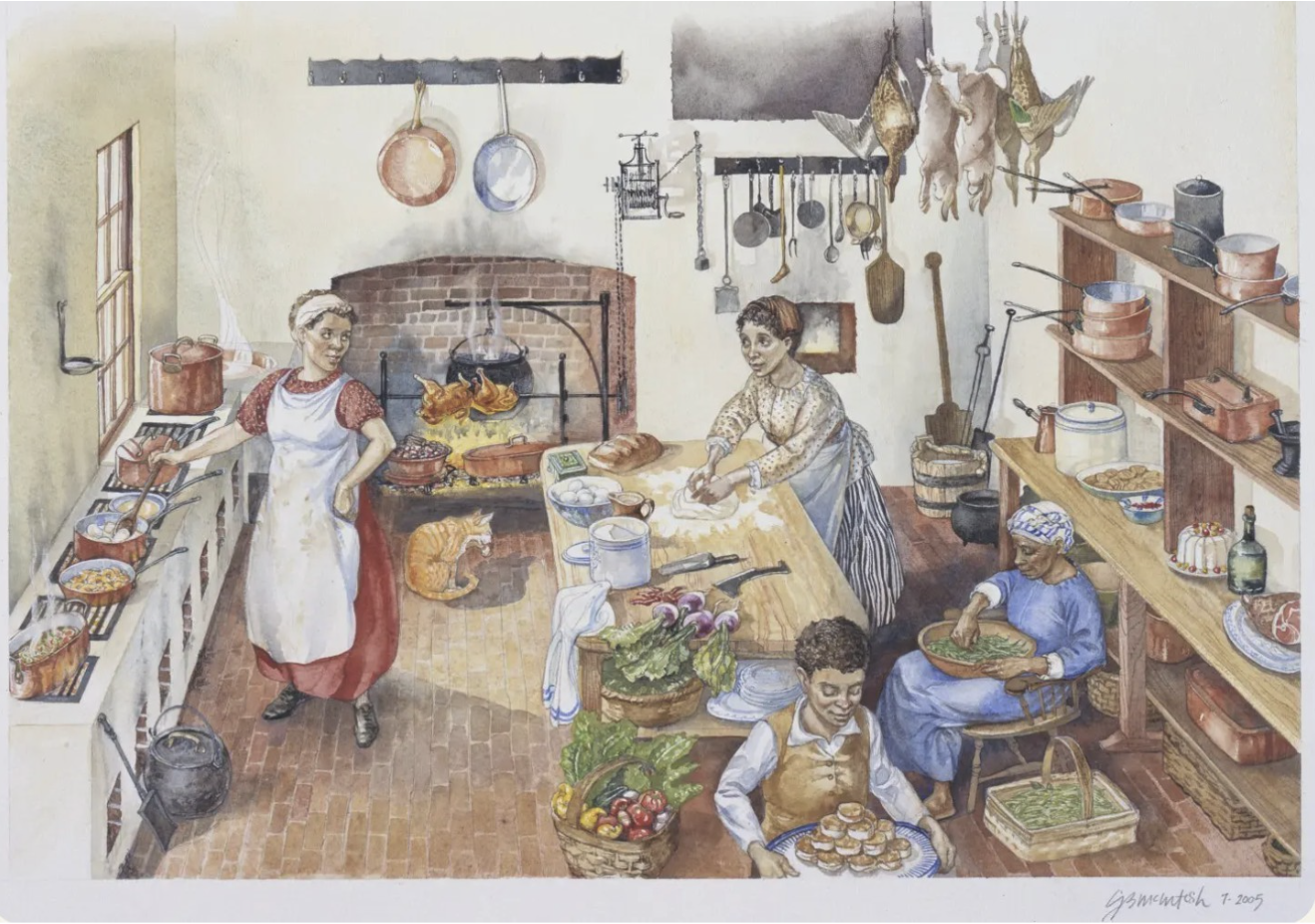
In 1769, George Washington, who had inherited almost two dozen enslaved people by his late teens (1740s), obtained an enslaved man named Hercules (and two dozen others) from neighbor John Posey in exchange for a mortgage note, according to Adrian E. Miller’s meticulously researched The President’s Kitchen Cabinet, which describes the experiences of African Americans who labored in White House kitchens. By 1786, Hercules was listed as a cook at Mount Vernon, Washington’s Virginia home overlooking the Potomac River. In 1790, the newly elected president brought him to the President’s House in Philadelphia, then the nation’s capital. Hercules worked in a kitchen staffed by free and enslaved Black workers, including his son Richmond, and White indentured servants. His valuable skill in the kitchen earned him privileges few enslaved people had. He was allowed to come and go from the house when he was not working, and to sell kitchen leftovers, known as “slops,” keeping as much as two hundred dollars a year (several thousand dollars now when adjusted for inflation).
To evade Pennsylvania’s gradual–abolition law, President Washington sent enslaved members of his household, including Hercules, back to Virginia before they had spent six months in the state, then brought them back again. On February 22, 1797, Hercules successfully escaped from Mount Vernon and took the surname Posey, that of his previous owner. Despite Washington’s intense efforts, he never was able to recapture his former chef. Hercules lived the rest of his life as a free man in New York, working as a cook and laborer, and died there in 1812. His children remained enslaved.
Thomas Jefferson’s now-well-known, enslaved chef was James Hemings, He was the half-brother of Martha Wayles Jefferson, Jefferson’s wife, through their shared father, John Wayles. So, remarkably, Hemings was his brother-in-law through marriage. Serving as a diplomat in France in the 1780s, Jefferson brought the enslaved man with him where he was trained in classic French cooking. Jefferson freed Hemings in 1796. In 1801, after Jefferson won the 1800 election, the talented chef might have returned to oversee the White House kitchen but, alas, according to some historians, Hemings had taken to alcohol and ended his troubled life by suicide that year.
Jefferson did bring enslaved women from Monticello to the newly built White House in Washington. Edith (Edy) Hern Fossett arrived in 1802 at fifteen, and her sister-in-law Frances (Fanny) Gillette Hern followed in 1806 at eighteen. Jefferson’s French chef, Honoré Julien, trained them, and they received a gratuity of two dollars a month rather than a wage. One Washington resident wrote, “Never before had such dinners been given in the President’s House.” The two young cooks stayed in the capital year-round—living in the basement slave quarters, which flooded during storms. After Jefferson’s death in 1826, both women and their children were sold at auction to help pay off his debts.
Jefferson’s successors from southern states relied on enslaved kitchen labor for another four decades. Zachary Taylor, who died in office in 1850, enslaved some 150 people and was the last president who had enslaved people working in the White House (most remained on his plantations in Mississippi and Louisiana).
After emancipation, White House food service increasingly relied on paid workers. African Americans continued to play important roles in the kitchen and household, partly because widespread racial discrimination limited their employment opportunities elsewhere and helped keep many Black workers concentrated in domestic service.
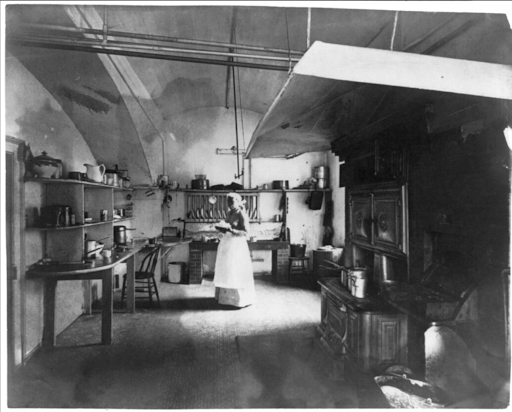
By the late nineteenth century, some Black cooks were hired, and publicly praised, for their culinary skills. In December 1889, Dolly Johnson of Lexington, Kentucky, replaced Benjamin Harrison’s French chef. Newspapers praised her Kentucky cooking as a better fit for the president’s “plain American taste.” In 1893 she returned as head cook for Harrison’s successor, Grover Cleveland, and she later opened dining rooms in Lexington, one of them called the White House Café. Similarly, a decade later, William McKinley’s cook, known today only as Mrs. Benjamin, was applauded for her fried chicken, hot bread, and pies.
Some cooks worked wherever the president went—be it a railroad car or a vacation retreat—rather than in the White House itself. During the Civil War, Mary Dines, who had escaped slavery in Maryland hidden in a hay wagon, cooked for the Lincolns at the Soldiers’ Home, a facility for retired and disabled veterans in Northwest Washington where the family spent its summers.
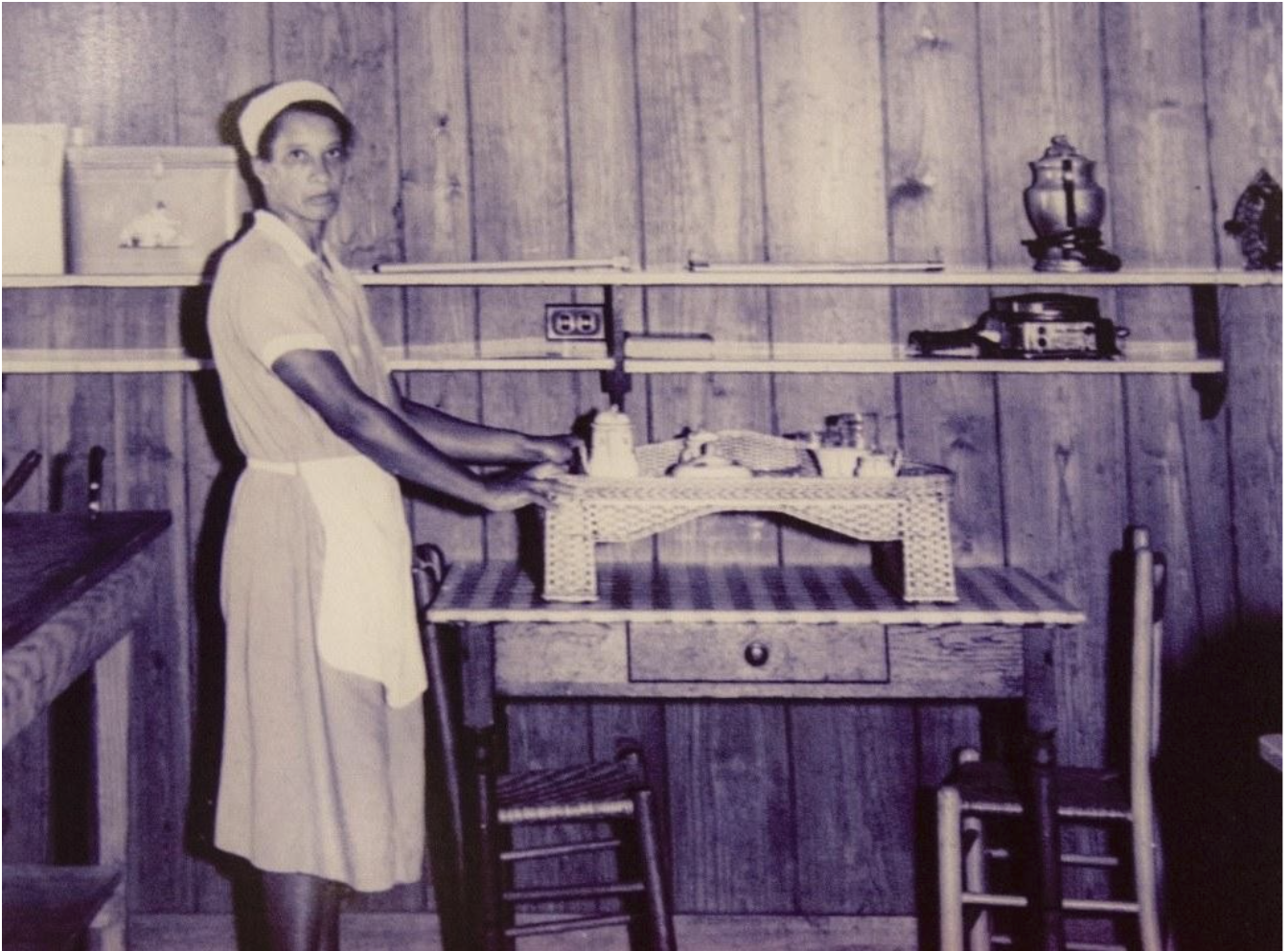
Seventy years later, Daisy Bonner was FDR’s beloved primary cook for about twenty years at his Warm Springs, Georgia, retreat. On April 12, 1945, she was preparing a cheese soufflé for his lunch when Roosevelt suffered a fatal cerebral hemorrhage while sitting for a portrait in his cottage. He never ate the soufflé. Bonner later recalled, “He never ate that soufflé, but it never fell until the minute he died.”
Blacks made up much of the staff in White House kitchens until the early 1960s. That is when Jacqueline Kennedy brought in European-trained chefs, which led, unintentionally, to a decline in Black staff. However, family cooks continued to follow presidents to the nation’s capital. Most prominently, Zephyr Wright cooked for Lyndon B. Johnson’s family from 1942 to 1969, and many credit her cooking with building the Johnsons’ reputation as hosts. She also bolstered Johnson’s understanding of the degrading Black experience with Jim Crow-era segregation. Driving between Texas and Washington with the Johnsons, Wright was barred from the Whites-only restaurants and restrooms, and she eventually refused to make the trip. Johnson cited her experience while lobbying Congress to pass the Civil Rights Act of 1964, and he gave her one of the pens he used to sign it.
Other Blacks built long careers on the White House staff itself. Eserline Dewberry worked as an assistant cook in six administrations, from Kennedy to Reagan, and Eugene Allen spent thirty-four years in several capacities under eight presidents. James Jeffries served as many as eleven presidents, starting in 1959 helping prepare desserts, then he moved upstairs to work as a pantry helper then butler. He ended his career with America’s only Black president, Barack Obama.
The record of Black workers who helped whip up everything from presidential desserts to state dinners is incomplete. Much of it survives only in scattered sources: wills, payrolls, census records, and newspaper items written years after the fact. Some workers are known by name; others appear only briefly in the archive, or not at all. Research to identify them all is ongoing.
We use cookies to improve your experience on our site. By using our site, you consent to cookies.
Manage your cookie preferences below:
Essential cookies enable basic functions and are necessary for the proper function of the website.
Google reCAPTCHA helps protect websites from spam and abuse by verifying user interactions through challenges.
Statistics cookies collect information anonymously. This information helps us understand how visitors use our website.
Google Analytics is a powerful tool that tracks and analyzes website traffic for informed marketing decisions.
Service URL: policies.google.com (opens in a new window)
Marketing cookies are used to follow visitors to websites. The intention is to show ads that are relevant and engaging to the individual user.
A video-sharing platform for users to upload, view, and share videos across various genres and topics.
Service URL: www.youtube.com (opens in a new window)
You can find more information in our Cookie Policy and Private: Privacy Policy.
Please join our email list to occasionally hear our views on timely issues and learn about The National Food Museum’s progress. We promise we won’t clutter your inbox!