
THE MAIN COURSE
Presidents and Food IS the theme of The Presidential Palate. Is that something anyone should really care about?
Does it matter what a president ate for lunch growing up? Does it matter what is served at a state dinner or lunch with a foreign leader? Does it matter who was doing the cooking in the White House?
The answers to those questions are a resounding Yes and No.
As you explore these profiles of every American president, you’ll see how numerous presidents used food to connect with voters—to show that they enjoyed eating the same foods as average Americans. As author Adrian Miller wrote in The President’s Kitchen Cabinet, “Savvy presidents carefully use food to… establish in the public consciousness that they are regular people, just like you and me….Through food, we get an authentic taste of our president’s personality.” But—they need to be cautious! In 2007 Barack Obama was ridiculed as an elitist when he referred in a campaign stop to arugula—a food that most people had never heard of, let alone eaten.
At the other end of the spectrum, presidents have used “gastrodiplomacy” to try to influence visiting presidents and kings and the course of history. In his book Dining at the White House, former White House chef John Moeller explains, “Eating a meal together is a great way of building relationships and establishing rapport….A tough-as-nails politician… will often become a different person when he [sic] sits down to a plate of good food and a glass of fine wine. Suddenly, the hard edge melts a little and everyone relaxes.” History comes alive when you picture President Franklin Delano Roosevelt serving plebeian hot dogs to the King of England (who loved them!) and President Lyndon Baines Johnson treating foreign dignitaries to an old-fashioned Texas barbecue.
And, totally separate from gastrodiplomacy, it is remarkable to see the extent to which throughout the country’s history presidents relied on the labor of African Americans, enslaved and free, in their kitchens. In some administrations, people of color served as the top chefs and became an inspiration to people in their communities.
Fun, Flavors, and Food Policy
Sometimes knowing what a president ate as a child or in the White House is just fun to learn, with dietary predilections not having the slightest significance in terms of official actions and policies. Did you know that President Warren Harding was a waffle-lover? That President Joe Biden’s favorite food was and is ice cream? That President Dwight D. Eisenhower, the mighty Supreme Commander of the Allied Expeditionary Force in Europe during World War II, was also probably the most talented and enthusiastic presidential cook—even installing a barbecue grill right on the roof of the White House?
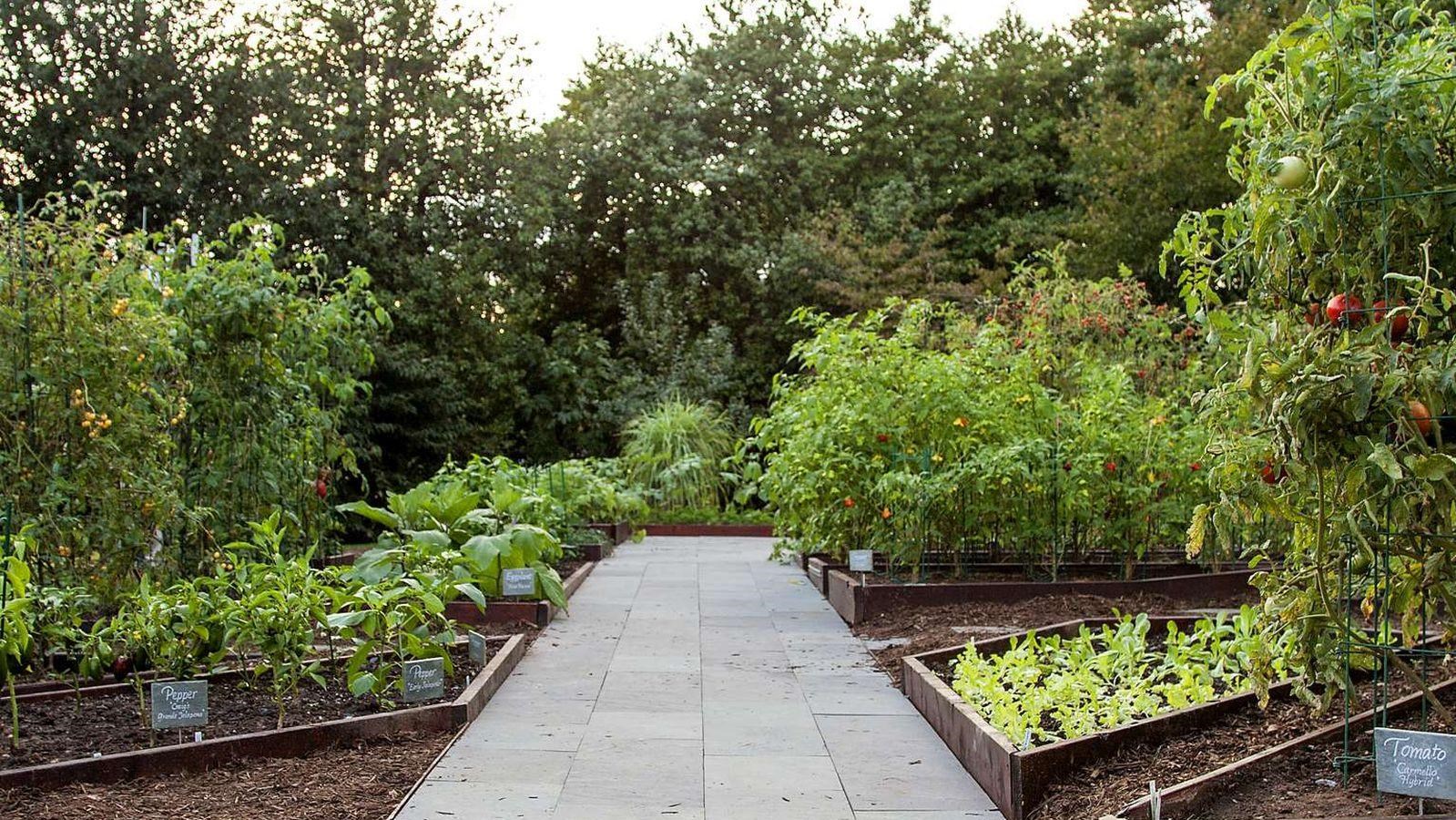
In a few cases, a president’s food preferences were publicized to advance his administration’s policies. Exhibit A: the Obamas’ vegetable garden on the White House grounds. The garden both provided vegetables and herbs for the chefs to use and generated publicity that encouraged Americans to plant their own gardens, eat healthier diets, and support important nutrition policies and programs, such as SNAP (food stamps) and WIC (Women, Infants, and Children).
Many presidents have eaten pretty ordinary meals most of the time, but they usually have had excellent chefs who could prepare much more interesting and bountiful meals, especially for dinners. Needless to say, no president has had to cope with hunger or resort to food stamps like millions of other Americans. However, FDR, at Eleanor’s insistence, modeled the fare that most people were eating during the Great Depression and World War II, enduring (and hating) many dull, simple meals. In fact, visitors to his White House often made certain to eat before they arrived because they knew they would be offered meager fare. State dinners and other special occasions are something else, with the chefs pulling out all the stops to serve creative, elaborate creations and perhaps score a political point.
While alcoholic beverages flowed freely in many White Houses, ten of the forty-five presidents, including Trump and Biden, were either life-long abstainers or stopped drinking because of their religion, personal or family problems with alcohol, or other reason. The other non-drinkers were George W. Bush, Millard Fillmore, Benjamin Harrison, William Henry Harrison, Rutherford B. Hayes, Andrew Johnson, James K. Polk, and Zachary Taylor.
But several presidents had serious problems with alcohol. Franklin Pierce was grief stricken and drank heavily after his one remaining child was killed in a train derailment shortly before he was inaugurated (father and son were both on that train). Previously, his first child died when he was only three days old, and his middle child died at age eleven of typhoid fever. Andrew Johnson appeared to be drunk during his vice-presidential inauguration and on several occasions when he was president. More recently, Richard Nixon, particularly when he was under tremendous strain because of investigations into his Watergate skullduggery, sometimes drank so heavily that his top associates worried that he might make terrible decisions while under the influence. After all, it is the president who is never far from the nuclear button.
So, explore and enjoy The Presidential Palate to learn about presidents’ loved (and hated) foods, culinary mishaps, the cooks who served them daily, and the food and agriculture policies that their administrations advocated.
Behind the Exhibition
The Presidential Palate exhibition had several chefs. The presidents’ profiles were researched and written by Haley Benbow, a graduate student in food studies, and edited by Michael F. Jacobson, founder of the National Food Museum. Sophie Churchill did valuable initial research. We are especially grateful to Andrea Freeman, a professor at Southwestern Law School, and Kaete O’Connell, the deputy director of the Society for Historians of American Foreign Relations for reviewing some of the profiles before the exhibition was launched (but any mistakes still in the exhibition are our own). The digital experience was brought to life by Sharon Reaves at Reaves Projects, who designed the exhibition’s website.
Key Resources
Institutions
- Library of Congress
- Miller Center, University of Virginia
- National Archives
- National Portrait Gallery
- Presidential libraries (from Franklin Delano Roosevelt to Obama; other venues are dedicated to many other presidents)
- Smithsonian Institution
- White House Historical Association
Books
- Dinner with the President, by Alex Prud’homme
- The First American Cookbook, by Amelia Simmons (1796)
- The First Ladies’ Cookbook, by Margaret Brown Klapthor and Helen Duprey Bullock
- The Presidents’ Cookbook, by Poppy Cannon and Patricia Brooks
- The President’s Kitchen Cabinet, by Adrian Miller
Digital Media
- Cooking with Congress (and Bennett Rea’s social media channels)
- Eats History
- Food Timeline