
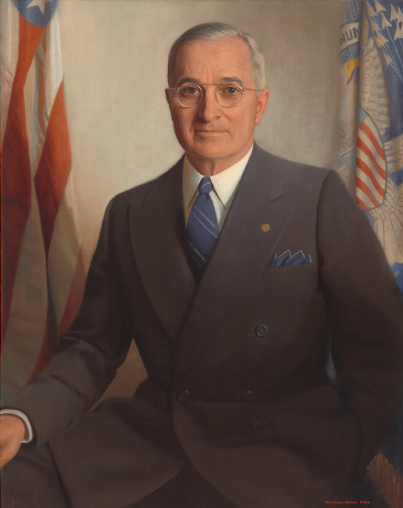
Time in office
April 12, 1945–January 20, 1953
Vital Statistics
Born: May 8, 1884, in Lamar, Missouri
Died: December 26, 1972, in Kansas City, Missouri
Political Affiliation
Democratic Party
First Bite
By the early 1950s, Harry S. Truman removed bread, butter, and sugar from his table in the name of health. That was striking discipline from a man who still started most mornings with a shot of bourbon “to get the engine going.”
THE MAIN COURSE
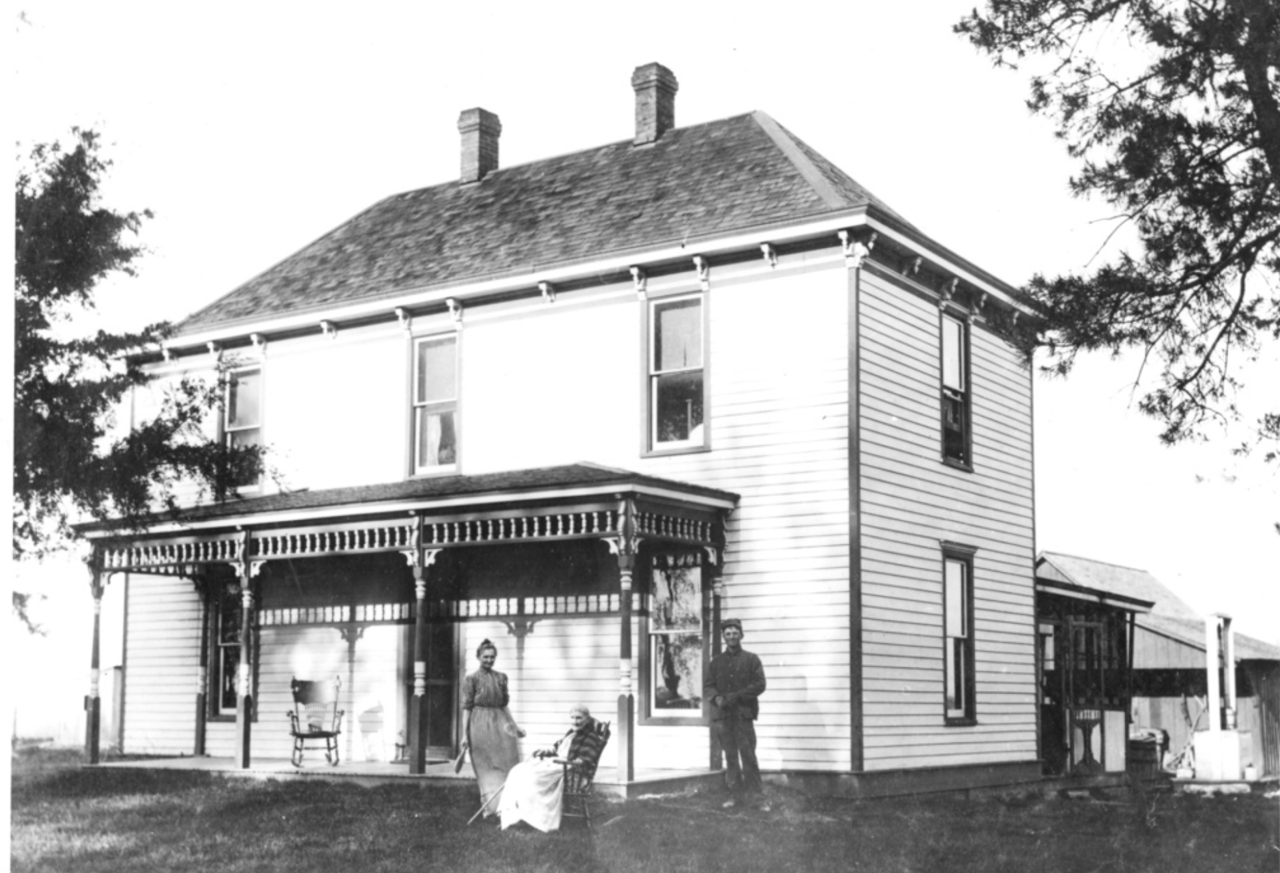
Harry Truman grew up on a 600-acre Missouri farm, and it shows in every corner of his eating habits.
He plowed, sowed, milked cows, fed hogs, and did just about everything else a working farm required, and the plain, hearty food of that upbringing followed him straight into the White House. He called himself a “meat and potatoes man.” Historians note he actually ate fairly lightly, but his heart clearly stayed with his mother’s fried chicken, cornbread with Missouri sorghum syrup, and Ozark pudding, a chopped apple-and-nut dessert his wife, Bess, made from her own family recipe. Senate Bean Soup, a dish he’d first grown fond of during his ten years in the Senate, stuck with him straight through his presidency. When it came to cake, he preferred chocolate to white, with angel food being the one exception. His mornings ran on a fixed routine of juice, cereal, whole-wheat toast, and milk (plus a shot of liquor, of course), eaten with the same reliability as his daily walk.
When he was asked once about his preferences, he shrugged it off entirely: “Never notice what’s put before me. Learned in the army to eat what could be obtained and like it.” His one genuine dealbreaker was onions, which he apparently despised in any form. His staff scrupulously sought to keep even traces of them off his plate. Another preference: When the weather cooperated at the Little White House in Key West, Florida, he preferred to skip the dining room altogether and eat out on the porch.
If Truman was easygoing about food, first lady Bess was anything but. She was a genuinely skilled cook in her own right, with exacting standards that extended down to the smallest details. White House staff had to be specifically trained on how the Trumans took their coffee, since on occasion, Bess would dip a spoon into her mug just to check the color, judging its strength. She clashed early with housekeeper Victoria “Henrietta” Nesbitt, the formidable menu-planner-in-chief she inherited from the Roosevelt White House—a woman with enough authority to oversee the kitchen staff and overrule some of FDR’s own requests. The flashpoint was dinner rolls: Nesbitt served them cold and hard, but Bess insisted on warm, fresh biscuits. It eventually took the president’s intervention to settle the matter. In the end, Bess replaced Nesbitt with her own cook from Missouri, Vietta Garr, specifically so the family could keep eating the dishes that actually felt like home. Truman affectionately called her “the Boss,” and by most accounts, the White House kitchen ran according to her rules far more than his.

That plain, private domesticity didn’t stop Truman from putting on a proper show when the occasion called for it. A White House luncheon for Winston Churchill, with a menu Truman personally ordered, included oyster soup, filet mignon with mushrooms, asparagus hollandaise, and strawberry shortcake—a formal spread standing in sharp contrast to his usual meat-and-potatoes dinners. Health eventually caught up with even that indulgence. A note in his own hand from January 1952 shows a strict, self-imposed regimen: a single egg and a strip of bacon for breakfast, sweetbreads or fish with vegetables for lunch, steak and fruit ice for dinner, with butter, sugar, and sweets banned outright. He backed it up with real self-discipline, too, with a daily routine of a brisk two-mile walk, a swim, time on the rowing machine, and a session in the sauna. He was convinced that physical fitness was the real foundation of mental fitness.
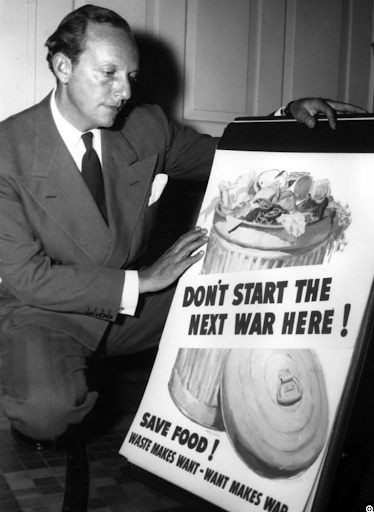
Where Truman’s food story becomes genuinely significant, though, is in what he did with it as president. In the aftermath of World War II, much of Europe faced real famine, and Truman treated American agricultural abundance as a direct tool of foreign policy rather than simply a domestic matter. In 1947, he launched a highly public campaign asking Americans to skip meat on Tuesdays and poultry and eggs on Thursdays, deliberately reviving the “meatless” and “eggless” days first popularized during World War I. The goal was to free up grain that was destined for animal feed but could be shipped to hungry people overseas.
In addition, 1947 and 1948 state dinners were suspended in solidarity with Europe. It worked as more than symbolism: Truman’s administration pushed U.S. grain and flour exports to record levels, ultimately exceeding an original target of 400 million bushels for the 1946–1947 program. He created a Cabinet Committee on World Food Programs to track the crisis in real time, and pushed the International Wheat Agreement through Congress in 1949, helping stabilize global wheat prices for producing and importing countries alike.
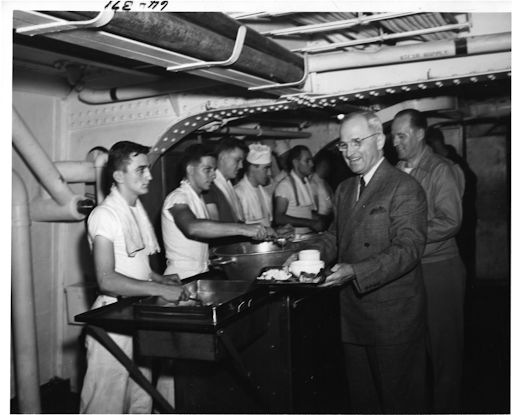
At home, Truman largely extended FDR’s New Deal farm programs, promising farmers a “Fair Deal” built on price supports tied to parity. The system was meant to shield farmers from the kind of catastrophic price collapses they had suffered during the Depression. It came with real political friction: propping up farm prices meant higher grocery bills, and Congress eventually pushed to scale the supports back to a more flexible range. His Agriculture Secretary, Charles Brannan, went even further, proposing to replace price supports altogether with direct income guarantees for farmers—a genuinely radical rethinking of federal farm policy that ultimately collapsed under opposition from major agricultural groups.
When Truman left office in 1953, he and Bess went straight back to Independence, Missouri, turning down lucrative corporate board seats and endorsement offers because he felt that such deals would cheapen the presidency. He lived out his remaining two decades on a modest income, largely funded by his memoirs, and spent much of that time establishing the Truman Presidential Library just down the road from the family farm where his food habits had first taken shape. It was a fittingly plain final chapter for a man who had once redirected the entire American food system to feed a starving continent, then went home content with fried chicken, bean soup, and a porch to eat it on.
Try it at home
Bess's Ozark Pudding
A humble Missouri dessert of chopped apples, walnuts, and a light batter, baked until set and usually served warm with whipped cream or ice cream. This is straight from Bess Truman’s own family recipe, and one of Harry’s favorite ways to end a meal (before sweets were banned, that is).