
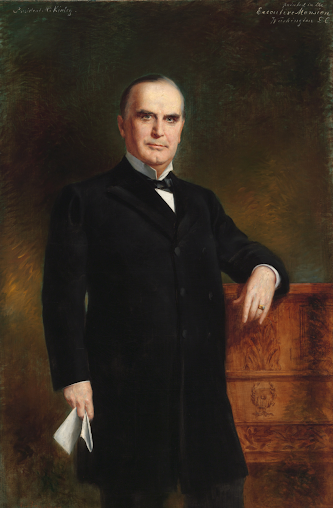
Time in office
March 4, 1897–September 14, 1901
Vital Statistics
Born: January 29, 1843, in Niles, Ohio
Died: September 14, 1901, in Buffalo, New York, after an assassin shot him on September 6, 1901
Political Affiliation
Republican Party
First Bite
William Mckinley once hosted a banquet for the president and first lady of Hawaii that featured seventy-one courses for over eight hundred guests. It still holds the record for the most courses ever served at a single White House meal.
THE MAIN COURSE
William McKinley presided over the tail end of the Gilded Age with all the pomp that era demanded, and nowhere was that more obvious than at his own dinner table.
He and his wife Ida were, by every account, hearty eaters who loved plain, starchy, filling food in genuinely large quantities. Breakfast alone could include a heaping portion of eggs, hot breads, potatoes, steak or chops, sometimes fish, fruit, and coffee. And lunch and dinner followed in the same abundant spirit. It’s little wonder the president was often described, not unkindly, as “portly.”
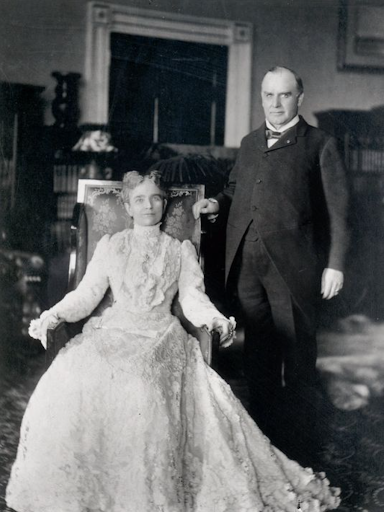
Family meals leaned simple and Midwestern despite all the formal spectacle elsewhere: boiled fish with hard-boiled eggs and cold beets, or red flannel hash, a hearty mix of corned beef, beets, and potatoes that was as unpretentious as it was filling. Formal dinners, on the other hand, went in the entirely opposite direction. Hot lobster salad, a decadent dish built from cream, Madeira wine, and truffles, made for a memorable center dish at the couple’s silver wedding anniversary celebration, alongside sweets, claret, and coffee served to guests over a marathon six-hour reception.
That anniversary party carried real weight beyond the menu. Ida McKinley suffered from a seizure disorder—many historians believe it was epilepsy—and questions swirled about whether her health made her fit to serve as first lady. The couple answered those doubts in dramatic fashion, throwing an elaborate party where she stood and greeted guests for six full hours straight.
Devotion showed up in smaller ways too. At formal dinners, McKinley broke with social custom and insisted on sitting beside his wife rather than across from her so he could act quickly if she had a seizure. When one struck, he would gently cover her face with a handkerchief or napkin to shield her from view while it passed, protecting her from the sight of onlookers. He would then hold her until it subsided, remove the cloth, and resume the conversation as if nothing had happened. The maneuver was so smooth that some guests never realized anything had occurred at all, mistaking the pause for an ordinary lull in the meal.
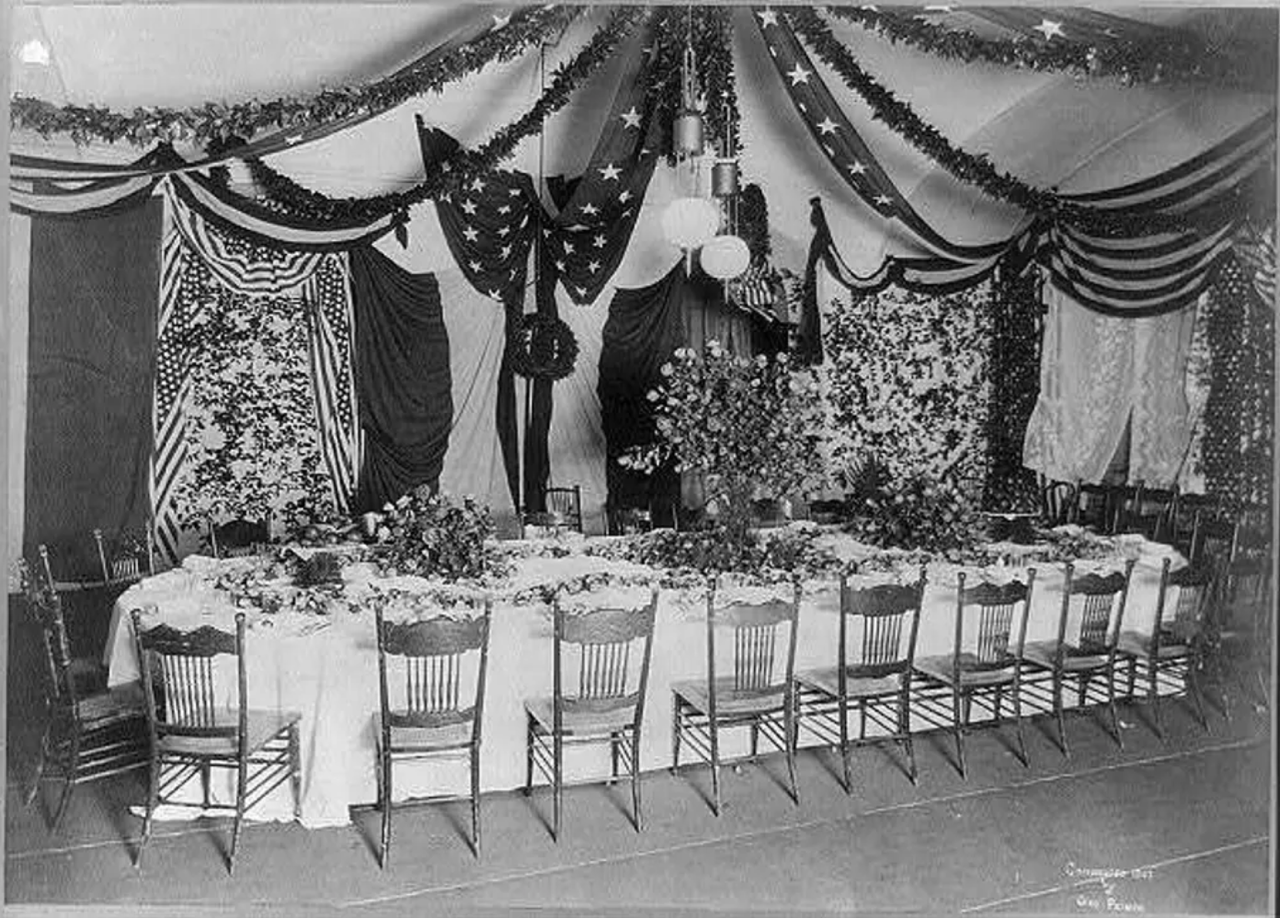
Entertaining at the McKinley White House leaned fully into Victorian excess: Heavy on flowers, spectacle, and sheer scale. Guest lists sometimes grew so large that staff resorted to seating overflow crowds in the White House corridors, a practice borrowed from the Cleveland administration. Every time a door opened, cold air rushed in, so attendees reportedly pulled cushions off nearby chairs, tucking them around their feet for warmth.
McKinley’s celebrity brought him some strange culinary tributes. During his 1896 front-porch election campaign, well-wishers turned up with food and livestock as a matter of course. The habit didn’t stop at the inauguration: In 1899, a Rhode Islander shipped the White House their plumpest turkey of the season. Another time, a Georgia farmer sent a 78-pound prize melon, two-and-a-half feet long and six feet around.
McKinley’s food policy carried a consistent thread from his earliest days in Congress through his presidency: protect American producers with high tariffs. As chair of the House Ways and Means Committee, he authored the McKinley Tariff of 1890, pushing average duties on imports to roughly 50 percent—a move so unpopular it helped cost him his own House seat that year. He returned to the same playbook as president with the Dingley Tariff of 1897, raising duties on agricultural imports like wool, dairy, sugar, and eggs to historic highs, all in the name of shielding American farmers, even as critics charged that it drove up food costs for working-class families.
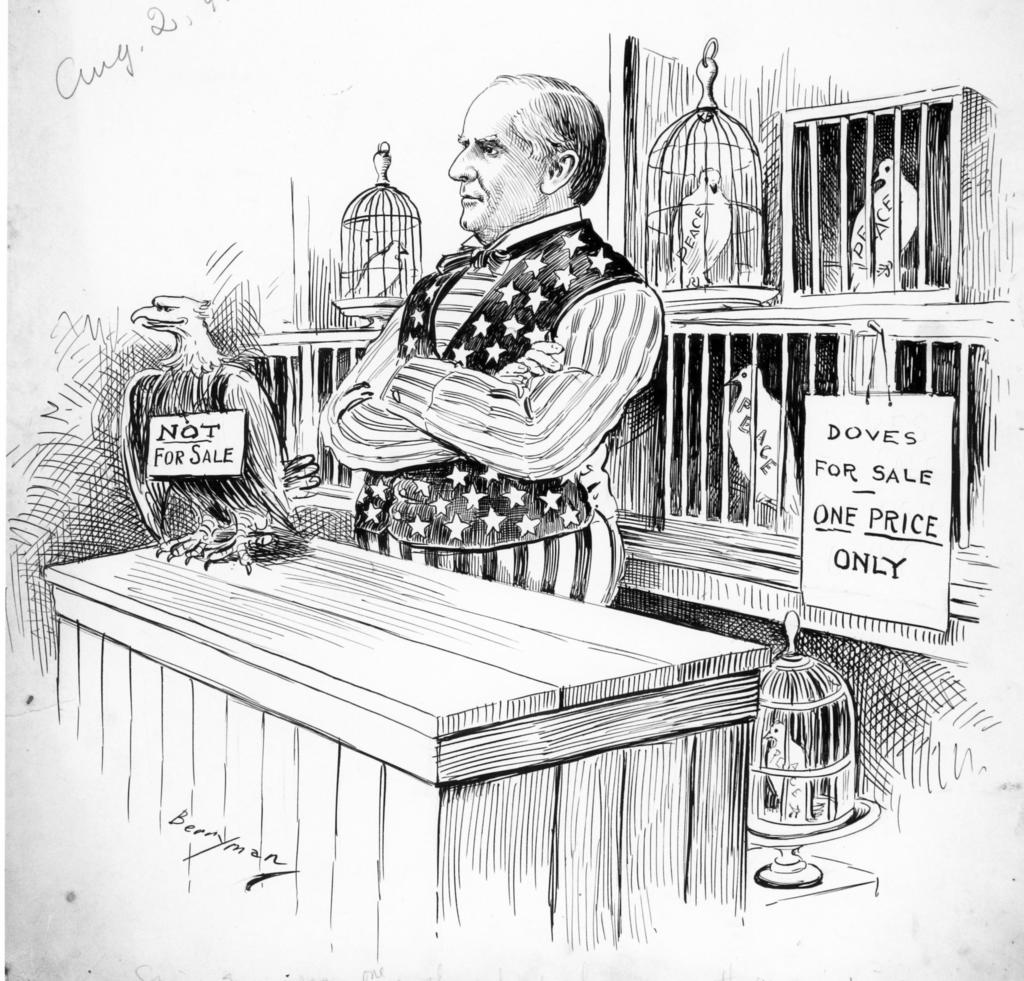
His 1900 reelection slogan, “Full Dinner Pail,” became shorthand for the prosperity experienced in his first term—the idea that under McKinley, American workers had steady jobs and full meals waiting at the end of the day. He credited that prosperity to two things: tariffs that protected American farmers and manufacturers at home, and new markets abroad opened up by territories like Puerto Rico, Guam, and the Philippines, won in the Spanish-American War. It turned a simple image of a worker’s lunch pail into one of the most effective campaign slogans of the era and helped propel him to a second term in the White House.
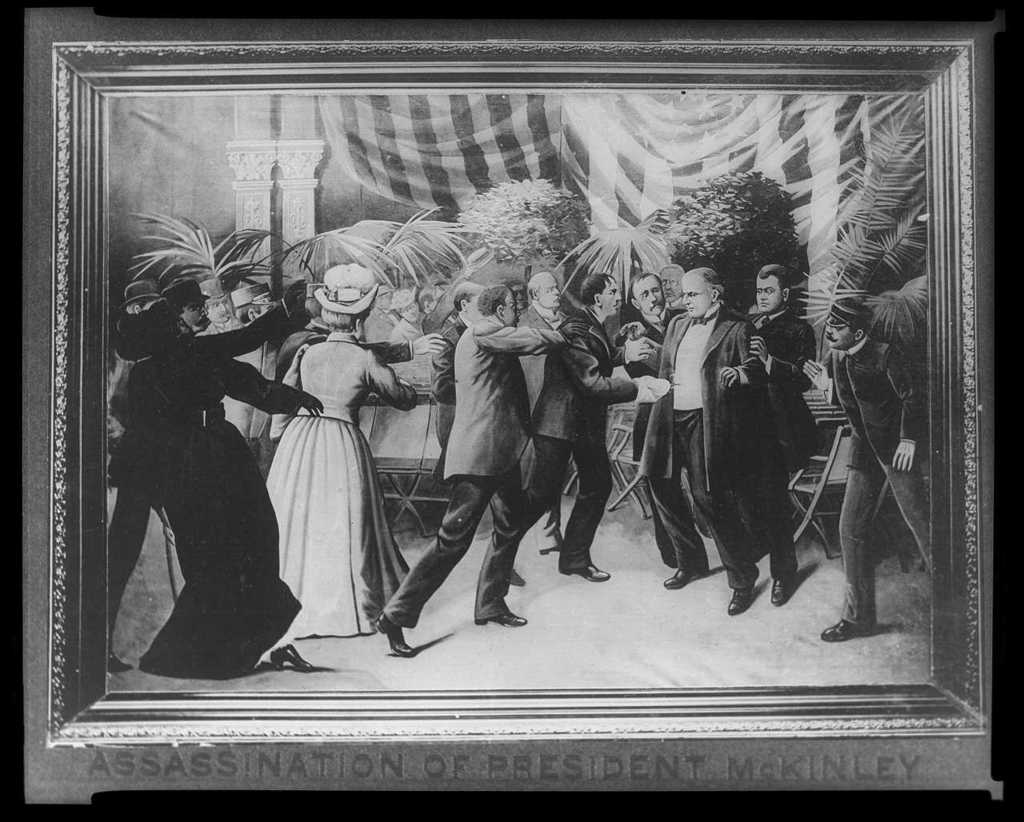
McKinley never got the chance to see where his own policies might have led next. He surprisingly reversed course on tariffs in a speech in Buffalo, New York, arguing that the country’s agricultural and industrial surplus now needed open foreign markets rather than tariff walls—a striking shift after decades of championing protectionism. The next day, September 6, 1901, he was shot twice while greeting the public at the Pan-American Exposition in Buffalo, and he died eight days later. His vice president, Theodore Roosevelt, was sworn in immediately after. It was a changing of the guard that, fittingly, also marked the end of the buttoned-up Victorian style McKinley had embodied, replaced by Roosevelt’s louder, more modern presence on the American scene.
Try it at home
Red Flannel Hash
Corned beef, beets, and potatoes, fried together until the edges crisp—simple, hearty, and starchy, exactly the kind of food that suited the McKinleys’ appetites.
This recipe is adapted from Poppy Cannon’s The Presidents’ Cookbook.