
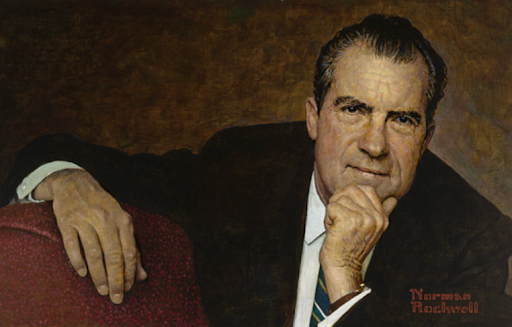
Time in office
January 20, 1969–August 9, 1974
Vital Statistics
Born: January 9, 1913, in Yorba Linda, California
Died: April 22, 1994, in New York City, New York
Political Affiliation
Republican Party
First Bite
Richard Nixon once said, “I eat cottage cheese until it runs out of my ears,” and he meant it literally. He would eat it served over a pineapple round, or topped with ketchup, black pepper, or both, whether it was breakfast, lunch, or a side dish next to steak.
THE MAIN COURSE
Richard Nixon, orchestrator of some of the most scandalous operations in White House history, also followed a surprisingly disciplined daily diet.
Breakfast rarely changed: fresh orange juice, half a grapefruit, wheat germ with skim milk, and coffee, eaten alone in about five minutes. Lunch was almost always cottage cheese with fruit (pineapple, peaches, pears, or oranges depending on the day), occasionally swapped for a hamburger and coffee, also finished in five minutes. He ate small portions and avoided snacking entirely, making it a point of keeping his other meals light around the more indulgent, multi-course state dinners he regularly had to attend. The menu for family dinners (shared with his wife, Pat, and his daughters, Tricia and Julie) followed a consistent pattern: meat or chicken, potato or pasta, vegetables or salad, and dessert only by request. They would rotate through spaghetti, lasagna, corned beef and cabbage, and occasionally Pat’s own meatloaf recipe, made from half beef and half pork. Nixon adored it so much that the recipe attracted widespread public interest. White House staff fielded a wave of requests for it. In general, Nixon wasn’t a picky eater, and he reportedly complimented the kitchen staff directly whenever a dish particularly pleased him.
The Nixons’ first night in the White House offered an example of how seriously White House staffers took presidents’ food preferences. According to Alex Prud’homme, author of Dinner With the President, on the evening of the inauguration, Pat Nixon called down to the kitchen and ordered four steaks and “just a bowl of cottage cheese.” Staff had already stocked prime cuts, anticipating the family’s well-known taste for steak, but nobody had been warned about the cottage cheese. A kitchen staffer ended up driving a White House limousine to procure the valued dairy product. The Nixons didn’t bring their own cook with them to the White House; Henry Haller, who’d cooked for the Johnsons before them, simply stayed on and adjusted to an entirely different set of tastes overnight.
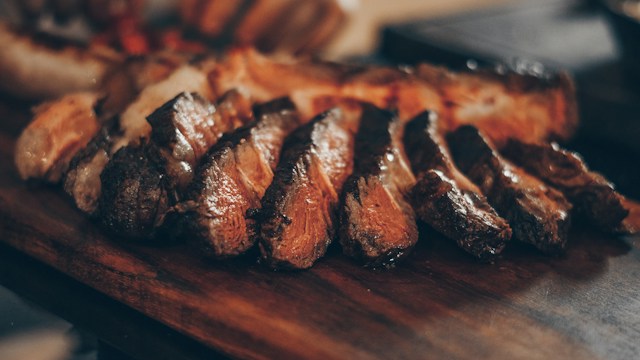
Entertaining under Nixon swung back toward formality after the looser, more social Kennedy and Johnson years. State dinners expanded back out to six or seven courses, up from the four Jacqueline Kennedy had introduced. And the Nixons’ own departure from a dinner again signaled the firm end of the evening, which was a sharp contrast to the Kennedys and Johnsons, who’d both stayed behind after dinner to linger and mingle with guests. Nixon genuinely disliked how long formal state dinners ran, and once managed to trim one down to an hour and twenty minutes. He even suggested cutting the soup course entirely, on the theory that men didn’t really care for soup. This suggestion looked a bit self-serving once it came out that he’d spilled soup on his own suit at a prior dinner. Soup was never served again.
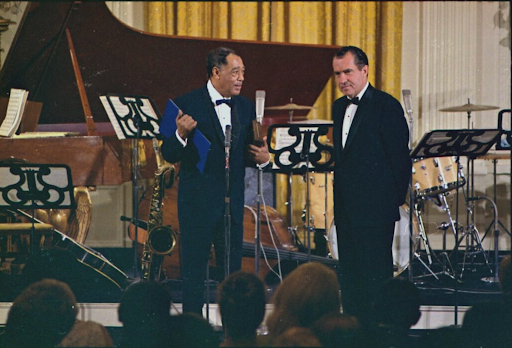
The Nixons’ new Sunday church services at the White House introduced Washington to pastry chef Heinz Bender’s brioches, which became such a hit that they developed something of a following outside the White House. The single most lavish event of the administration may have been a 1969 dinner honoring composer Duke Ellington’s 70th birthday: It was an extraordinarily elaborate affair for a private citizen, matching the scale of an actual state dinner, complete with seafood Neptune, roast sirloin bordelaise, and cheddar cheese mousse…and not a bowl of cottage cheese in sight!
Nixon’s historic 1972 trip to China became memorable for its diplomacy, but also the cuisine. The trip marked the first time a U.S. president had visited the People’s Republic of China and began a dramatic improvement in U.S.-China relations after decades of hostility. It paved the way for establishing diplomatic relations in 1979 and reshaping the balance of power with the Soviet Union. Duck-heavy state banquets dominated the televised coverage, and Nixon, Pat, and Secretary of State Henry Kissinger reportedly had spent months practicing with chopsticks beforehand, worried that fumbling them on camera would become a diplomatic embarrassment. The publicity even helped spark an American boom in authentic Chinese cuisine, turning once-obscure dishes like Peking duck into a commonplace item in Chinese restaurants.

Nixon’s record on food and nutrition policy was a genuine mix of real accomplishment and consequences that are still being sorted out today:
Nixon’s primary achievement on food and nutrition policy began with the landmark 1969 White House Conference on Food, Nutrition and Health. Nixon declared, “I not only accept the responsibility—I claim the responsibility” for ending hunger in America.The president appointed Tufts University professor Jean Mayer to lead the effort, which drew roughly three thousand participants, divided into twenty working groups. They produced a final report with over eighteen-hundred policy recommendations. The conference catalyzed major expansions of the Food Stamp Program and School Lunch Program, along with the creation of WIC (the Special Supplemental Nutrition Program for Women, Infants, and Children), all three of which are vitally important anti-hunger programs as of 2026. Such a conference held again until 2022, during the Biden administration, but it was not nearly as impactful as the initial one.
Agricultural policy under Nixon proved enormously consequential, and controversial, in the decades since. After the 1972 “Great Grain Robbery,” when Soviet wheat purchases sent U.S. food prices spiking, Nixon backed sweeping farm reforms. He signed the Agriculture and Consumer Protection Act of 1973 that shifted agricultural policy toward higher production, with government support tied more closely to production and market prices. That marked an important departure from some earlier supply-management policies, and a shift that Agriculture Secretary Earl Butz championed with the blunt instructions to plant “fence row to fence row” and “get big or get out.”
Nixon, aided by Democratic Congress’s throughout his presidency (and nudged forward by consumer activist Ralph Nader), had an extraordinary environmental record. In 1970, he signed groundbreaking legislation that:
- created OSHA (the Occupational Safety and Health Administration, tasked with enforcing workplace safety standards)
- created the EPA (the Environmental Protection Agency, responsible for enforcing environmental regulations related to pesticides, air, and water),
- NOAA (the National Oceanic and Atmospheric Administration, which oversees weather, climate, and ocean research)
- expanded the Clean Air Act
He later signed the Marine Mammal Protection Act and the Endangered Species Act. Even so, environmentalists were far from satisfied. Nixon impounded billions in Clean Air Act funding, pushed hard for the highly polluting Supersonic Transport program, and subjected new environmental rules to cost-benefit analyses that consistently emphasized their economic costs over their environmental benefits
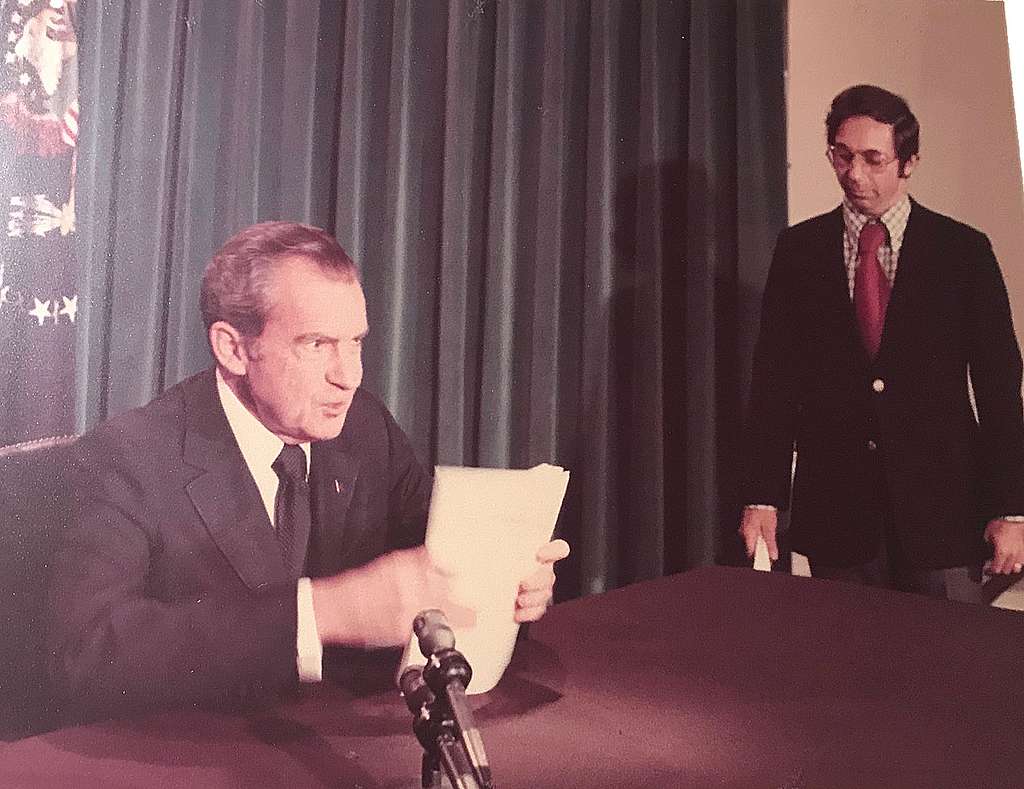
Nixon ran for president in 1968 on a promise to end the war in Vietnam, but then spent his first term secretly expanding it into Cambodia and Laos while telling the public otherwise. In an attempt to dig up damaging material on his political enemies ahead of his 1972 reelection, his campaign operatives broke into Daniel Ellsberg’s psychiatrist’s office and, later that year, at the Democratic National Committee’s headquarters in the Watergate complex. It was the cover-up of that second break-in, facilitated through two years of lies, that finally left him with nothing to bargain with. By August 1974, even his erstwhile allies in the Senate had turned against him. His stark choice was to be only president impeached and convicted or the only one to resign. He chose the latter.
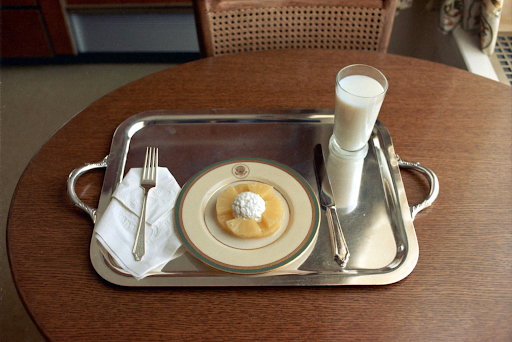
Unable to sleep on “resignation eve,” Nixon wandered down to the White House kitchen in his pajamas before dawn and ordered corned beef hash with poached eggs, a real departure from his usual wheat germ and fruit. He ate it in the Lincoln Sitting Room, reportedly enjoying every bite, before Chief of Staff Alexander Haig arrived with a single typed page. Nixon signed his resignation letter shortly after finishing his plate. His last White House lunch was a spare, almost-funereal plate of cottage cheese and pineapple slices and a glass of milk, photographed by a staffer. It is a small, oddly human detail about a disgraced president.
Try it at home
Pat Nixon’s Meatloaf
This recipe was so widely publicized that the White House kitchen was flooded with requests for it. It is plain, hearty, and the one dish Nixon reliably asked for by name.