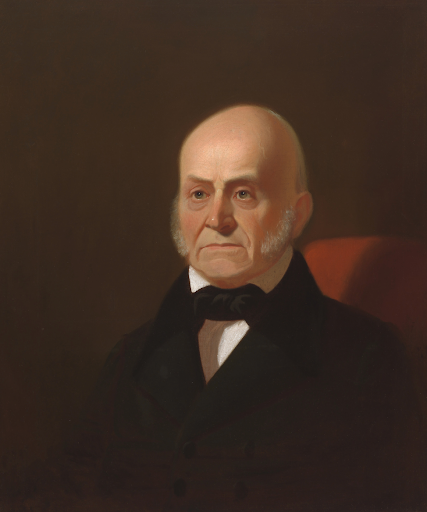

March 4, 1825–March 4, 1829
Born: July 11, 1767, in Braintree, MA
Died: February 23, 1848, in Washington, DC
Democratic-Republican Party
John Quincy Adams’ post-presidency notes in his diary about his garden linger more affectionately over a single peach tree than any of the foods he ate when he was president.
John Quincy Adams grew up eating the plain, unshowy fare of Puritan New England—the kind of cooking his parents John and Abigail might have considered more a moral exercise than a pleasure. Then he spent decades abroad, first as a diplomat’s son and later as a foreign minister, dining at the finest tables Europe had to offer. You’d expect that exposure to have left a mark, but maybe it didn’t. Adams came home from all that continental splendor and barely mentioned food in his writings. One read is that he simply never cared, reverting to the simple tastes of his upbringing. Another is that food simply wasn’t important enough to Adams to record. Another is that, after decades of diplomatic travel, fine wine and haute cuisine had become too ordinary to merit comment. We can’t know.
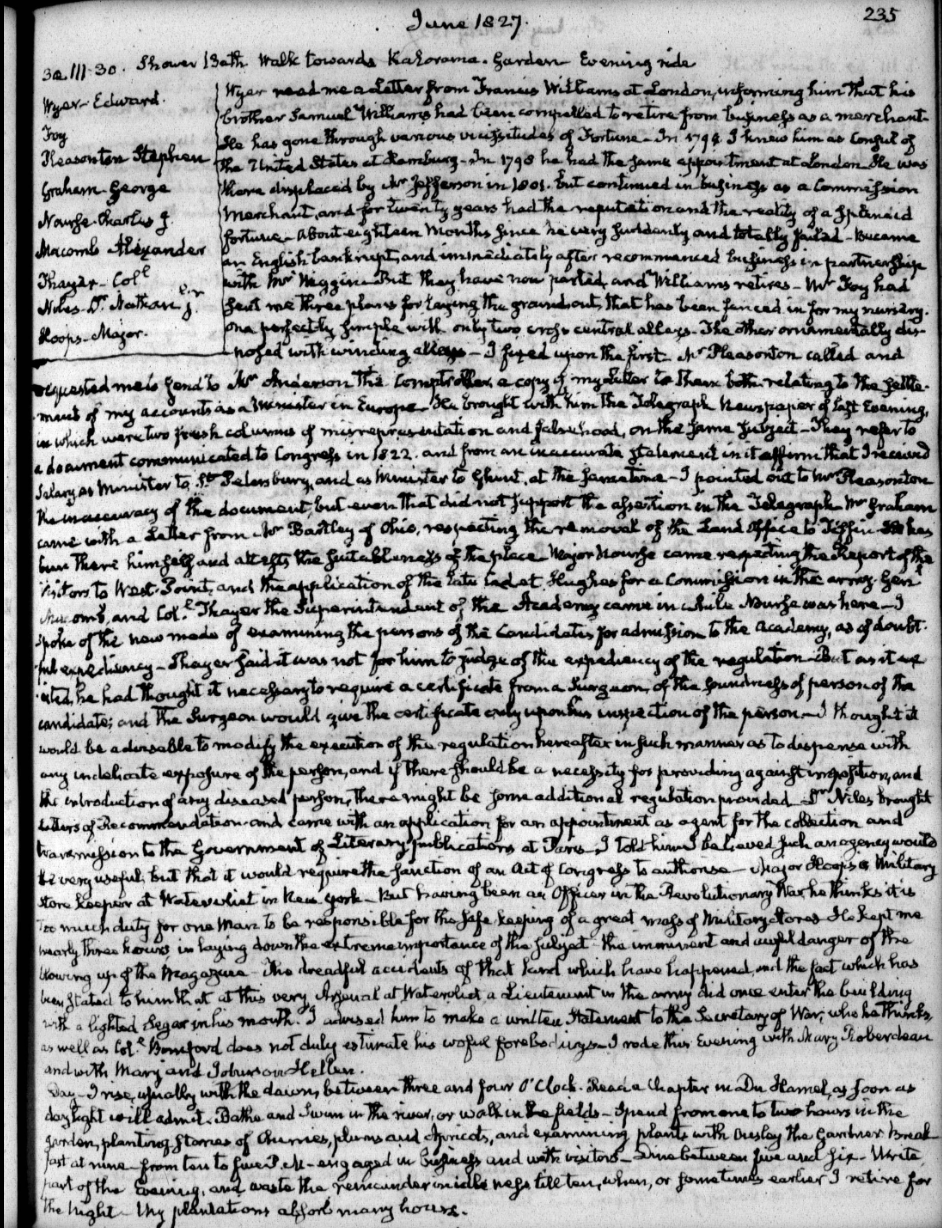
That silence is almost comic considering how thorough Adams was about everything else. He kept one of the most detailed diaries in presidential history, recording dinners, guests, and hours with real precision, decade after decade. And in all those pages, he almost never mentioned what was actually served. Whether that was indifference or just jadedness, the food didn’t make the cut.
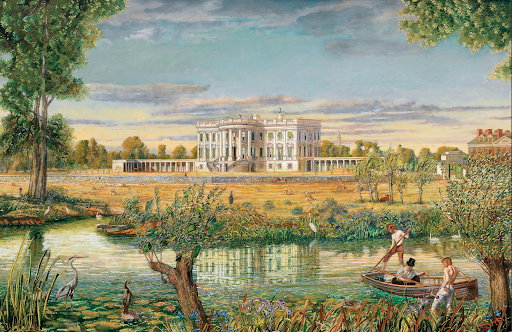
Entertaining, too, seemed to happen around him rather than because of him. Adams had a reputation for formal, reserved conversation, which may help explain why his entertaining style differed from the more sociable approach associated with his parents. Still, under his wife Louisa’s direction, White House functions grew more elaborate than his parents’ had ever been, described at the time as “ceremonious and exclusive.” Louisa initially kept her receptions open to anyone who wished to attend, until the wine and liquor bill got so alarming that the president switched to invitation-only. Grandeur and inclusiveness, apparently, had a budget.
As president, Adams’ relationship with food policy was a good deal more consequential than his relationship with food itself. In 1828, he signed the Tariff of 1828 (dubbed by Southern critics the “Tariff of Abominations”), a sweeping set of import duties designed to protect Northern manufacturing and Western agriculture—raising the cost of imported goods like molasses, hemp, and iron in the process. The bill was part of Adams’ broader vision for a self-sufficient national economy, one where northern factories, southern cotton, and western foodstuffs all traded neatly with one another. It was a tidy theory that pleased almost no one in practice: Southern planters condemned it for raising the cost of imported goods and threatening the cotton export trade through possible British retaliation, while New England merchants and shippers worried it would choke off the international commerce on which their livelihoods depended. The backlash helped cost Adams his reelection. He never did figure out how to make people happy at the table, literal or legislative.
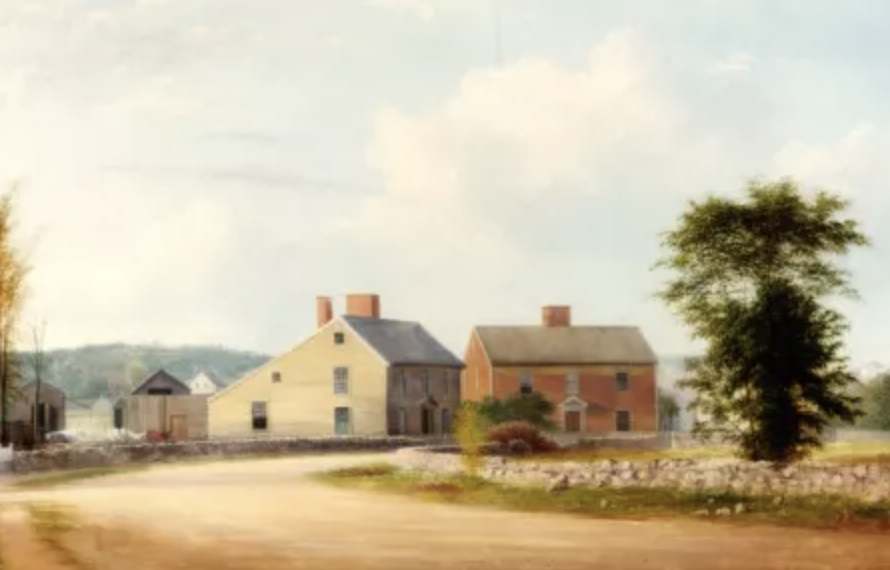
While Adams may have been indifferent to what was on his plate, he was attentive to what was in his garden.” He planted a two-acre kitchen garden at the White House, tended by John Ousley, full of trees, herbs, and vegetables—old stand-bys like turnips and cucumbers alongside newer arrivals like strawberries and black currants, which became regular fixtures at his table. But it’s after leaving office that Adams’ garden writing turns almost tender. In 1830, describing the walnuts, oaks, chestnuts, elms, and fruit trees he’d planted at Quincy, he wrote that he had raised his peaches, apples, plums, and apricots “from the stone and seed” himself. Of that same land, he wrote that it was “now pregnant with at least ten thousand seeds of fruit and forest, mostly planted by my hand,” and that in a century’s time it might “bear timber for the floating Castles of my Country, and fruit for the subsistence health and comfort of my descendants.” It’s an incredibly poetic musing—and it’s about trees, not dinner.
By the time he returned to Washington as a congressman (less than two years after he left the White House), Adams’ relationship with food had shrunk to something almost monastic. He’d skip lunch to keep working, nibbling bread from his pocket between votes. In 1837, he summed up his philosophy in one diary line: a few crackers and a glass of water made “a sumptuous dinner.” For a man who’d once dined at the courts of Europe, it was a remarkably modest place to land.
A humble, deeply New England dessert of stewed apples under a broken biscuit crust—plain and practical. This recipe comes from Abigail Adams, John Quincy’s mother, and is exactly the kind of thing that shaped a young Adams’ palate long before Berlin, St. Petersburg, or London ever had the chance. Fittingly, it’s built entirely around apples, the very fruit Adams spent his later years coaxing from seed in his own orchards.
We use cookies to improve your experience on our site. By using our site, you consent to cookies.
Manage your cookie preferences below:
Essential cookies enable basic functions and are necessary for the proper function of the website.
Google reCAPTCHA helps protect websites from spam and abuse by verifying user interactions through challenges.
Statistics cookies collect information anonymously. This information helps us understand how visitors use our website.
Google Analytics is a powerful tool that tracks and analyzes website traffic for informed marketing decisions.
Service URL: policies.google.com (opens in a new window)
Marketing cookies are used to follow visitors to websites. The intention is to show ads that are relevant and engaging to the individual user.
A video-sharing platform for users to upload, view, and share videos across various genres and topics.
Service URL: www.youtube.com (opens in a new window)
You can find more information in our Cookie Policy and Private: Privacy Policy.
Please join our email list to occasionally hear our views on timely issues and learn about The National Food Museum’s progress. We promise we won’t clutter your inbox!