
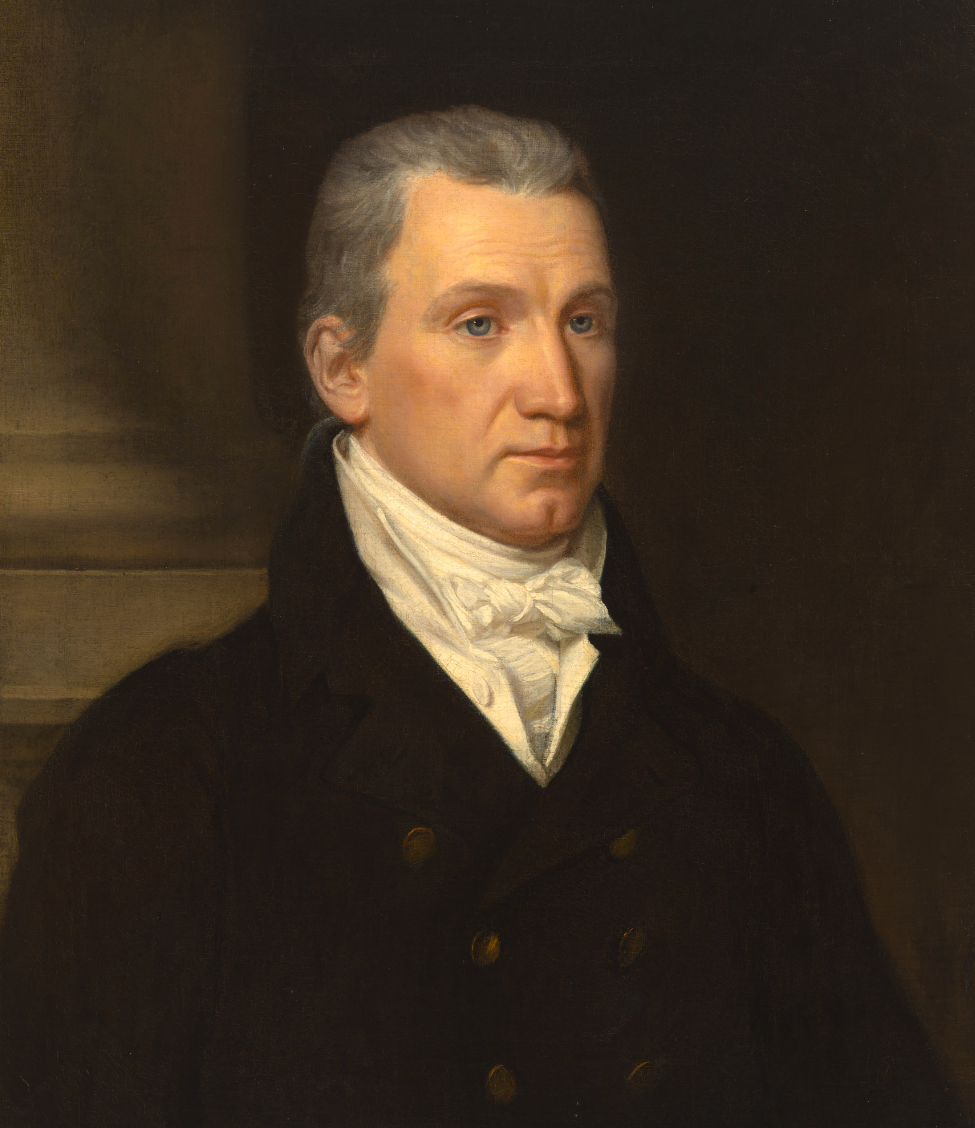
Time in office
March 4, 1817–March 4, 1825
Vital Statistics
Born: April 28, 1758, in Westmoreland County, VA
Died: July 4, 1831, in New York City
Vital Statistics
Born: April 28, 1758, in Westmoreland County, VA
Died: July 4, 1831, in New York City
Political Affiliation
Democratic-Republican Party
First Bite
After the British burned the White House in 1814, James Monroe rebuilt its dining room almost entirely from France, including a gilded bronze centerpiece so large it measures over 13 feet when fully extended, still used at state dinners today, more than two centuries later.
THE MAIN COURSE
James Monroe arrived in Washington in 1817
As one of the most credentialed men ever to hold the office—soldier; governor; senator; minister to France, Britain, and Spain—he was the last president who could genuinely call himself a Founding Father. He also arrived to a White House that had been gutted by the British three years earlier, which meant furnishing the entire mansion from scratch fell to him and Elizabeth. They went French, and they went big: gilded chairs, silk drapery, and a thirteen-foot bronze centerpiece known as the Monroe Plateau, still sitting on the White House table two centuries later. It was an odd statement for a republic barely forty years out from firing a king, but Monroe had spent enough time in actual European courts to know exactly what elegance looked like.
The dinners matched the table setting: French both in style and in taste. Monroe’s French chef ran a kitchen built around haute cuisine—elaborate, multi-course meals presented in lavish display. Monroe shut down the open-door entertaining Dolley Madison had made famous in favor of strict, invitation-only affairs run largely by his daughter Eliza Hay, since Elizabeth’s health kept her off much of the social calendar. The family announced early on, in proper European style, that they would neither pay nor return social calls, which scandalized a Washington that still expected its First Family to at least pretend to be democrats. It’s the great irony tucked inside the term “Era of Good Feelings”: the food was exquisite, the service was flawless, and nobody who sat down to eat would have called the atmosphere warm.

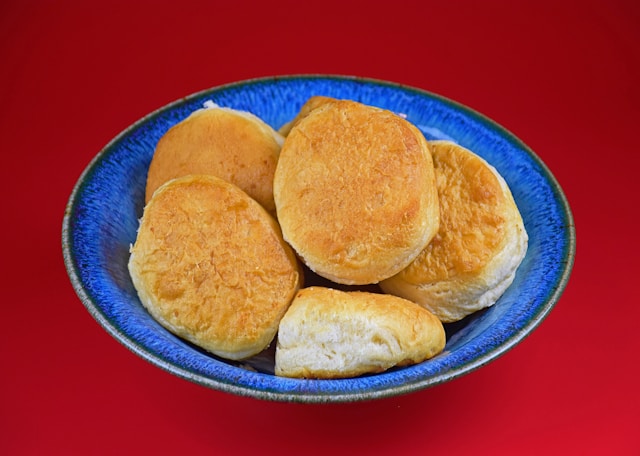
Peel back the French service, though, and Monroe’s own appetite never really left Virginia. Left to his own habits, he favored spoon bread (a hybrid between cornbread and soufflé), hot biscuits, and chicken fried in butter, baked with rice, eggs, and a dash of nutmeg. It was home cooking dressed up just enough to survive a state dinner, embodying the same duality that ran through the man himself: a Founding Father fluent in the courts of Europe who still wanted his cornbread soft enough to eat with a spoon.
Monroe’s food policy ran almost entirely through tariffs, and the fight over them was its own small joke: everyone in Congress claimed to be protecting American agriculture; they just meant different agricultures. Northern farmers wanted high tariffs to shield their grain from foreign competition; Southern planters wanted them low, since cotton depended on selling freely into the British market, and high tariffs threatened that by inviting British retaliation and shrinking the transatlantic trade cotton relied on.
Because the Panic of 1819, the first widespread economic depression in the country’s history, occurred at a time when presidents were generally understood to have little constitutional authority to intervene in economic crises, Monroe largely waited it out. He later signed the protectionist Tariff of 1824, raising duties on iron, wool, cotton textiles, and hemp to shield Northern manufacturers and farmers from cheaper British competition, over the objections of Southern cotton growers who feared retaliation.
The tariff fit into a larger economic vision known as the “American System,” championed by Henry Clay rather than Monroe himself, though his administration helped put it into practice. The idea divided the economy into three interlocking parts: an industrial North producing manufactured goods, and farmers in the South and West producing raw agricultural products, each buying from the other to reduce dependence on foreign trade. Monroe also backed federal investment in roads and canals to move goods more efficiently across a rapidly expanding country, and personally invested in canal company stock.
Monroe left office having drafted the doctrine that would define American foreign policy for nearly two centuries, then retired to Oak Hill, his Loudoun County, Virginia, farm. After Elizabeth died in 1830, he left for New York City to live out his final year with his daughter, presumably still partial to a good spoon bread over anything a Manhattan kitchen could plate. He died there on July 4th—the third president to do so.
Try it at home
Spoonbread
A Virginia staple by way of Monroe’s plantation kitchen, spoonbread is a cornmeal dish dating back to early Indigenous cooking, closer to a savory soufflé than to actual bread—soft enough to genuinely require a spoon. It’s a fitting stand-in for Monroe himself: Virginia roots dressed up with a little European polish.