

Time in office
January 20, 1977–January 20, 1981
Vital Statistics
Born: October 1, 1924, in Plains, Georgia
Died: December 29, 2024, in Plains, Georgia
Political Affiliation
Democratic Party
First Bite
Peanuts helped Jimmy Carter win the presidency more than they ever fed him. The 1976 campaign ran on his identity as a peanut farmer, down to bags of peanuts stamped with his name handed out to voters on the trail. But by most accounts, the Carters ate peanuts about as often as any other family, which is to say occasionally, not religiously.
THE MAIN COURSE
Jimmy Carter grew up on his family’s peanut farm outside Plains, Georgia, where the Carters raised peanuts, cotton, corn, and sugar cane alongside cows, chickens, and pigs.
He started selling boiled peanuts on the street in Plains by age five, pulling in about a dollar a day, far more than what most farm kids his age were making. He went on to receive a bachelor’s degree in engineering from the U.S. Naval Academy and subsequently joined the Navy’s nuclear submarine program.
Carter’s father’s death in 1953 ended that career and sent him home to save the family farm. He eventually parlayed a reputation for stubborn honesty into the Georgia Senate and then, in 1970, the governor’s office. His inaugural address that year declared segregation over: “I say to you quite frankly that the time for racial discrimination is over.” That line surprised even some of the voters who had elected him. By 1976, that same outsider’s credibility catapulted the previously little-known Georgian untouched by the Watergate scandal over incumbent Gerald Ford into the White House.
Though he was living in the White House, Carter’s food habits, shaped during the Great Depression, never really left the farm. Grits, ideally with cheese stirred in, were his favorite Southern classic. He liked the dish so much that he not only named the family’s mutt after it, but occasionally put it (grits, not Grits) on the menu at state dinners, alongside the usual often-French-inflected fare, part of a broader shift toward less formal, more American entertaining that marked his early presidency.
Vegetables were the real constant: butternut squash, zucchini, butter beans, vine-ripe tomatoes, fried corn—all served plain, raw or barely steamed since he had no use for sauces like hollandaise or béarnaise and said as much on the record. He told The Washington Post during the ’76 campaign that he liked corn on the cob, collard greens, turnips, grits, fried chicken—simple, “down-home” food. Eggplant, in particular, was reportedly his favorite, whether sliced thin and batter-fried or baked into a casserole. Dairy showed up everywhere it could: butter worked into crackers, buttermilk drunk straight, cheese added to the grits whenever possible.
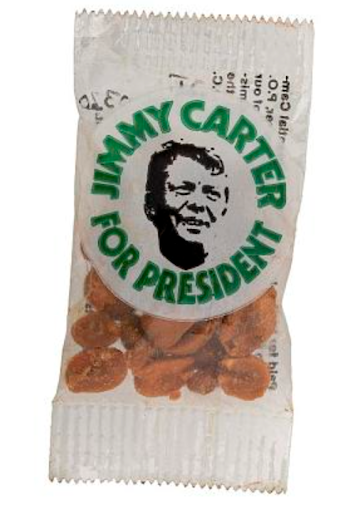
A favorite Sunday breakfast was country ham with redeye gravy, scrambled eggs, baked grits, cornbread, and fried apples. Weekday lunch in the White House was soup and a sandwich on whole-wheat bread, the same lunch he’d eaten keeping books at the peanut warehouse, and the same one his daughter, Amy, carried to her Washington public school in a lunchbox. Dessert showed up on Sundays, but only for company. When Jimmy and his wife Rosalynn wanted to impress someone, they served their own “Plains Special” cheese ring: sharp cheddar, chopped pecans, mayonnaise, and grated onion, molded into a ring with strawberry preserves spooned into the center.
Despite the plain Georgia palate, Carter turned out to be a hyper-active host, throwing more state dinners in a single term than any president before or since, sixteen in 1977 alone on his way to thirty-nine over four years. The high point came on March 26, 1979, when he hosted a South Lawn dinner honoring Anwar Sadat and Menachem Begin after the signing of the Egypt-Israel peace treaty: 1,340 guests, the largest state dinner recorded in White House history. The dinner included seafood mousse, strip sirloin with spring vegetables, and a hazelnut-chocolate mousse for dessert, with 110 kosher meals brought in for Begin’s delegation. Opera star Leontyne Price performed after the toasts.
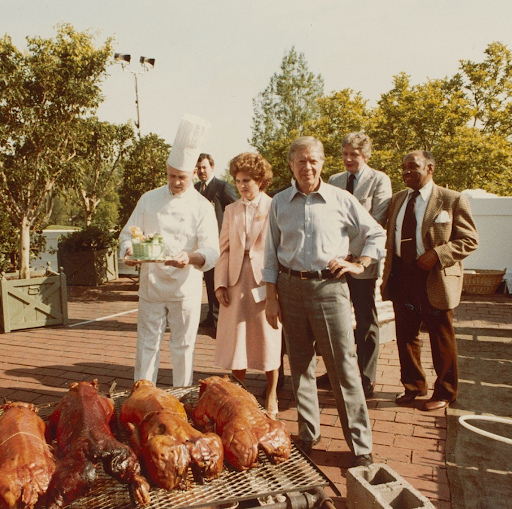
Carter could also read a room: When his social secretary discovered that Japan’s Prime Minister Masayoshi Ōhira was curious about American barbecue, the White House built an entire state dinner menu around it, serving him suckling pig, roast buffalo, and barbecued chicken. It’s hard to imagine another president reworking a state dinner around a guest’s curiosity about backyard cooking, but Carter, who once had Dizzy Gillespie talk him into singing the lyrics to “Salt Peanuts” onstage at his own White House jazz festival, never seemed to mind being the one who bent the formality of the room rather than the other way around.

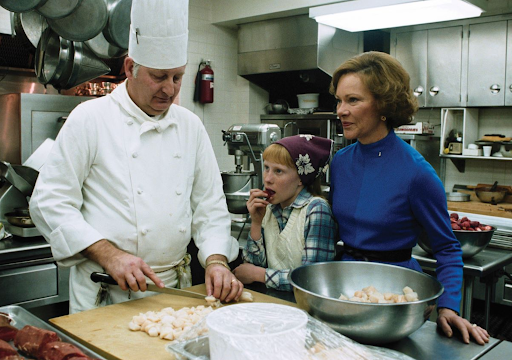
First lady Rosalynn set the household’s food standards, and the whole family leaned health-conscious well before it was fashionable: By Carter’s own account, she kept their diet in check the same way she’d been raised to, reading every ingredient label she could find and getting frustrated when products didn’t have one. That habit shaped her broader stance on food safety, too—if something might be dangerous, pull it first and test it after, rather than make people wait to find out. Carter took the same concern national, declaring February Heart Month and tying heart disease directly to diet, salt, and inadequate exercise. It was classic Carter: telling the country to eat its peas whether Americans wanted to hear it or not.
Just three months into office, Carter encountered his first food-related headache: in April 1977, the Center for Science in the Public Interest sponsored the third National Food Day, with events in hundreds of communities. The events, which focused on nutrition, hunger, and agribusiness, culminated in a vegetarian buffet dinner at the White House. Several White House staffers showed up. Carter didn’t, probably because of pressure from the meat industry. The cattle industry was furious and telegrammed Carter, “The last thing we need is the President of the United States advocating a vegetarian diet ….[That] could do great harm to the largest segment of American agriculture, the beef cattle industry.” (Never mind harm to the public.) The cattle lobby’s protest over an event that, ironically, wasn’t even advocating vegetarianism, just healthier eating, backfired and gave Food Day a big publicity boost.

In 1980, the Carter administration published the Dietary Guidelines for Americans, which modernized federal nutrition advice. Rather than focus on virtually nonexistent deficiency diseases like scurvy and beriberi, the landmark report emphasized for the first time the need to eat less refined sugars, saturated fat, cholesterol, and salt. Over-consumption of those nutrients, along with too little dietary fiber, were identified at the time as major causes of heart attacks, strokes, and possibly cancer. And when the egg industry pushed back hard on cholesterol warnings, Carter had the guts to tell his Agriculture Secretary to hold the position anyway. A law passed a decade later required the Guidelines to be updated every five years.
Agriculture was the one policy area where Carter actually outranked many of his own advisors on expertise, and it’s also where his presidency took its worst beating. The Food and Agriculture Act of 1977 captures the whole contradiction in a single bill:
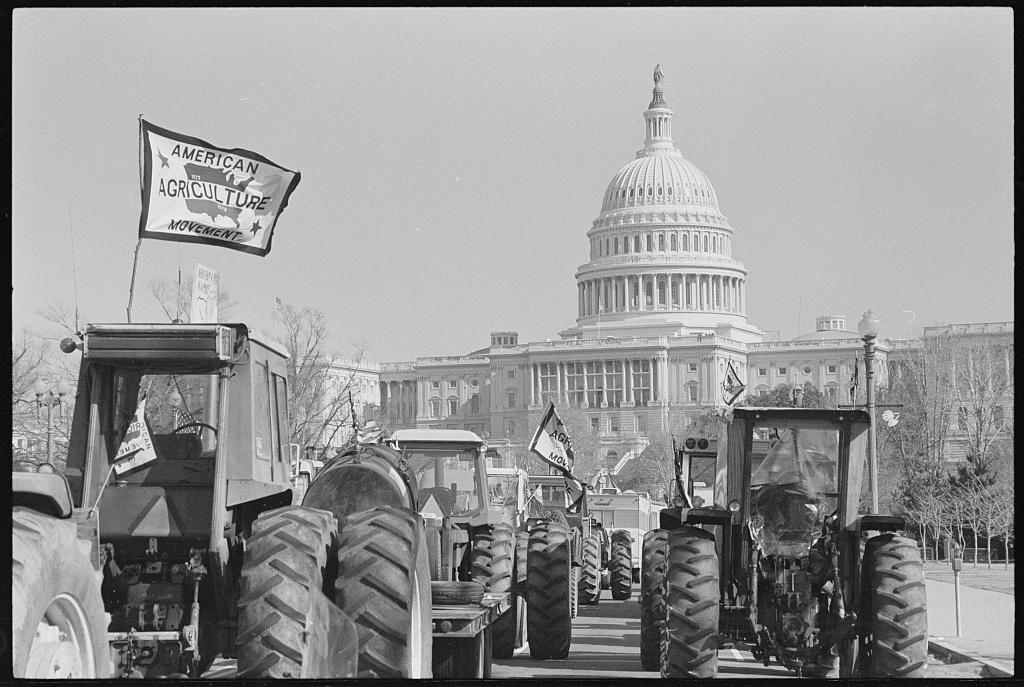
- It was the largest farm bill in forty years, tying crop prices to actual production costs and killing off old acreage allotments. But the target prices the bill set were quickly outpaced by inflation and a bumper 1977 harvest, leaving real farm income stagnant even as costs rose. That gap between promised support and lived reality helped spark the American Agriculture Movement, whose members drove tractors to Washington in 1979, snarling traffic and drivers’ nerves, to protest an administration they felt had turned its back on them.
- It simplified the entire food stamp system, cutting down on administrative fraud and ending the requirement that recipients pay cash upfront, which enabled more than a million additional Americans to join the program within a month.
- It boosted federal agricultural research funding and expanded Public Law 480, the program that lets the U.S. sell and donate surplus food abroad, and it set up food reserves kept under farmer control rather than government control, specifically to keep Washington from dumping surplus crops onto the market and crashing prices on the people who’d grown it.
Aside from the bill itself, Carter created the World Hunger Working Group in 1977, folding global hunger into national security planning for the first time. It was ambitious framing for a man losing the confidence of farmers back home. That erosion showed up elsewhere, too. A campaign promise of dairy price supports collided with inflation and overproduction, leaving the government buying up surplus milk (with taxpayers’ dollars) and storing it as cheese in warehouses. The 1980 grain embargo against the Soviet Union followed the same pattern: Meant to punish the invasion of Afghanistan by cutting off roughly 17 million metric tons of corn and wheat, it barely dented Soviet food supplies, since Moscow simply bought grain elsewhere. American farmers who had ramped up production expecting continued Soviet demand were left holding the oversupply as domestic prices collapsed.
Carter left Washington in 1981, voted out amid inflation, gas lines, and the Iran hostage crisis. But the throughline holds: a man who grew up on vegetables, grits, and buttermilk stayed that same man his whole life. He lived to 100, longer than any president in history, which is either a coincidence or the strongest argument yet for a simple, vegetable-heavy plate. For Carter, food was both personal and political: His Southern upbringing shaped his tastes, while food, agriculture, nutrition, and hunger became recurring issues during his presidency.
Try it at home
Cheesy Grits
This is the dish Carter loved enough to name a dog after: stone-ground grits, simmered slowly, finished with a generous handful of sharp cheddar and a knob of butter. Rich enough to serve at a state dinner and plain enough to eat every day of the week, because as far as Carter was concerned, it was both.