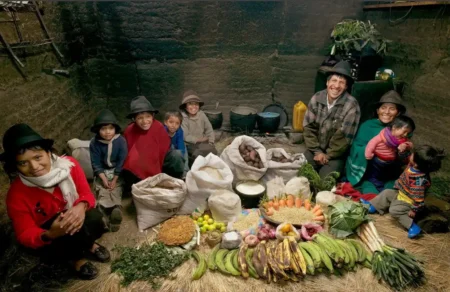

Photography project by George Steinmetz documenting food production around the world. Read statement from the artist below.
Feed the Planet
Since the domestication of plants began some 11,000 years ago, humans have converted 40% of the earth’s surface into farmland. With the global population expected to reach 9.7 billion by the year 2050, combined with the rising standard of living in rapidly developing nations, it is estimated that we will have to increase the global food supply by 60%. The Feed the Planet project is an examination of how the world can meet the rapidly expanding challenge of feeding humanity without putting more natural lands under the plow. Most of us only come into contact with raw food in the supermarket, and are unaware of the methods used to raise it. In many cases, the food industry goes to significant lengths to prevent us from seeing how our food is produced. Access to this information is central to the personal decisions we make about what we eat, which cumulatively have huge environmental impact. This project seeks to show how our food is produced, so that we can make more informed decisions.