
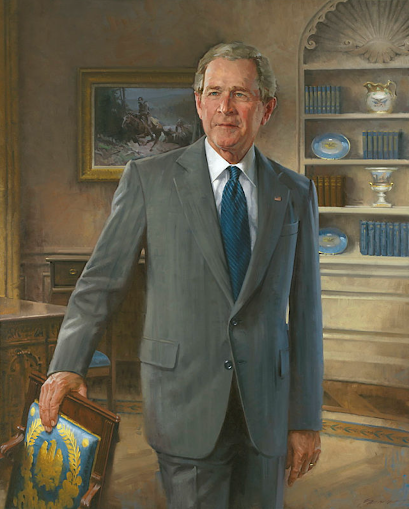
Time in office
January 20, 2001–January 20, 2009
Vital Statistics
Born: July 6, 1946 in New Haven, CT
Currently: Living in Dallas, TX, with a 1,600 acre ranch (over 2 square miles) in Crawford, TX
Political Affiliation
Republican Party
First Bite
Bush’s 2001 inaugural party served five thousand pounds of beef brisket and twenty thousand pounds of shrimp—a Texas-sized opening statement before he’d even unpacked.
THE MAIN COURSE
George W. Bush arrived in Washington in 2001 having spent the better part of a decade cultivating an image—Texan, plainspoken, allergic to pretense—and put his kitchen to work selling it.
After two terms of Clinton-era kitchens featuring healthy, farm-to-table cuisines, the Bush style was described (or derided) by some as “country club.” Conservative, traditional, generally recognizable dishes to Middle Americans, or at least Texans: steak, classic Texas barbecue, peanut butter and jelly sandwiches, and Tex-Mex foods like huevos rancheros (salsa-smothered eggs over tortillas). And, most famously, a cheeseburger.
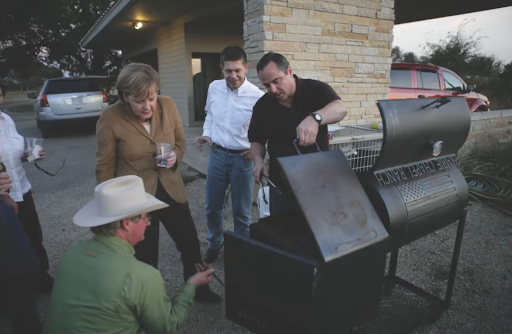
If the Clinton White House occasionally served you something requiring a menu explanation, the Bush White House served you something more familiar. Foreign leaders visiting Camp David or Bush’s 1,600-acre ranch in Crawford, Texas, were often treated to a simple burger off the grill, sometimes flipped by the president himself. The press took to calling those meals “cheeseburger diplomacy,” and the informal dining, indeed, might have fostered a better understanding of Americans, a feeling of conviviality, and sometimes even progress on policies.
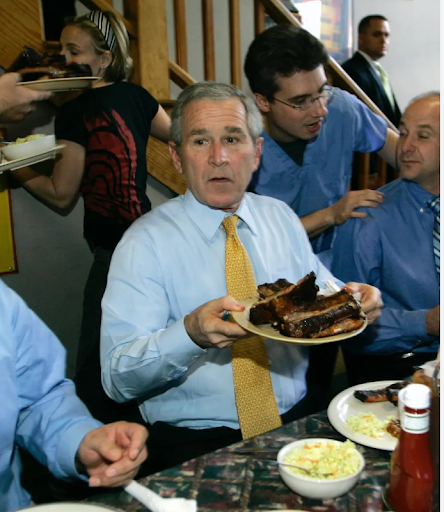
Bush ate quickly and had little patience for lingering at the table. Matthew Wendel, the family’s personal chef at Camp David and the Texas ranch, quipped that Bush “ate his meals so fast so he could get to dessert.” And there was no wine to slow things down. Bush gave up alcohol in 1986, the morning after a heavy-drinking weekend in Colorado Springs celebrating his 40th birthday with friends. The widely publicized story that his wife, Laura Bush, made him choose between Jim Beam and her isn’t true, she later said. He simply woke up knowing he wanted to quit, and he stopped cold turkey.
What Bush gave up in drink, he made up for in sugar. At the ranch, that often meant Blue Bell ice cream and Wendel’s own chocolate chip cookies. At the White House, pastry chefs Roland Mesnier and Bill Yosses agreed that Bush’s favorite dessert was a seven-layer chocolate cake from Houston. That he stayed visibly fit through it all owes something to his disciplined exercise routine. He was a dedicated runner and, when his knees gave out, a serious mountain biker.
Bush’s fit image took a bit of a hit in 2002 after he choked on a pretzel watching a football game alone in the White House. He passed out, fell off his couch, and woke up with minor cuts and bruises on his face. His comment on the incident the next day was classic Bush: “My mother always said, ‘When you’re eating pretzels, chew before you swallow. Listen to your mother.’”
Behind the scenes, the first lady set the standard for what went into those meals. According to White House chef Walter Scheib, she was “adamant” that organic ingredients be used whenever they were available, and the kitchen bought from local farms. The president’s tastes stayed simple, but the cheeseburgers and enchiladas he favored were made with some of the best ingredients in Washington. Little of this was publicized, partly for security reasons: a farm publicly known to supply the White House risked being dropped from the approved supplier list.
Probably the most terrifying event at the White House since the British burned it down in 1814 was on September 11, 2001. Though President Bush was reading to school children in Florida, the White House staff was in the building when the terrorists attacked the World Trade Center in New York and the Pentagon just across the Potomac River. Laura Bush, in her book Spoken from the Heart, described the panic: “White House staffers had fled barefoot and sobbing through the heavy iron gates with Secret Service agents shouting at them to ‘Run, run!'” Chef John Moeller, who worked in the White Houses of both Bushes and Clinton, relates in his Dining at the White House how he and many others, bewildered by the morning’s tragic events, slowly walked up Connecticut Avenue until he was able to squeeze into the Metro and get home.
By 2003, a sort of normalcy had returned to the country. President Bush stood at a Dallas YMCA and put a price on the obesity problem—an estimated $117 billion in national costs for the year 2000 alone—and framed exercise and “good food” as the fix. Personal responsibility was preferred over federal laws and regulations concerning such things as food labeling and advertising, food safety, and many other matters. The following year he signed a $16 billion reauthorization of child-nutrition programs, requiring school districts to adopt wellness policies on nutrition and physical activity. Subsequent legislation broadened the requirements to include community involvement in the policy process and specific nutrition and activity goals.
Bush’s bigger food legacy, though, came from the fuel side of the ledger. The energy bills he signed in 2005 and 2007 created and then expanded the Renewable Fuel Standard, mandating that billions of gallons of ethanol made from corn be blended into the nation’s gasoline. That mandate means that much of the corn crop ends up in a gas tank instead of on a dinner plate or in livestock feed. While corn farmers rejoiced, using corn as fuel creates competition in the marketplace, pushing food prices upward. Also, producing the fertilizer, drawing the water, spraying the pesticides, and clearing the land required to grow more corn for ethanol likely poses problems (greenhouse-gas emissions, groundwater depletion, and more) as great as pumping oil and producing gasoline.
Try it at home
The Sweet and Smoky Cheeseburger
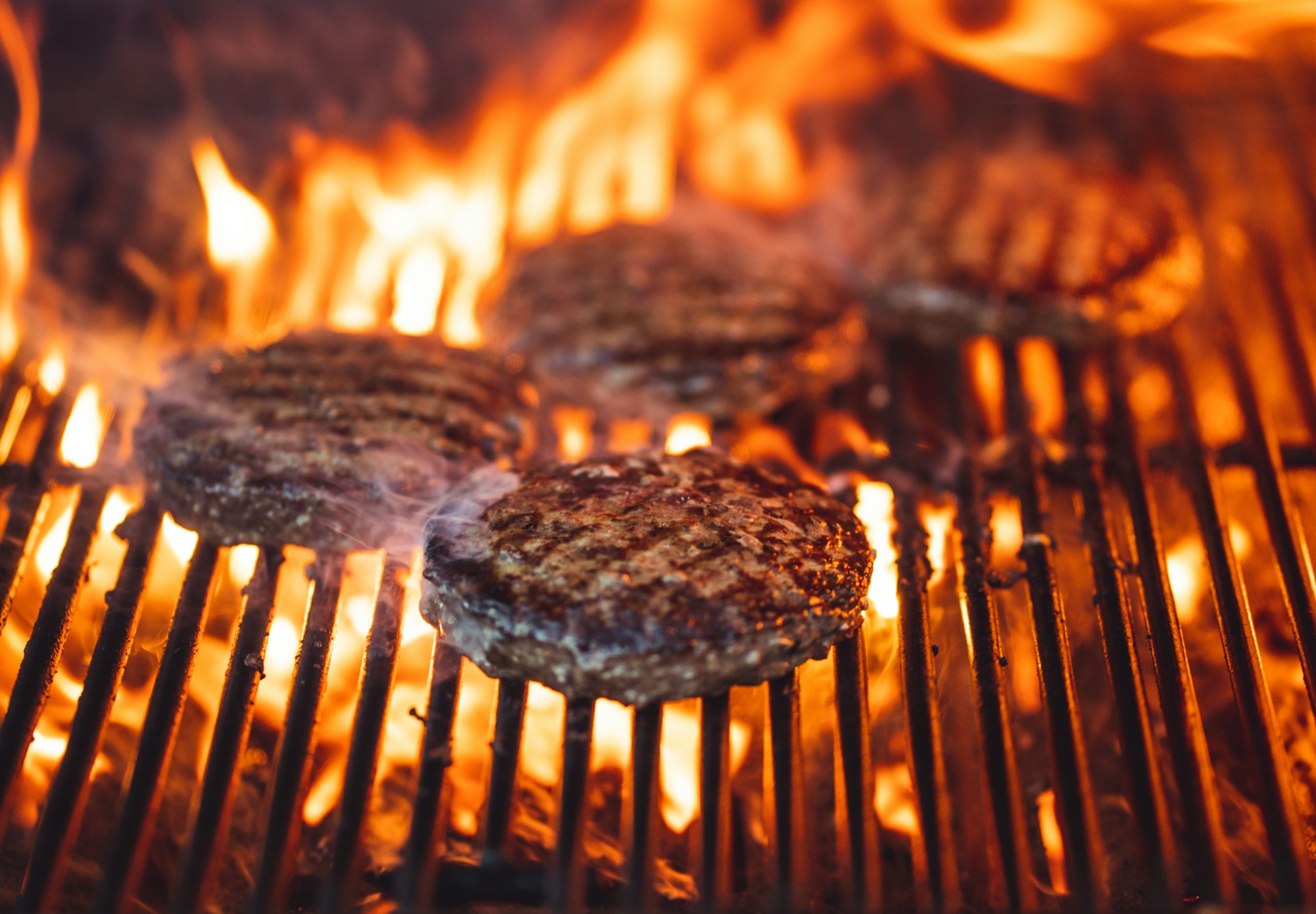
Chef Wendel’s signature dish—the same burger that launched “cheeseburger diplomacy.” The twist: barbecue sauce goes into the meat, not on the bun, for a smoky surprise in every bite. Top with extra sharp cheddar, per Laura Bush’s orders—sharp enough to cut through the sweetness. No frills, no fancying up for heads of state.