
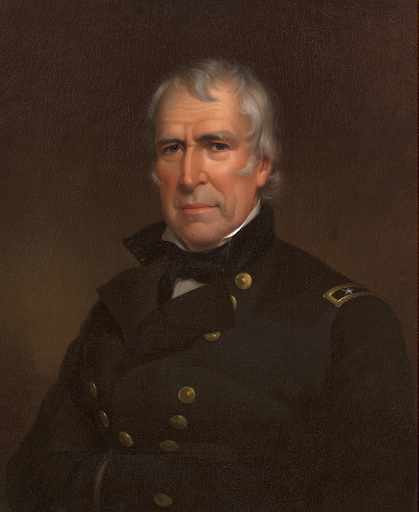
Time in office
March 5, 1849–July 9, 1850
Vital Statistics
Born: November 24, 1784, Gordonsville (Orange County), VA
Died: July 9, 1850, Washington, DC
Political Affiliation
Whig Party
First Bite
Zachary Taylor served just sixteen months as president before dying in office—the second to pull off this particular feat. The exact cause of death remains disputed, but it may have been due to contaminated food, or another bacterial infection like cholera or dysentery.
THE MAIN COURSE
Zachary Taylor spent most of his life in the military, bouncing between frontier posts long before he bounced into the White House.
His troops called him “Old Rough and Ready,” a nickname that suggested low standards and high tolerance—he’d eat plain food without complaint, so long as it was cooked well. But his years in Baton Rouge gave him something closer to a refined palate, and a genuine, lasting appreciation for Louisiana’s Creole cooking.
That food, of course, was inseparable from the people who made it. Taylor owned plantations in Mississippi and Louisiana, worked by scores of enslaved people, where cotton, corn, potatoes, wheat, peas, and tobacco were grown. He is believed to be the last president to bring enslaved individuals to live and work at the White House—among them a woman named Jane, described by his daughter as “an excellent cook.” The Creole flavors Taylor loved were, in large part, thanks to her.
At the White House, that Creole influence showed up on the table. Guests might find gumbo, étouffée, or jambalaya rubbing elbows with more conventional fare—dining was informal by Washington standards, but never short on flavor. Taylor had a particular soft spot for calas-tous-chauds, sweet deep-fried rice fritters, classic New Orleans street food , eaten for breakfast with a dusting of powdered sugar and coffee strong enough to stand up on its own.
On July 4, 1850, Taylor sat through hours of Independence Day festivities near the Washington Monument during a brutal heat wave—the kind of move that should come with its own warning label. He came home and reportedly tucked into a spread of fresh cherries, cold milk, and ice water. By that evening he was gravely ill. Five days later, he was dead.
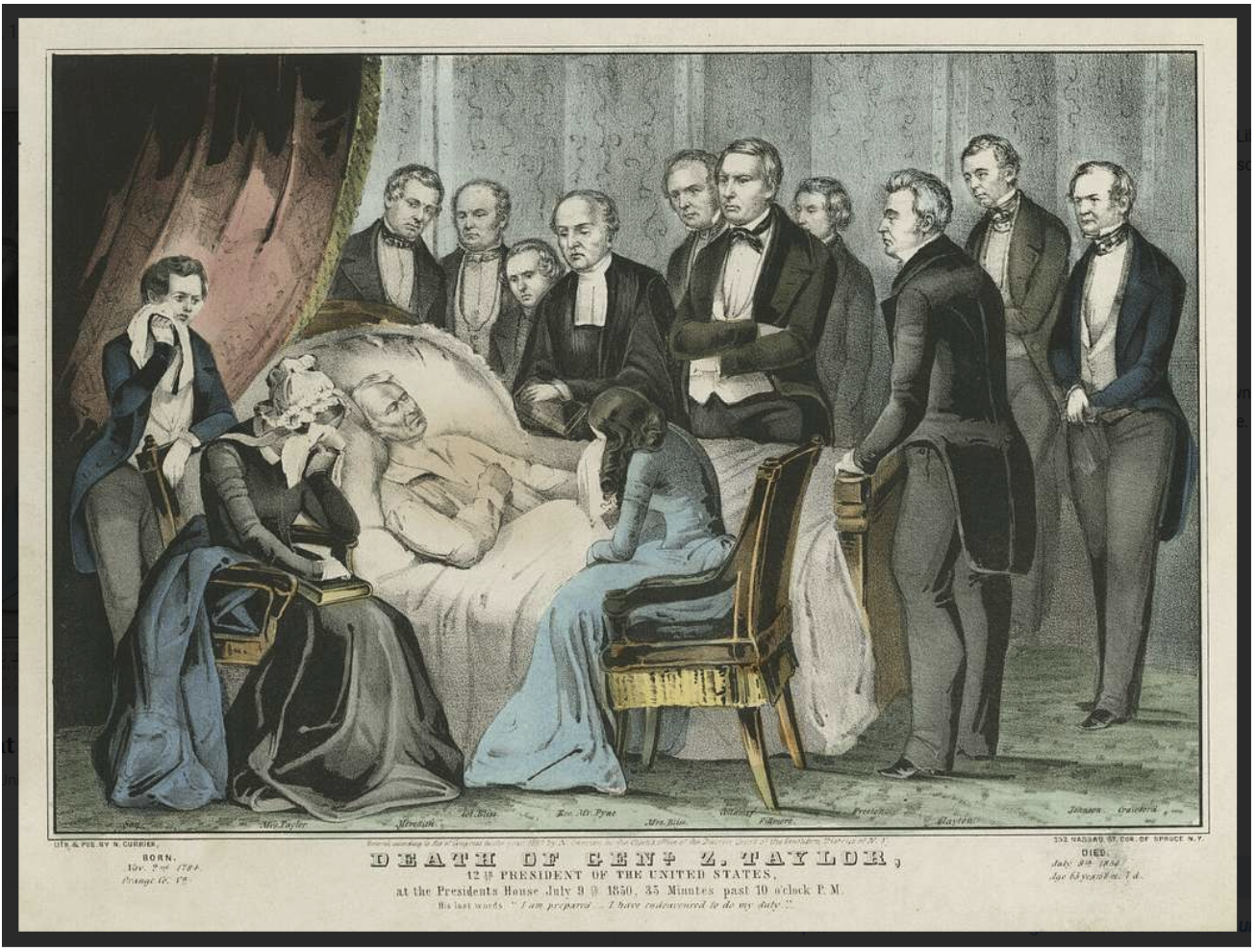
His physicians blamed “cholera morbus,” a catch-all 1850s term for severe gastrointestinal distress that’s medical-speak for “something in there really did not agree with him.” The actual cause has never been pinned down. In 1991, researchers exhumed his remains to check for arsenic poisoning—conspiracy theorists, your moment—but came up empty. The leading theory remains some unglamorous strain of foodborne or waterborne illness, courtesy of the cherries, the milk, the ice water, or some unholy combination of the three. The milk on that hot day in July certainly could have served as a friendly home for pathogens.
Taylor’s death is less a medical mystery than a snapshot of how precarious food safety was at the time. Washington in 1850 had no sewer system, no germ theory, no pasteurization, and refrigeration that barely deserved the name. Milk was drunk raw without a second thought, produce changed hands with no concept of hygiene, and summer reliably delivered cholera and dysentery to cities where waste and drinking water lived a little too close together. Taylor’s illness wasn’t unusual for the era—thousands of ordinary Americans died the same way every year, and some still do. What made his case notable wasn’t the illness itself, but the reminder that even the most powerful man in the country ate at the same table, and faced the same risks, as everyone else.
Try it at home
Calas-Tous-Chauds
These sweet, deep-fried rice fritters were the toast of antebellum New Orleans street food and an unwavering favorite of President Taylor’s. Best enjoyed warm, dusted with powdered sugar, and chased with black coffee—Taylor brought the recipe all the way to Washington.