
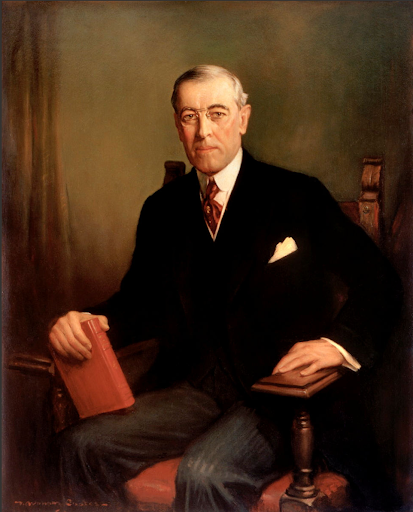
Time in office
March 4, 1913–March 4, 1921
Vital Statistics
Born: December 28, 1856, in Staunton, Virginia
Died: February 3, 1924, in Washington, D.C.
Political Affiliation
Democratic Party
First Bite
Woodrow Wilson’s doctor-prescribed breakfast was two raw eggs stirred into Concord grape juice, a concoction Wilson drank dutifully while admitting it tasted like “an unborn thing.”
THE MAIN COURSE
Woodrow Wilson’s most interesting connection to food has almost nothing to do with what he actually ate.
Raised in the post-Civil War South on Presbyterian restraint and country cooking, Wilson carried an academic’s love of order into the White House—and, unfortunately, a stomach that rarely cooperated with him.
Wilson suffered from chronic digestive trouble throughout his presidency, and the White House physician spent years quietly worried about his weight. Staff even carefully monitored which dishes the president actually finished and which he pushed aside untouched. His prescribed diet included chicken, salads, clear broths, and that infamous raw-egg-and-grape-juice breakfast that became a daily ritual he never learned to enjoy.
Historians have generally described Wilson as not being terribly interested in food. When a dish did spark real enthusiasm, it tended to be simple and Southern: Chicken salad was a frequent lunch request. In one uncharacteristically excited letter to friends in the Virginia countryside, he confessed a fondness for country ham, peach cobbler, hot biscuits, and homemade ice cream. It was actually strawberry ice cream, paired most evenings with a small glass of scotch, that served as Wilson’s nightly indulgence.
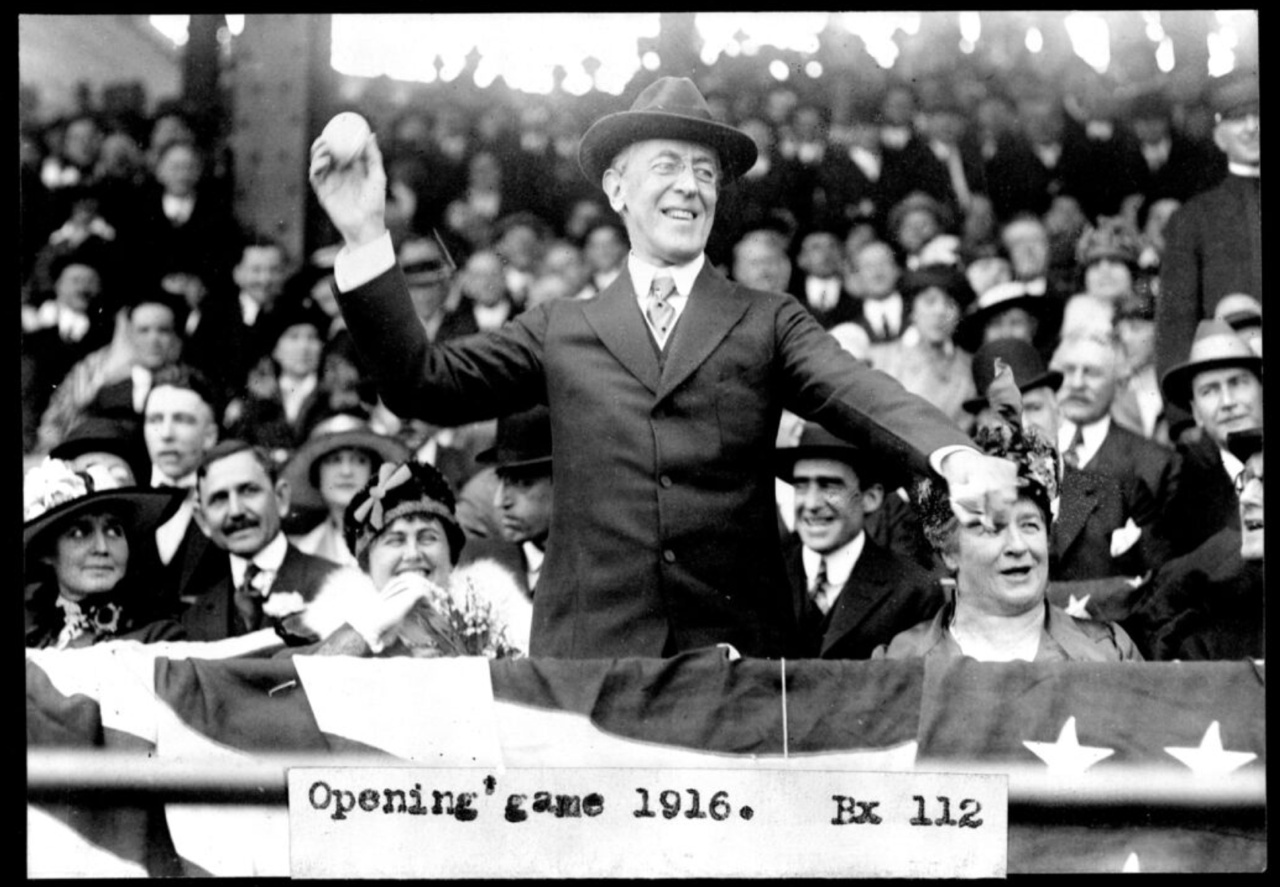
Entertaining under Wilson ebbed and flowed in restraint as his presidency wore on, and the reasons were rarely happy ones. Before the United States entered the Great War, his first wife Ellen preferred simple receptions over lavish parties, and President Wilson himself considered an inaugural ball too frivolous for the seriousness of the office, so he skipped it from the start. Then, in 1914, Ellen fell ill and died—a loss that darkened the mood of the administration and further dimmed any appetite for grand entertaining, even after Wilson remarried a year later.
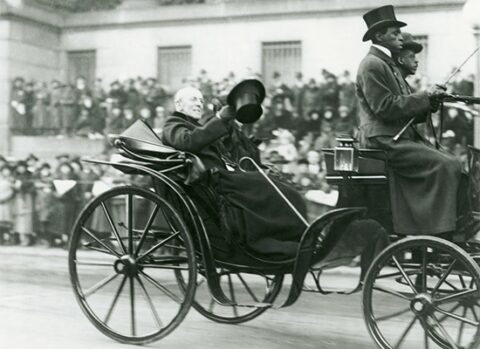
By 1917, the country had entered the War and any remaining pretense of indulgence was largely set aside: Tours and receptions stopped, packages were inspected before entering the house, and the Wilsons observed the same wheatless and meatless days they were asking the rest of the country to follow—even trading their car for a horse-drawn carriage on occasion to conserve fuel. Then came the 1918 influenza pandemic, which killed millions around the world, including over half a million in the United States. Wilson’s health added one final layer of restraint: he suffered a debilitating stroke on October 2, 1919, a year and a half before his second term ended, and never fully recovered, leaving him increasingly withdrawn. Grief, war, pandemic, and illness, stacked one on top of the other, meant that whatever appetite the Wilson White House may have had for celebration had mostly disappeared.
But Wilson’s true food legacy wasn’t served at his own table—it was the one he asked the entire country to share in. Shortly after the United States entered World War I in 1917, Wilson created the U.S. Food Administration and put Herbert Hoover, then a wealthy mining engineer and later a beleaguered president, in charge of it. Its purpose was to ensure an adequate food supply for the U.S. military and the Allied nations, while preventing domestic shortages and profiteering. Hoover launched campaigns like for “Meatless Tuesday” and “Wheatless Wednesday”—which inspired today’s Meatless Monday—asking Americans voluntarily to cut back on meat, wheat, and sugar without the need for formal rationing. After the war, Hoover earned widespread praise for organizing major relief efforts that fed millions across war-torn Europe.
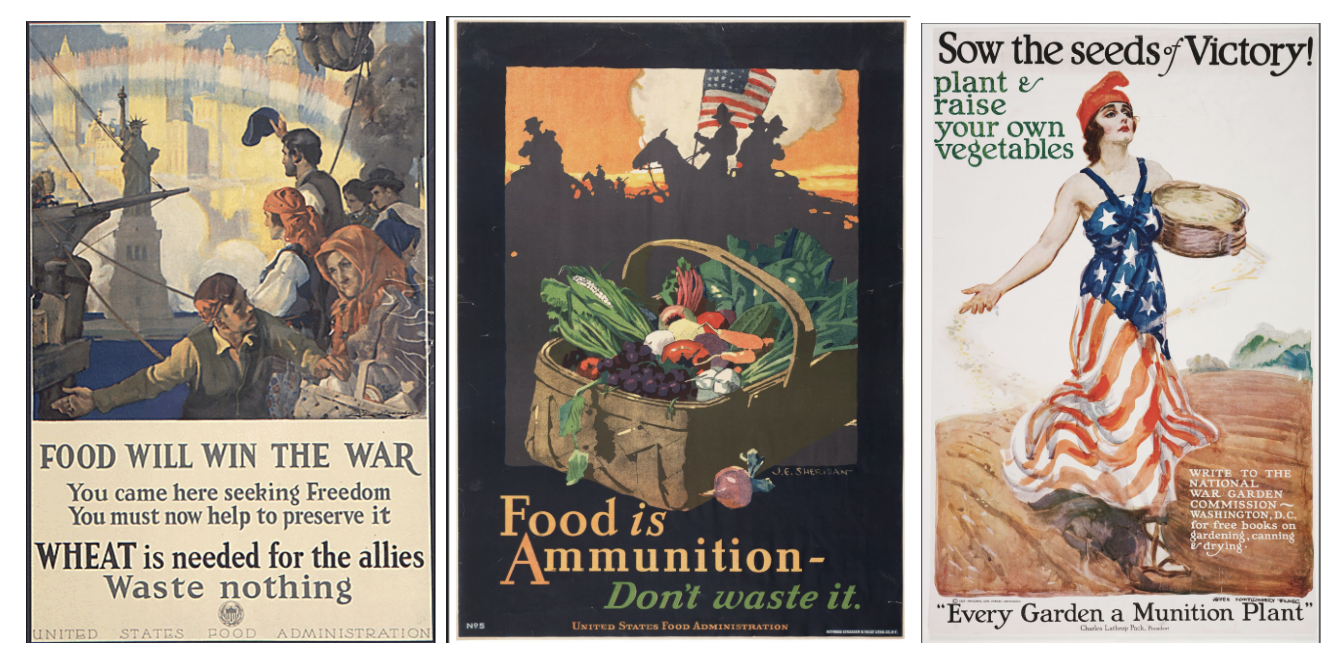
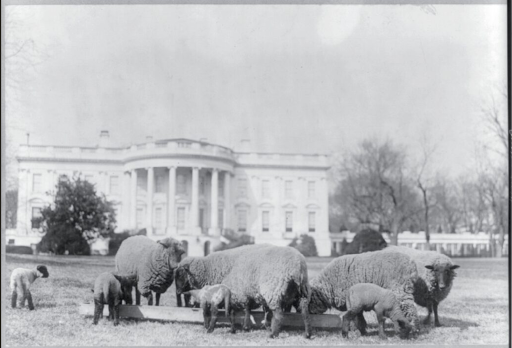
Patriotism reached all the way down to the dinner table: Sauerkraut and frankfurters were rebranded “Liberty Cabbage” and “Liberty Sausage” to remove their German connection. The Food Administration’s slogan, “Food Will Win the War,” turned home canning and other food preservation measures into acts of national service. Even the White House lawn got drafted into the effort—a flock of sheep grazed the grounds to reduce the need for groundskeeping labor, with their wool sold off to benefit the Red Cross.
Food policy reached well beyond wartime symbolism. Wilson’s 1914 Smith-Lever Act created the Cooperative Extension System, linking land-grant universities with the U.S. Department of Agriculture to help farmers modernize. During the war, Extension helped expand wheat plantings from forty-seven million to seventy-four million acres and organized programs like the Women’s Land Army to fill labor shortages left by soldiers overseas.
In 1917, Wilson directed the Federal Trade Commission to investigate the meatpacking industry. It found serious problems involving the major packers and helped build the case for stronger federal regulation. Congress responded with the Packers and Stockyards Act of 1921, enacted after Wilson had left office.
The law treated stockyards like public utilities subject to federal oversight. It barred the companies running stockyards from also owning the animals passing through, a safeguard against exactly the kind of price manipulation the FTC had uncovered. It remains, in a quieter way, one of the foundational laws still shaping how the meat industry should be regulated today (in 2026 the top five companies control about eighty-five percent of the market).
Wartime food control reached what Americans drank, too, though the push for Prohibition was much older. The temperance movement dates to the early 1800s, when clergymen, doctors, and women organized against the country’s heavy drinking. It grew through groups like the American Temperance Society (founded in 1826), the Women’s Christian Temperance Union (1874), and the Anti-Saloon League (1893), the organization most responsible for the Eighteenth Amendment. A number of states had already passed their own prohibition laws by the time the United States entered World War I, and the war added momentum. The Food and Fuel Control Act of August 1917 barred food materials from being used to make distilled spirits, and the Wartime Prohibition Act banned the sale of distilled spirits and intoxicating beer and wine for beverage purposes beginning June 30, 1919. Anti-German sentiment played a role too, since German Americans dominated the brewing industry. Congress sent the Eighteenth Amendment to the states in 1917, and it was ratified in 1919.
Wilson largely stayed out of the fight. He agreed with the moral case for controlling liquor but believed it was a matter for states and localities, even though his Navy secretary and first Secretary of State were both fiercely anti-alcohol. When Congress passed the Volstead Act in October 1919 to enforce the new amendment, he vetoed it, objecting to its inclusion of wartime prohibition, which he considered unnecessary now that the fighting was over. Congress overrode him, the act became law on October 28, 1919, and national Prohibition took effect in January 1920.
For a man who could barely stomach his own breakfast, Wilson left an outsized mark on how the rest of the country ate—proof that a president’s legacy at the table doesn’t always depend on what’s actually on his plate.
Try it at home
Strawberry Ice Cream
Wilson’s favorite dessert was delightfully uncomplicated. One scoop of strawberry ice cream is an easy—and far sweeter—way to revisit his presidency than a plate of Liberty Cabbage.
This recipe is adapted from Poppy Cannon’s The Presidents’ Cookbook.