
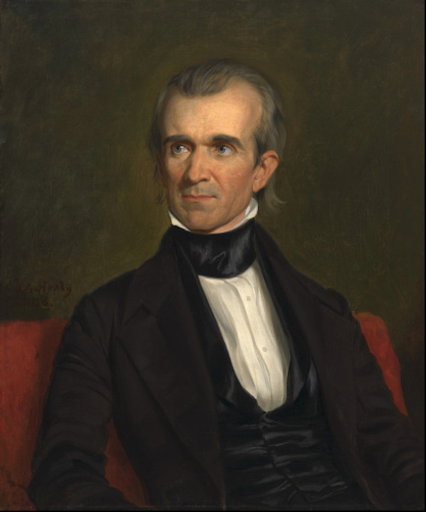
Time in office
March 4, 1845–March 4, 1849
Vital Statistics
Born: November 2, 1795, in Pineville, North Carolina
Died: June 15, 1849, in Nashville, Tennessee
Political Affiliation
Democratic Party
First Bite
Some blamed Polk’s grueling post-presidency Southern tour for his sudden decline. Plot twist: the real villain was cholera, picked up during a stop in New Orleans.
THE MAIN COURSE
James K. Polk was a lot of things—workaholic, expansionist, the rare politician who promised one term and actually stuck to it—but a foodie he most certainly was not.
Polk’s culinary Waterloo arrived in New Orleans, at a lavish French dinner thrown in his honor, right after his term in office ended. Course after mysterious course paraded past, each one saucier and harder to identify than the last. Reportedly, Polk accepted some coffee and nudged the food around his plate for appearances’ sake, but he had zero intention of eating it. The second he had a chance, he asked a servant for the only thing he actually wanted: corn pone and boiled ham.
That wasn’t pickiness. It was muscle memory. Polk grew up on a Tennessee plantation eating exactly what the land handed him—cornbread, turnip greens, pork, repeat, forever. Food historians have a polite term for this: the “unadorned frontier diet of the South.”
Inside the White House, fun was, shall we say, rationed. Polk’s wife Sarah banned hard liquor and dancing outright—devastating news for anyone hoping to cut loose at a 19th-century White House party. Wine was permitted at official dinners, and that was the absolute ceiling. Polk himself barely touched alcohol, insisting he had “no use for whiskey,” and reaching instead for wine, champagne, or brandy on the rare occasion he let his guard down.
That same no-frills energy ran his entire presidency. Polk showed up with four goals, checked them off like a man speed running his own to-do list, and worked himself half into the grave doing it—17-hour days, no “off” switch. By the time he left office, he looked like he had aged a decade in four years. Three months later, he was dead from cholera. The shortest-ever post-presidency.
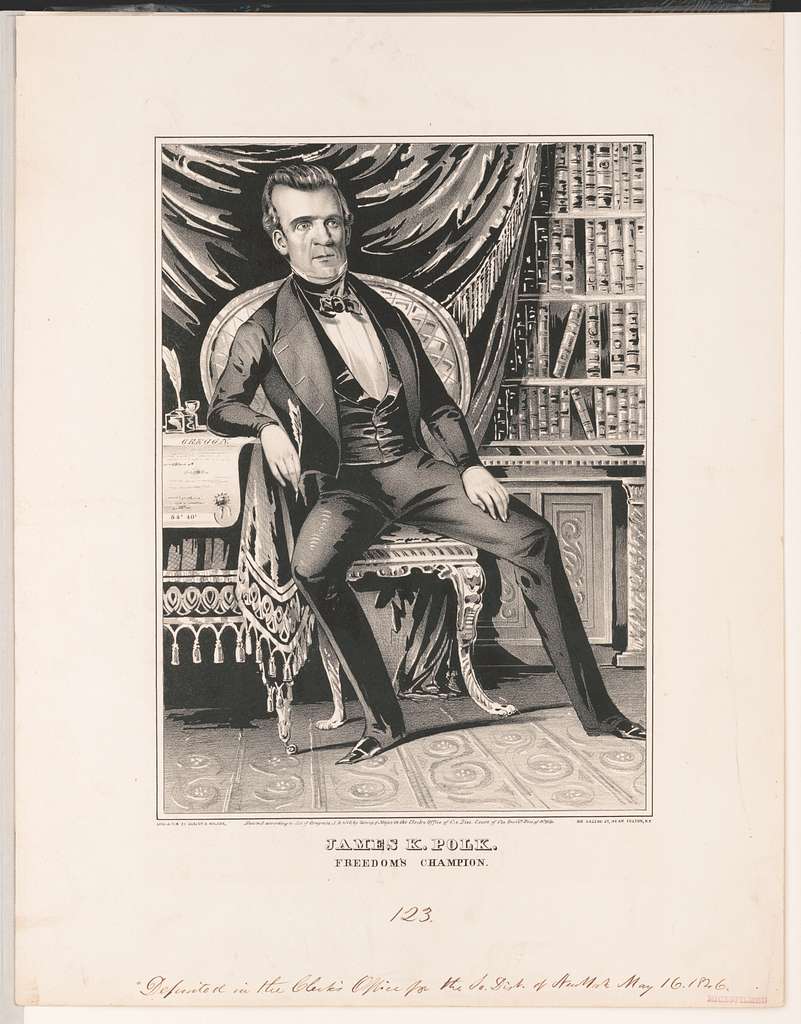
Here’s the twist, though: the same man who spurned French cuisine ended up making everyday groceries cheaper for the entire country. Polk’s Treasury Secretary, Robert J. Walker, believed tariffs should raise revenue, not shield industries from competition. So in 1846, he pushed through sweeping cuts to import duties, dropping the average rate from around 32 percent to 25 percent and replacing the old system’s tangle of specific fees with simpler, uniform percentage rates. The effect rippled well beyond the treasury ledger: Cheaper imports meant cheaper sugar, molasses, coffee, tea, and salt—basically the starter pack for any 1840s American kitchen. Trade with Britain surged and revenues jumped despite the lower rates, since more goods were arriving in American ports.
Try it at home
Corn Pone
Corn pone is cornbread with every frill surgically removed—just cornmeal, water, fat, salt. No sugar, no leavening, no nonsense, no apologies. Dense, hearty, and a fixture on Southern frontier tables for generations. In other words: Polk would have cleared his plate.