

Time in office
April 30, 1789–March 4, 1797
Vital Statistics
Born: February 22, 1732, in Popes Creek, Virginia
Died: December 14, 1799, at Mount Vernon
Political Affiliation
No political party; Washington warned that partisanship would separate and destroy the nation.
First Bite
By his inauguration, Washington had exactly one natural tooth left. The rest of his “wooden” teeth were a myth—the real dentures were a mix of ivory, metal, animal teeth, and human teeth, some likely from enslaved people.
THE MAIN COURSE
George Washington liked his food plain, hearty, and no-nonsense.
General George Washington led the Continental Army to a historic victory in the Revolutionary War. By the time the new nation moved to choose its first president, he was so universally respected that in 1789, he was elected unanimously by the Electoral College (the only president in American history to accomplish this feat). He served two terms and then stepped down voluntarily, a decision with no legal requirement behind it, establishing a precedent that held for a century and a half until Franklin Roosevelt broke it. Washington was also famously wary of the presidency looking anything like a monarchy, preferring the relatively modest title “Mr. President” over grander alternatives some in Congress had proposed, like “His Excellency” or “His Highness.”
Washington’s eating style definitely was non-regal. His go-to breakfast was hoecakes—a cornmeal pancake fried in lard and practically swimming in butter and honey—washed down with coffee or tea. At dinner, he was famously easygoing about most dishes and had a particular fondness for fish, especially shad or trout. Dessert was where he really let loose, working through what one guest called an “enormous quantity” of hazelnuts and walnuts, a habit John Adams said cost Washington several teeth.
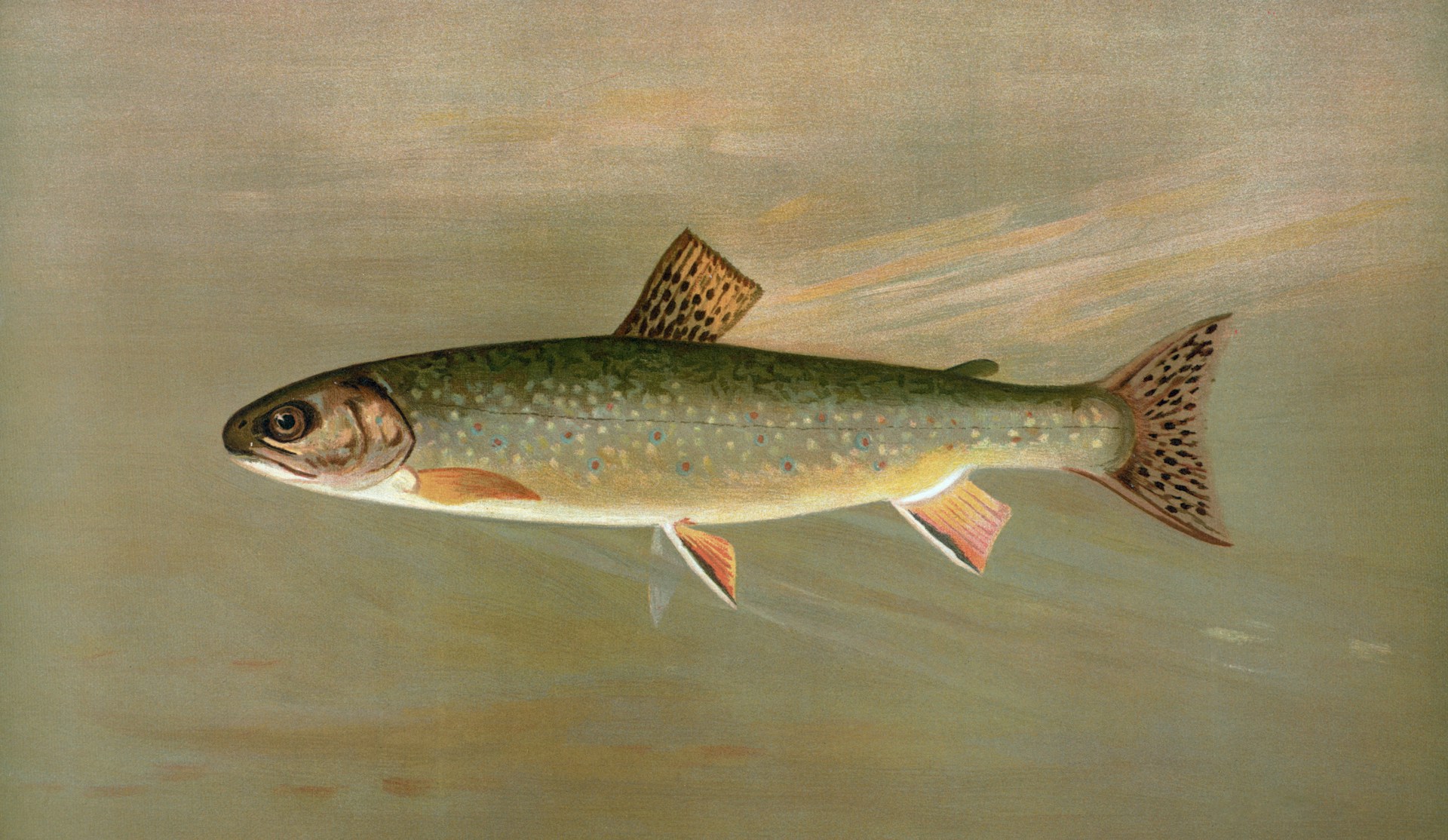
The American Brook Trout, one of the types of fish Washington would have been eating. (The New York Public Library Digital Collections)
That early damage caught up with him in office. By his first inauguration, Washington had one real tooth left, and his dentures—presumably an uncomfortable fit—pushed him toward soft, simple food for the rest of his life. They also slowly turned a dark brownish-black, stained by his other great loves at the dinner table: Madeira and port wines, three glasses after dinner most nights, right alongside a pint of beer and whatever mutton was on offer. Washington was characteristically blunt about the whole arrangement, describing his own home as “a well-resorted tavern” and writing in a letter to George William Fairfax: “My manner of living is plain… A glass of wine and a bit of mutton are always ready… Those, who expect more, will be disappointed…” Aside from mutton, Martha Washington took real pride in her ham, reportedly serving one at the table every single day.
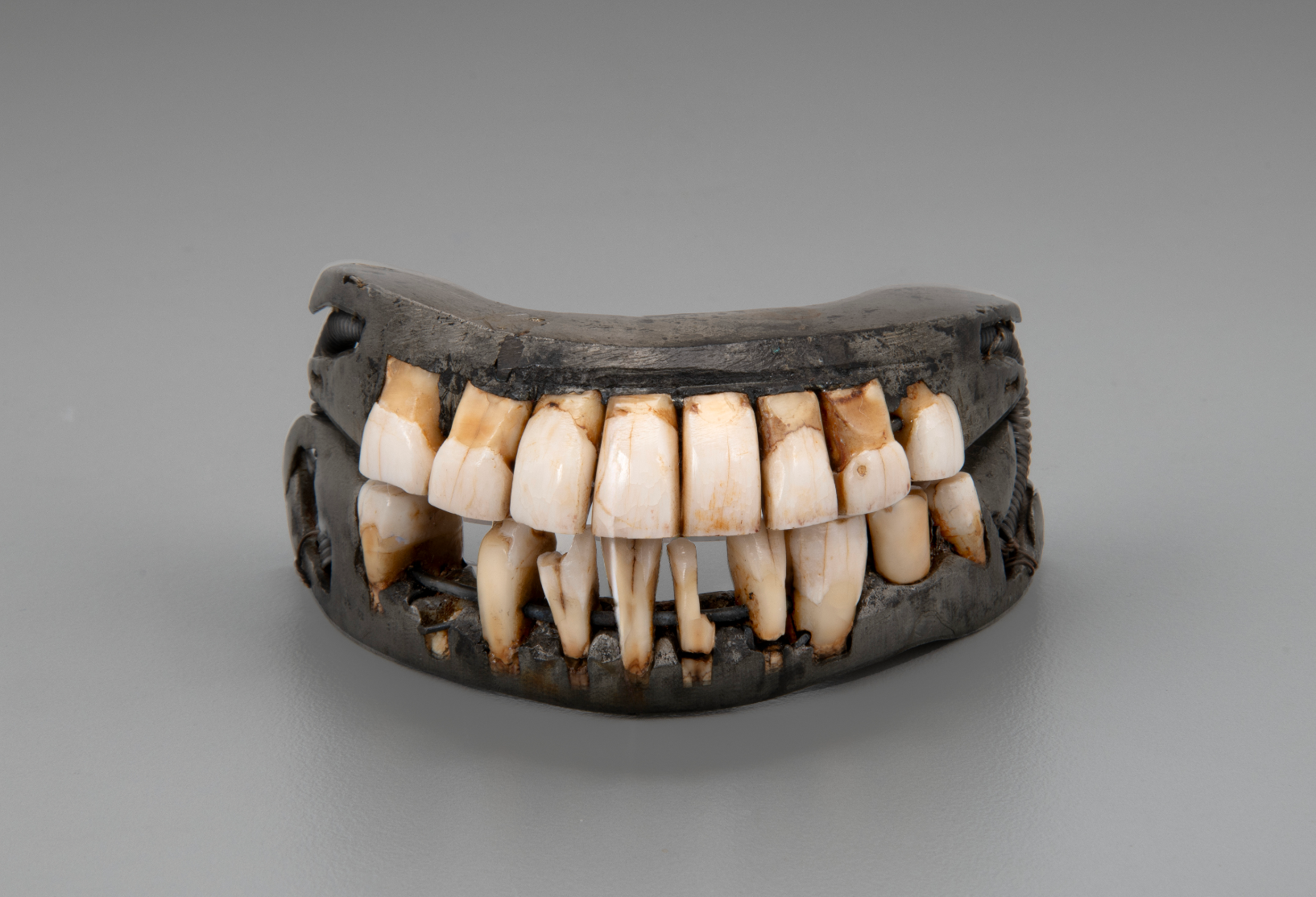
“My manner of living is plain... A glass of wine and a bit of mutton are always welcome. Those who expect more will be disappointed.”

Behind that plain front, though, the kitchen itself ran on real talent, as Adrian Miller relates in his meticulously researched The President’s Kitchen Cabinet, which tells the stories of African Americans in White House kitchens. After several failed hires, the Washington bought Hercules from a neighboring Virginia farmer. Hercules was an accomplished chef who became responsible for the Washingtons’ presidential kitchen in Philadelphia. He turned out elaborate, French-inspired meals that gave the new First Family genuine social standing, and his skill bought him privileges almost no other enslaved person in the household had—including time off the property and the right to sell kitchen scraps and pocket the money himself, sometimes $100 to $200 a year.
But that same skill made him too valuable to lose. Pennsylvania law freed enslaved people after six consecutive months of residency, so the Washingtons sent Hercules back to Mount Vernon every time the deadline approached, resetting the clock before it could run out. In 1797, Hercules, though he was being carefully monitored, finally stopped waiting and escaped from Mount Vernon. Despite Washington’s vigorous efforts to recapture him, he disappeared from the family’s control entirely, going on to spend the rest of his life free in New York, according to some historians. Hercules took on the surname Posey, the name of his previous owner.
It’s a strange thing to sit with: The president who led the successful Revolutionary War and then led the nation for eight years lost his battle to keep enslaved a chef he was determined never to free.
Try it at home
Hoecakes
White (refined) cornmeal, water, a hot griddle—simple enough for Washington’s own table (and soft enough for him to eat). We’d suggest using vegetable oil, not lard, on the griddle. Butter and honey on top, naturally, but not great nutrition.