
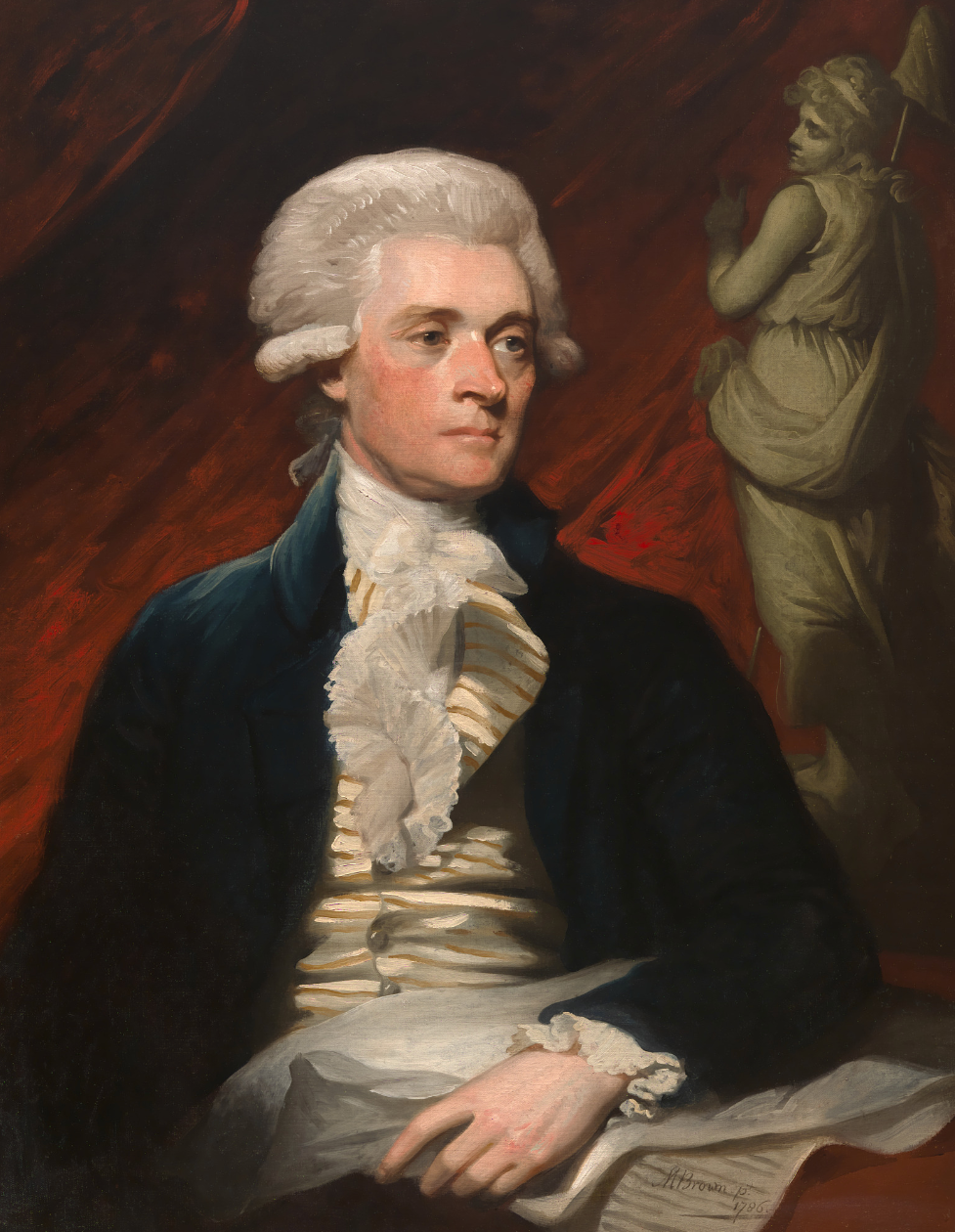
Time in office
March 4, 1801–March 4, 1809
Vital Statistics
Born: April 13, 1743, in Albemarle County, Virginia
Died: July 4, 1826, in Charlottesville, Virginia
Political Affiliation
Democratic-Republican Party
First Bite
Jefferson’s wine bill during his eight years in office ran past $10,000—north of a quarter-million today. He was a man who called wine “a necessary of life” and clearly meant it.
THE MAIN COURSE
Jefferson didn’t just eat well—he approached food the way he approached most things: as something to be studied, measured, and improved upon.
He tracked which vegetable hit the Washington markets in which week; built an ice house at his Virginia home, Monticello, to keep his desserts properly frozen; and kept a running mental inventory of the best cheeses, wines, and sauces Europe had to offer. Long before “foodie” was a word, Jefferson had already adopted the lifestyle.
Prior to living in Paris, Jefferson’s tastes were formed on the family table at Shadwell, his birthplace and boyhood home in Albemarle County, Virginia, and later at Monticello, where he grew up on Virginia staples like corn, ham, and the fresh vegetables he’d spend his whole life fussing over. He had already started experimenting in his own garden years before he ever crossed the Atlantic, so when he took up his post as minister to France in 1785, he brought a farmer’s curiosity along with his appetite—and five years there turned that curiosity into something closer to a research assignment.
Jefferson preferred French cooking, confessing that the meats were more tender than what he’d grown up on in Virginia. He tried waffles for the first time in Holland and liked them enough to buy the iron on the spot. A particular tea in Amsterdam impressed him so much he bought a supply to bring home. In Nancy (in eastern France) it was chocolate; in southern France, he tracked the subtle differences between orange varieties from town to town; in Rozzano, Italy, he studied the finer points of butter- and Parmesan-making, recorded in enough detail to produce them himself. He was so taken with macaroni that he sketched his own pasta-making machine, detailed enough to actually build from. When he finally packed up for home, he wasn’t ready to give any of it up—he brought back macaroni, Parmesan, Marseilles figs, raisins, almonds, mustard, vinegar, olive oil, and anchovies, rich in flavors few Americans had ever tasted.

Before he was elected president in 1800, Jefferson had enslaved a young man named James Hemings (who was actually the future president’s brother-in-law through marriage!). As a diplomat in the 1780s, Jefferson brought Hemings to Paris in the 1780s and had him trained under French chefs. Hemings mastered a cuisine almost no one in America had encountered and ran Jefferson’s kitchens for years afterward at Monticello. After Hemings trained successors, Jefferson freed Hemings in 1797. Hemings might have become a White House chef in 1801, but, alas, he drank excessively and, deeply troubled, committed suicide that same year.

Wine was where Jefferson’s palate reflected genuine expertise. Madeira, from Portugal’s Madeira Islands, was his favorite, French vintages his passion, and he could discuss a bottle’s origins with the fluency of a sommelier decades before that was a word used in the United States. Dinners were served à la française for a dozen or more guests nightly—course after course of elaborate dishes, poured wine, and unhurried conversation, at a round table with no head and no hierarchy—guests were seated in the order they happened to arrive rather than by rank. To keep the meal moving without servants underfoot, he installed dumbwaiters and a revolving shelf that swapped full dishes for empty ones at the touch of a spring. The food kept coming and the talk never had to pause and the enslaved servants never had to be seen.
Jefferson used dumbwaiters and revolving serving doors to reduce the number of enslaved servers visible in the dining room and to give guests greater privacy during meals. (Jefferson’s Monticello)

For all the French sophistication, Jefferson never fully gave up Virginia: sweet potatoes, turnip greens, baked shad, green peas, and Virginia ham stayed in regular rotation, and he was fond enough of his home state’s sweet corn to plant it in his garden in Paris. His Monticello kitchen garden ran to more than fifteen pea varieties alone, and by his own account late in life, he ate “little animal food,” treating meat as a condiment for the vegetables rather than the point of the meal.
Jefferson’s tastes at the table reflected his broader worldview. He believed that agriculture, not manufacturing, was the nation’s most virtuous and economically vital pursuit, and that independent farmers formed the backbone of the republic. The Louisiana Purchase of 1803 is usually filed under foreign policy, but Jefferson also saw it as an agricultural project: more land meant more generations of small land-owning farmers, which meant a republic that could keep renewing itself. He backed this up with hands-on experimentation rather than legislation, testing hundreds of crop varieties at Monticello and trading seeds and plants with correspondents around the world in an effort to improve what American farmers had to work with. What he never did was ask the federal government to get involved—Jefferson had no interest in programs to regulate food production or prop up farmers financially, trusting instead that agriculture, left alone and given room to trade freely, would take care of itself.
For Jefferson, food and politics were never separate pursuits. The same meticulous mind that sketched a pasta machine and recorded his wine purchases down to the dollar believed that the good life—and the nation’s future—grew from the soil.
Try it at home
Thomas Jefferson’s Vanilla Ice Cream
Written in Jefferson’s own hand and one of only about ten recipes he bothered to record, this is a straightforward custard base—cream, egg yolks, sugar, vanilla bean—frozen the hard way, by hand, in a bucket of salted ice. Modern churns make it considerably less of a workout than it was for whoever actually made it at Monticello.