
March 4th, 1853–March 4, 1857
Born: November 23, 1804, in Hillsborough, NH
Died: October 8, 1869, in Concord, NH
Democratic Party
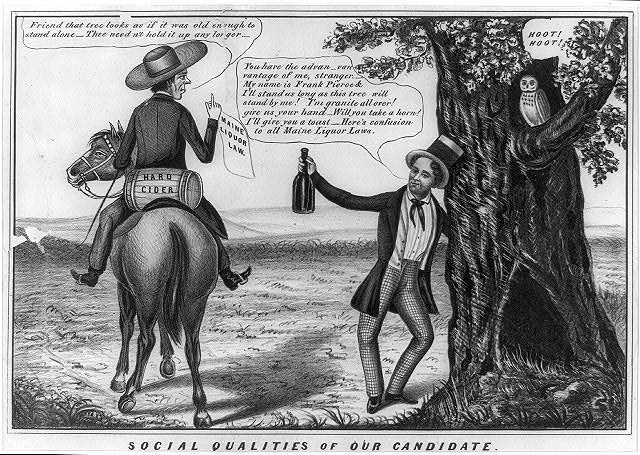
Franklin Pierce is often ranked the hardest-drinking president in American history, and he died of cirrhosis of the liver in 1869.
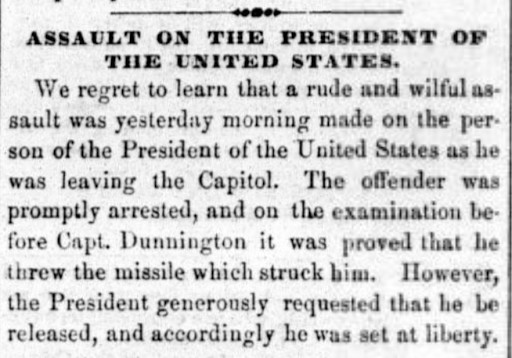
He declined and turned for his carriage, which is when one of them threw a hard-boiled egg at the head of state, knocking off his hat. A Washington newspaper reported the incident the next day, noting that the assailant had been briefly arrested before the charges were dropped—at Pierce’s own request. It’s a strange little episode on its own terms, and stranger still in context: the man got egged for declining a drink, and by most accounts, declining drinks was not exactly a pattern he was known for.
Pierce had long maintained the posture of a temperance man. He banned alcohol from all White House receptions and functions, projecting the image of a sober, disciplined New Englander. Yet in private, one member of his entourage wrote: “I deeply, deeply deplore his habits. He drinks deep––a great mistake was made in putting him in at all.” The contradiction was less hypocrisy than it was grief looking for somewhere to go. Pierce had watched all three of his sons die young. The last, Benjamin, was eleven years old when he was killed in a train derailment just weeks before his father’s inauguration. Jane Pierce, already reluctant to go to Washington, was so distraught that she did not appear at a public event for two years. She was described by those who saw her as “the very picture of melancholy.” Pierce entered the White House having just buried his last surviving child and with a wife who could barely leave her room.
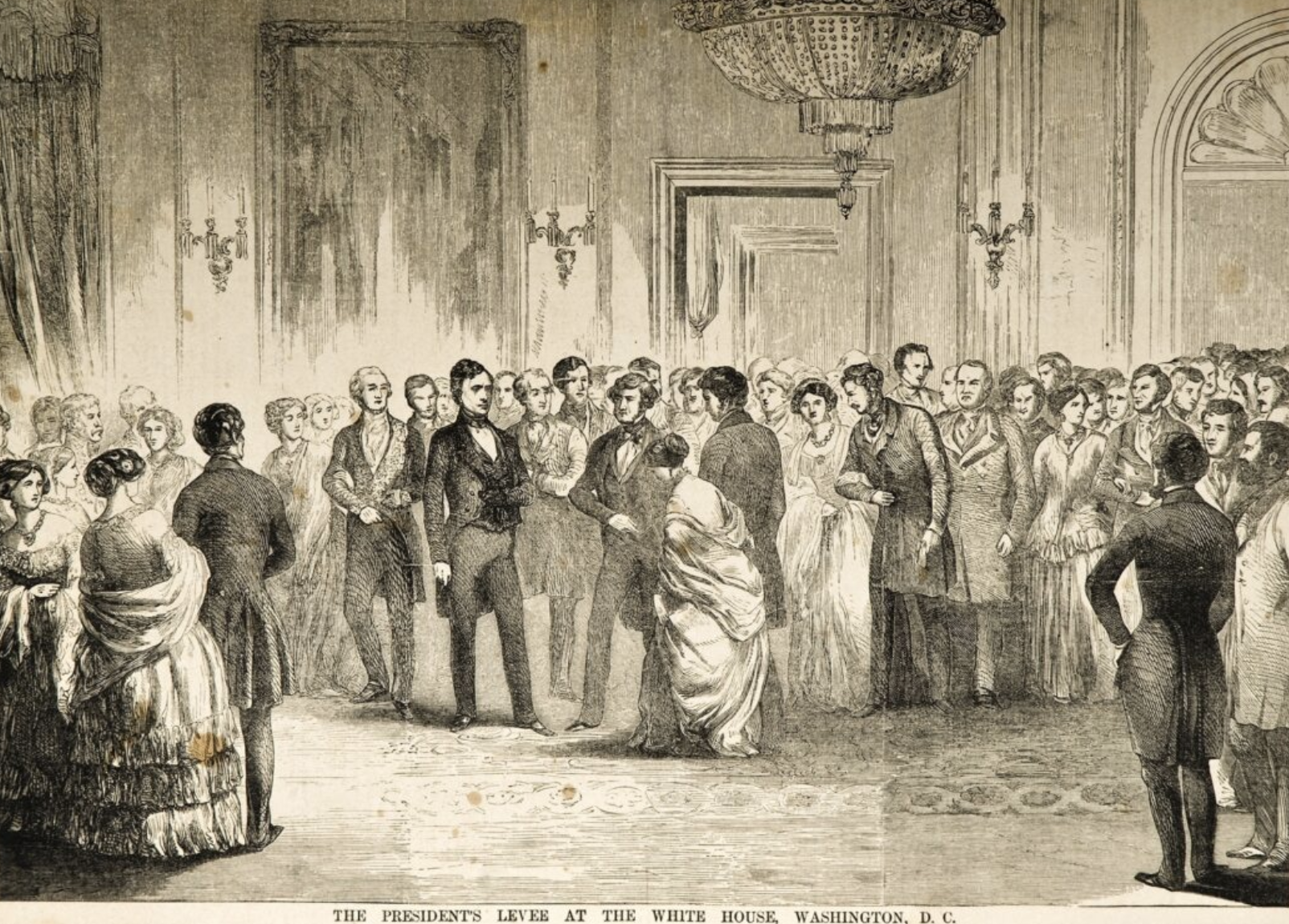
That grief set the tone for the entire administration, and the Pierce White House ran quiet and stiff to match it. Formal dinners were held weekly while Congress was in session—thirty-six guests at a table. Observers uniformly described them as being cold and overly formal, the social equivalent of a long car ride with someone you’ve wronged—while family dinners stayed small and unceremonious. When Jane finally reappeared in public at the 1855 New Year’s Reception, two years on, the White House marked the occasion by serving no refreshments at all.
Pierce had grown up on a working farm in Hillsborough, New Hampshire, son of a farmer and tavernkeeper, and his palate never strayed from those roots: fried clams, White Mountain rolls, the hearty, unfussy cooking of rural New England. It suited a White House already stripped of warmth—plain food for a plain sorrow, nothing on the menu that might accidentally constitute a great time.
Pierce’s one unambiguous legislative achievement, fittingly, involved groceries. He had long called for lower tariffs, and Congress finally delivered in the last days of his administration, passing the Tariff of 1857. Southern agricultural interests were the loudest backers, since they exported cotton and other crops abroad and had little use for tariffs protecting Northern manufacturers, rather than any broad national coalition, and it was signed into law on March 3, 1857, one day before he left office. But the effects reached well beyond the South: lower tariffs meant cheaper imported sugar, tea, and coffee for ordinary Americans everywhere, a popular outcome for a presidency better remembered for signing the Kansas-Nebraska Act, which repealed the Missouri Compromise (the 1820 agreement that had drawn a geographic line limiting slavery’s expansion into new territories), unleashed a guerrilla war between pro- and anti-slavery settlers in Kansas, helped destroy the Whig Party, and accelerated the country’s march toward civil war.
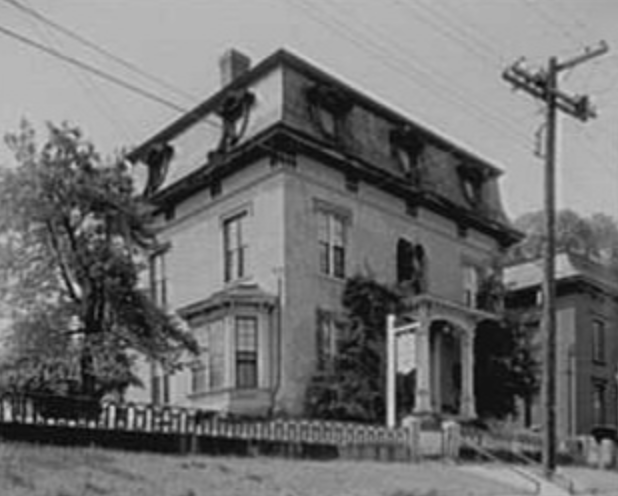
He lost the Democratic nomination in 1856 to James Buchanan. After his presidency ended in 1857, he went home to New Hampshire, presumably relieved to briefly stop being everyone’s answer to “who’s the worst president we’ve had so far.” When Jane died in 1863, he returned to drinking in earnest and died of cirrhosis in 1869: A quiet, grim final chapter for a man who spent four years publicly banning alcohol from the White House in the name of temperance, while privately being unable to put it down.
Known in nineteenth-century New England as “Fannie Daddies,” fried clams were a regional staple suited to Pierce’s simple tastes—and unlike his administration, nobody walked away from this dish disappointed. Battered in a mixture of flour, salt, eggs, butter, milk, and lemon juice, the clams are fried in butter or lard and served hot.
We use cookies to improve your experience on our site. By using our site, you consent to cookies.
Manage your cookie preferences below:
Essential cookies enable basic functions and are necessary for the proper function of the website.
Google reCAPTCHA helps protect websites from spam and abuse by verifying user interactions through challenges.
Statistics cookies collect information anonymously. This information helps us understand how visitors use our website.
Google Analytics is a powerful tool that tracks and analyzes website traffic for informed marketing decisions.
Service URL: policies.google.com (opens in a new window)
Marketing cookies are used to follow visitors to websites. The intention is to show ads that are relevant and engaging to the individual user.
A video-sharing platform for users to upload, view, and share videos across various genres and topics.
Service URL: www.youtube.com (opens in a new window)
You can find more information in our Cookie Policy and Private: Privacy Policy.
Please join our email list to occasionally hear our views on timely issues and learn about The National Food Museum’s progress. We promise we won’t clutter your inbox!