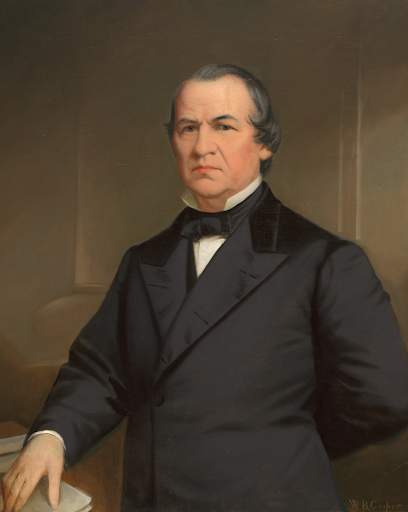
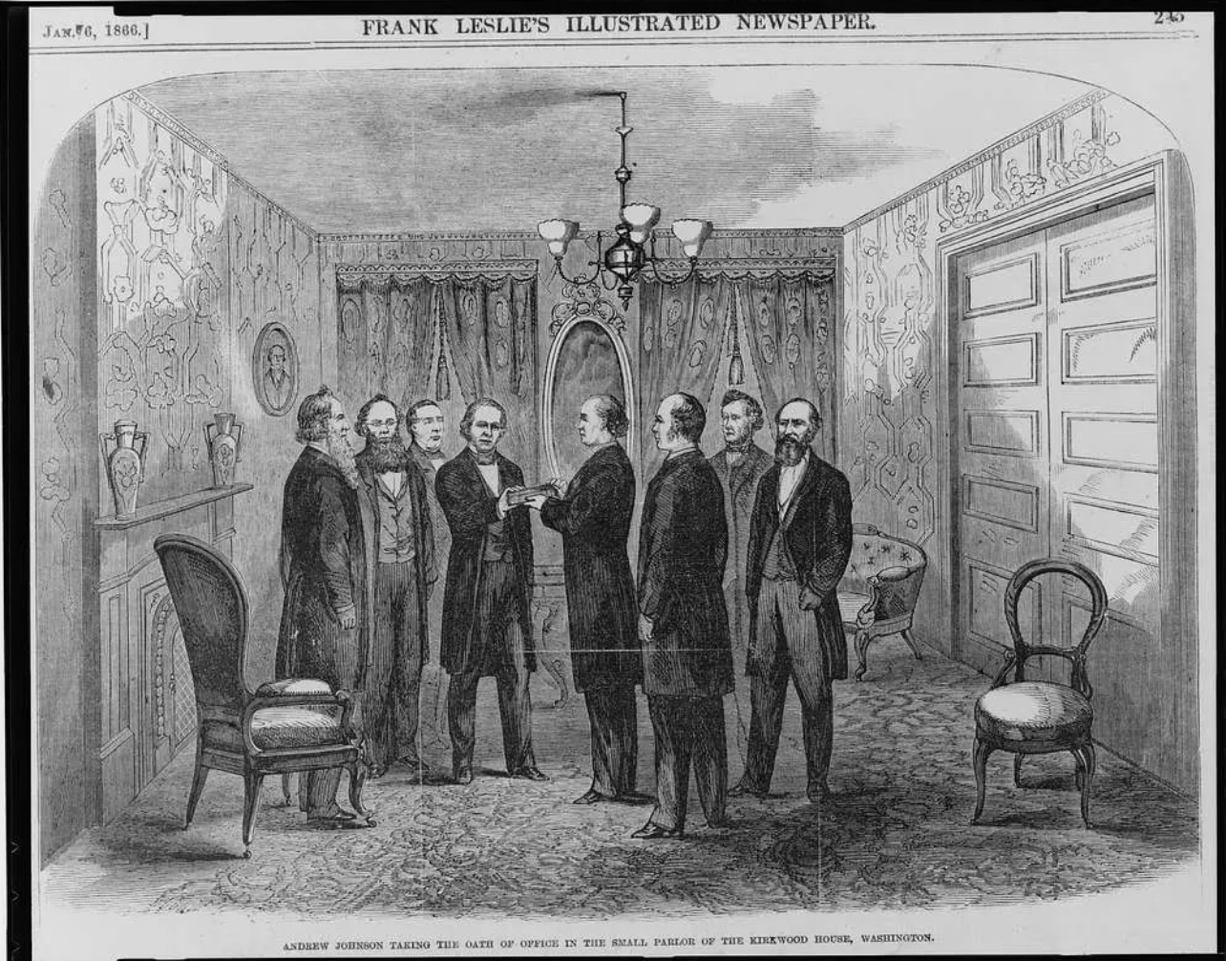

April 15, 1865–March 4, 1869
Born: December 29, 1808, in Raleigh, North Carolina
Died: July 31, 1875, in Elizabethton, Tennessee
Democratic Party
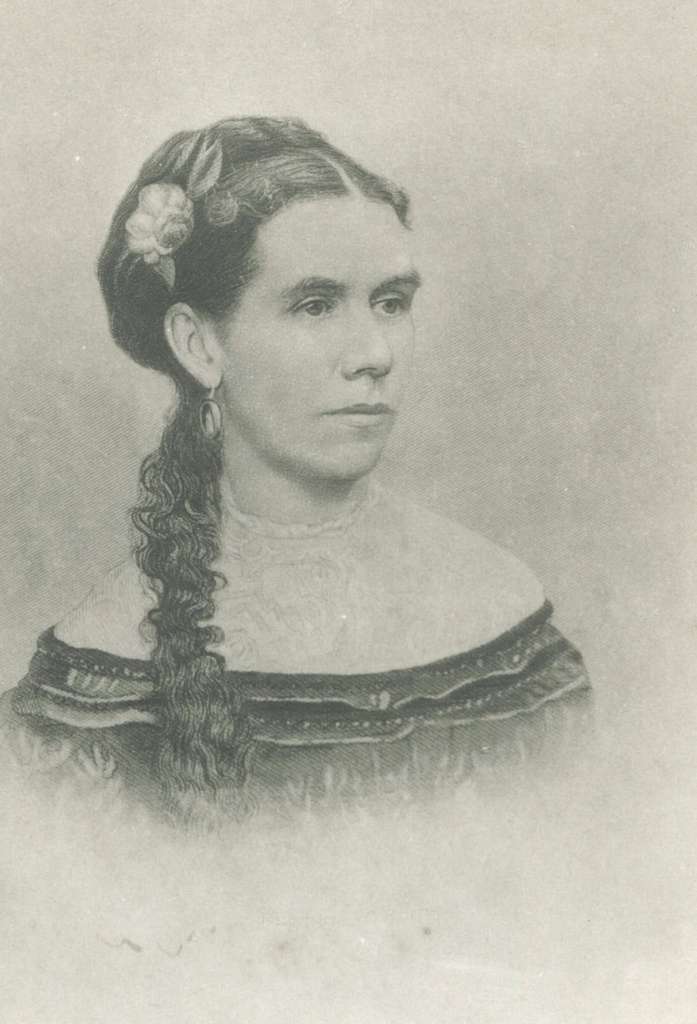
Martha Johnson Patterson, who served as White House hostess because of her mother’s poor health, brought two Jersey cows to the White House grounds to supply the household with fresh milk and butter.
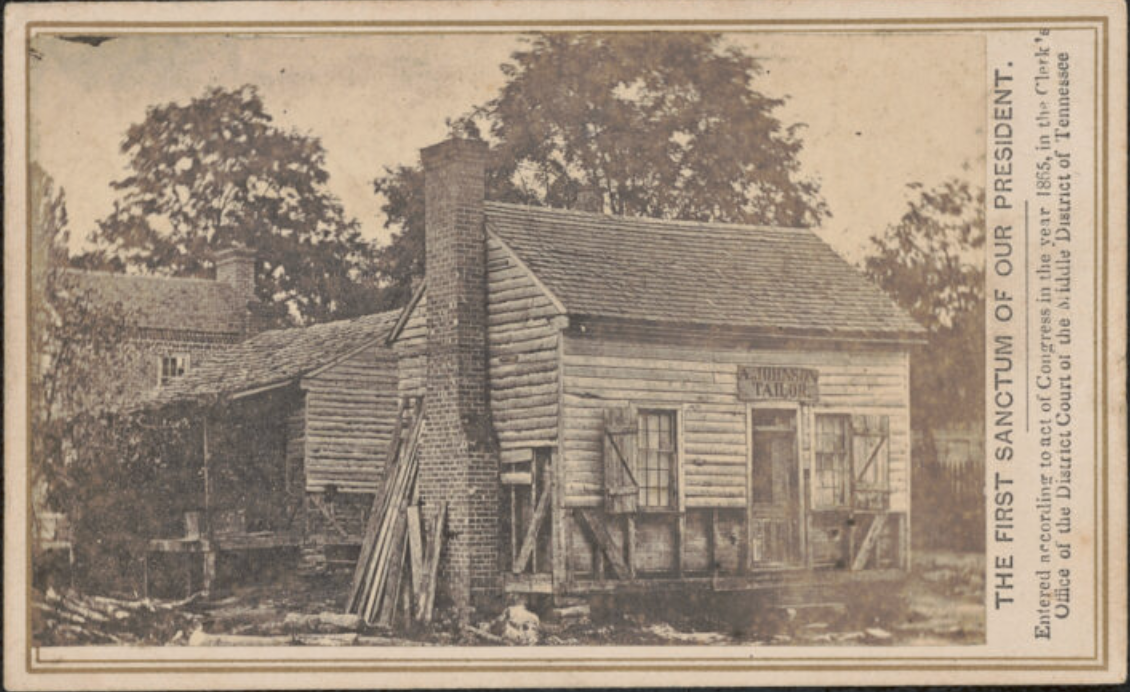
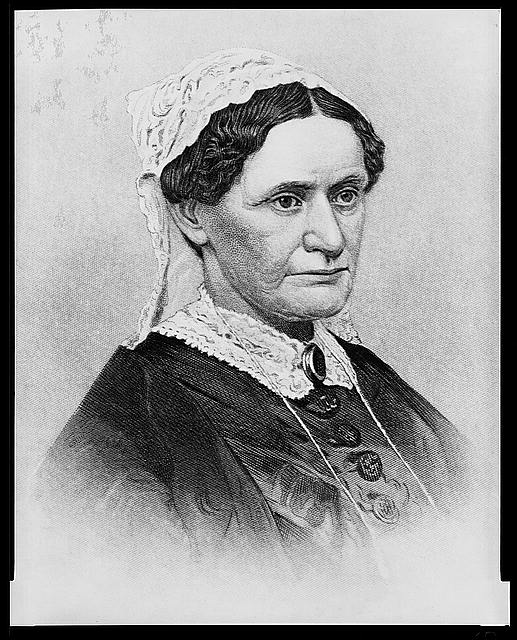
Born into poverty in Raleigh, North Carolina and a tailor’s apprentice as a boy, he ran away from that apprenticeship as a teenager and made his way west in search of better economic opportunities. He eventually settled in Greeneville, Tennessee, where he opened his own tailor shop. It was there he met and married Eliza McCardle, who taught him writing and arithmetic, and there his political career took root—stump speeches championing the common man against the planter class carried him from local office to the White House.
As president, he ate like always. One frequent dish was Hoppin’ John, the Southern staple of black-eyed peas, onion, pepper, and rice cooked in butter. Red rice—cooked with bacon, onions, and tomato—was another favorite, the kind of dish that stretches what you have into something filling. Pilaf, catfish, wild turkey, and canvasback duck rounded it out. It was the food of his early life in Tennessee, and he never saw much reason to change his preferences.
When they got to the White House after President Abraham Lincoln’s assassination, Eliza set the tone before they even unpacked. Chronically ill throughout Johnson’s presidency, she appeared publicly only twice in four years, leaving their daughter, Martha Johnson Patterson, to serve as White House hostess. She established the household philosophy on arrival, stating plainly: “We are plain people from the mountains of Tennessee. I trust too much will not be expected of us.” The approach echoed through her directing agricultural operations at the White House, including the two Jersey cows that grazed on the lawn and supplied the family with fresh milk and butter. Visitors expecting gilded excess found popcorn parties instead. Popcorn was Johnson’s favorite snack, served alongside roasted apples and chestnuts at informal family gatherings. He was, by all accounts, a naturally good host, with an ease around people that made even modest entertaining feel warm rather than pinched.
The one food-adjacent moment that defined his public image had nothing to do with food. On March 4, 1865, Johnson arrived, seriously ill, at the Capitol to be inaugurated as Lincoln’s vice president. He had been unable to hold down food for days, and his doctor suspected typhoid fever. To get through the ceremony, he reportedly consumed three glasses of whiskey. On an empty stomach, it went straight to his head. He jumped incoherently from subject to subject, ranging from a shout to a whisper, while Lincoln sat in the front row with his eyes closed. Lincoln defended him afterward in a letter to a cabinet member—“I have known Andy Johnson for many years; he made a bad slip the other day, but you need not be scared; Andy ain’t a drunkard.”—but the damage was done. The reputation attached itself to every crisis that followed: the Reconstruction battles, the vetoes, the impeachment.
Johnson’s rejection of Reconstruction returned confiscated plantations to White landowners, blowing to smithereens the promise of “40 acres and a mule”—the land grants that would have given formerly enslaved people an economic foothold after the war—and pushing freed people into sharecropping instead.
Johnson’s vetoes of major civil rights legislation so enraged many anti-slavery Republicans in Congress that in 1868 the House voted to impeach him, making him the first president in American history to face that fate; he escaped conviction in the Senate by a single vote. The man who had risen from poverty, been taught to read by his wife, and asked not much of the White House other than plain food and popcorn parties turned out to have very little interest in extending that kind of second chance to anyone else.
A Southern staple since at least the early 1800s, and a favorite of President Johnson, Hoppin’ John is the kind of dish that has been feeding people through hard times and good ones alike. Black-eyed peas, slow-cooked with a ham hock and the classic Southern trinity of onion, celery, and pepper, served over a bed of white rice.
We use cookies to improve your experience on our site. By using our site, you consent to cookies.
Manage your cookie preferences below:
Essential cookies enable basic functions and are necessary for the proper function of the website.
Google reCAPTCHA helps protect websites from spam and abuse by verifying user interactions through challenges.
Statistics cookies collect information anonymously. This information helps us understand how visitors use our website.
Google Analytics is a powerful tool that tracks and analyzes website traffic for informed marketing decisions.
Service URL: policies.google.com (opens in a new window)
Marketing cookies are used to follow visitors to websites. The intention is to show ads that are relevant and engaging to the individual user.
A video-sharing platform for users to upload, view, and share videos across various genres and topics.
Service URL: www.youtube.com (opens in a new window)
You can find more information in our Cookie Policy and Private: Privacy Policy.
Please join our email list to occasionally hear our views on timely issues and learn about The National Food Museum’s progress. We promise we won’t clutter your inbox!