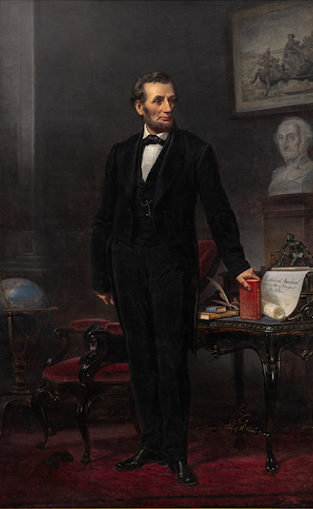
March 4, 1861–April 15, 1865
Born: February 12, 1809, in Hodgenville, Kentucky
Died: April 15, 1865, in Washington, D.C. (shot at Ford’s Theatre on April 14, died early the next morning at the Petersen House across the street)
Republican (previously Whig)
In 1862—with the Civil War tearing the country apart—Abraham Lincoln found time to sign the bills creating the U.S. Department of Agriculture, the Homestead Act, and the Morrill Act, reshaping how Americans grew, owned, and got access to food for generations to come. He affectionately called USDA “the People’s Department.”
Born in a one-room Kentucky cabin to a farmer-carpenter father and a mother who died when he was nine, Lincoln spent his boyhood on a Little Pigeon Creek claim in Indiana. He helped with the unglamorous work of frontier subsistence farming: plowing, splitting rails for fencing, and milking the cows. The Lincoln family ate whatever the farm produced. Corn dodgers (dense, fried, cornmeal cakes), mush (boiled cornmeal porridge), bacon, and honey made up the bulk of the daily fare; apples (core and all) became a lifelong favorite, too. The occasional gingerbread cookie with sorghum syrup counted as the height of luxury––and a treat rare enough that Lincoln remembered it vividly enough to use on the campaign trail decades later.
In his legendary Illinois Senate debates with opponent Stephen Douglas, Lincoln recalled how, as a kid, he would split his rare gingerbread men with a poorer neighbor boy. The boy who, after wolfing his share down in two bites, told Lincoln he didn’t suppose anybody on earth liked gingerbread better than he did, or got less of it than he did.
Dietary plainness never really left him. Friends described the adult Lincoln as strikingly uncritical at the table. His stepmother recalled that he simply “ate what was before him, making no complaint,” and a legal colleague of ten years claimed he never once heard the man gripe about a bad meal. Accounts of his appetite diverge wildly: His bodyguard remembered him as a hearty eater with an enduring soft spot for bacon, while others insisted he was almost entirely indifferent to food, apples and hot coffee being the rare exceptions. Both were probably a little right. By the White House years, with the Slaveholders’ Rebellion grinding on, even those modest interests thinned out. Breakfast might be a single egg and lunch a biscuit and some milk, His wife, Mary Todd Lincoln, coaxed him to eat more, including his one genuine favorite, chicken fricassée, but that met with only occasional success. Possibly as a result, Lincoln grew visibly gaunter.
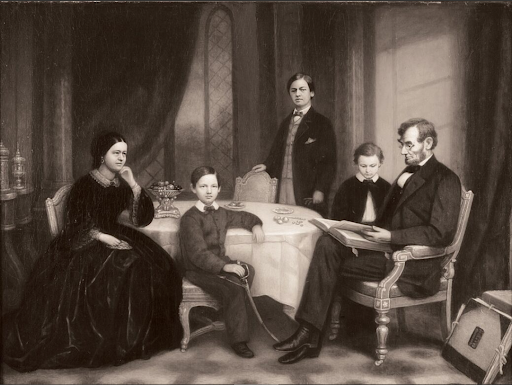
Mary Todd Lincoln, by contrast, had grown up in Lexington’s bluegrass gentry and knew exactly what an elaborate table was supposed to look like. The White House kitchen bent to her preferences rather than his: turtle soup, pâté de foie gras, truffled turkey, and multi-course state dinners—a menu about as far as one could get from corn dodgers and honey. The gap between the President’s frontier stomach and the First Lady’s Kentucky formality was one of the more visible mismatches in their marriage.
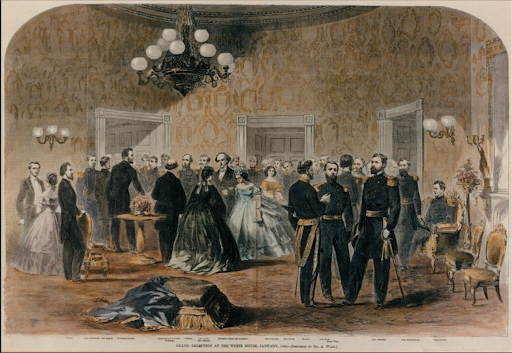
While serving turtle soup instead of corn dodgers could hardly be called a crisis, Lincoln’s second inaugural ball in March 1865 was a bit of a disaster. The supper in the Old Patent Office Building (which today houses the National Portrait Gallery) offered an ambitious spread—oyster stews, terrapin, roast beef, boned turkey, confectionery centerpieces shaped like the Capitol. But roughly five thousand people tried to squeeze into a space that could fit far fewer. The tables were stripped bare within the hour, the ornamental centerpieces trampled, and a witness described the wreckage afterward as “positively frightful to behold.” Lincoln, by most accounts, took one look and left.
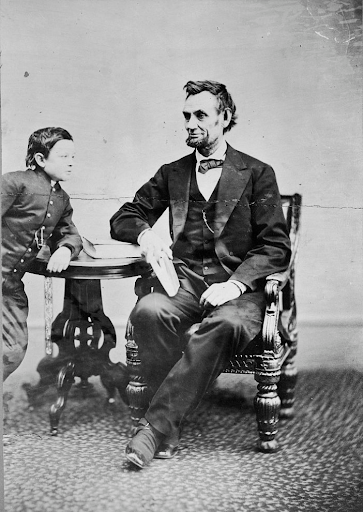
One of the Lincolns’ most enduring food stories featured their youngest son. Tad Lincoln adopted as a pet a turkey destined for the family’s 1863 Christmas dinner table, named him Jack, and tried talking his father out of eating him. Lincoln, ever compassionate, obliged by writing the bird a formal reprieve on a card. That was the earliest documented instance of a president sparing a holiday turkey, over a century before President George H.W. Bush turned it into an official White House ceremony every Thanksgiving. Jack stuck around long enough to become part of one more Lincoln anecdote: Spotted among soldiers lining up to vote in the 1864 election, Tad was asked by his father whether the turkey had cast a ballot. “Oh, no,” Tad said, “he isn’t of age yet,” which became a line story-teller Lincoln reportedly retold many times.
If Lincoln’s own diet was modest, his agricultural legacy was major. In 1862, in the middle of the Civil War, he signed the bill creating what would become the United States Department of Agriculture (USDA)—which he called “the People’s Department.” He also signed the Homestead Act, opening 160-acre claims to any settler willing to live on and farm the land for five years. And then he signed the Morrill Act, which granted states public land that they could sell to raise money for new agricultural colleges. (It is worth noting that over ten million acres of that land had been taken from Native nations.) In that same busy year he also signed the Pacific Railway Act that summer, giving Western farmers a rail line to get crops to market and leading to the first transcontinental railroad. And, last but not least, in 1863 he formally proclaimed Thanksgiving a national holiday.
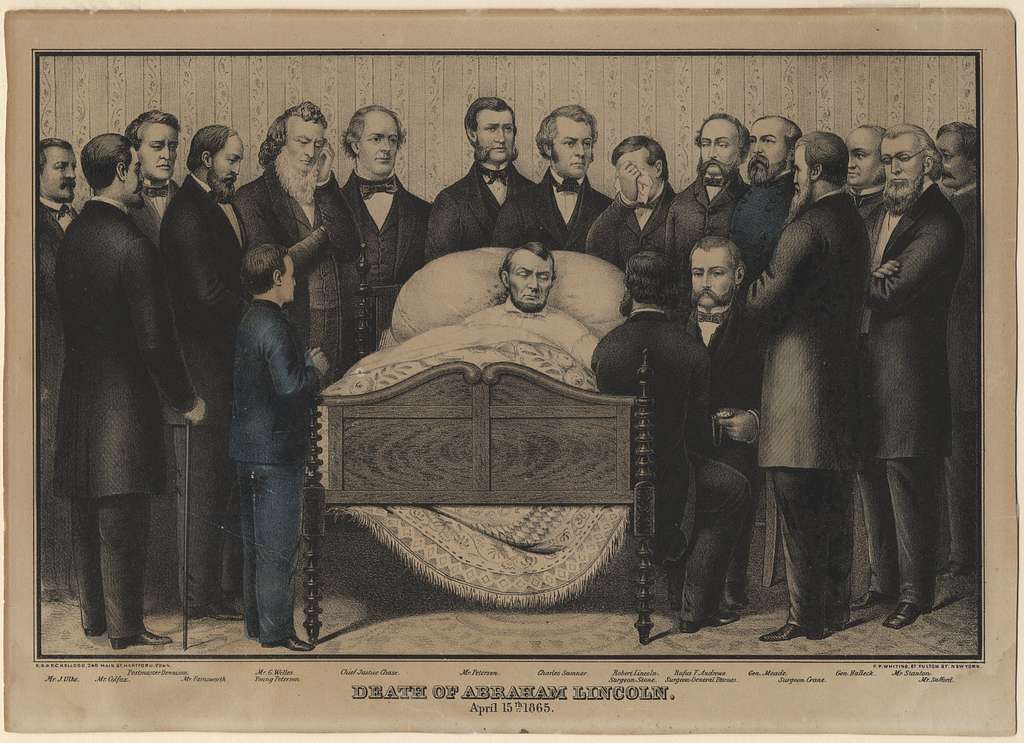
On April 14, 1865, just five days after Confederate General Robert E. Lee’s surrender effectively ended the Civil War, President Lincoln was shot while attending a play at Ford’s Theatre in Washington. He died the following morning, becoming the first U.S. president to be assassinated. Lincoln’s legacy includes not only bringing the Civil War to a successful conclusion, but, rarely recognized, also reshaping American agriculture.
The dish Mary Todd Lincoln turned to when her husband stopped eating properly during the war—she asked the White House chef for an “old-fashioned chicken fricassée,” and it was one of the few meals that actually tempted him.
We use cookies to improve your experience on our site. By using our site, you consent to cookies.
Manage your cookie preferences below:
Essential cookies enable basic functions and are necessary for the proper function of the website.
Google reCAPTCHA helps protect websites from spam and abuse by verifying user interactions through challenges.
Statistics cookies collect information anonymously. This information helps us understand how visitors use our website.
Google Analytics is a powerful tool that tracks and analyzes website traffic for informed marketing decisions.
Service URL: policies.google.com (opens in a new window)
Marketing cookies are used to follow visitors to websites. The intention is to show ads that are relevant and engaging to the individual user.
A video-sharing platform for users to upload, view, and share videos across various genres and topics.
Service URL: www.youtube.com (opens in a new window)
You can find more information in our Cookie Policy and Private: Privacy Policy.
Please join our email list to occasionally hear our views on timely issues and learn about The National Food Museum’s progress. We promise we won’t clutter your inbox!