
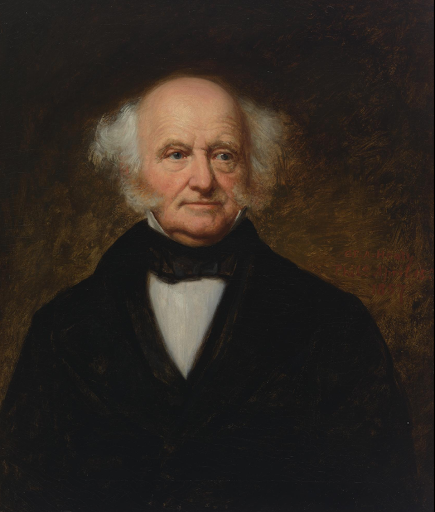
Time in office
March 4, 1837–March 4, 1841
Vital Statistics
Born: December 5, 1782 in Kinderhook, NY
Died: July 24, 1862, in Kinderhook, NY
Political Affiliation
Democratic Party
First Bite
While most presidents never met a pastry they didn’t like, Martin Van Buren had the audacity to reach for a piece of fruit instead. A real maverick.
THE MAIN COURSE
Martin Van Buren’s food story starts, fittingly, in a bar
Born above his father’s tavern in Kinderhook, New York, an upbringing that exposed him to the Dutch-American food traditions of the Hudson Valley. The food of his childhood was straightforward Dutch fare: olykoeks (“oily cakes,” basically proto-doughnuts), seasonal fruit, and oysters—cheap, plentiful, and apparently good enough to stay a lifelong favorite even after he could afford literally anything else.
Then politics happened, and so did his palate. Stints as Andrew Jackson’s Secretary of State and U.S. Minister to Great Britain dropped him straight into European fine dining culture. London left a mark: he came home with a taste for boar’s head and, more consequentially, an actual French chef. By 1837, the tavernkeeper’s kid from Kinderhook had quietly transformed into one of Washington’s smoothest hosts—the political equivalent of someone who backpacked through Europe and came back insufferable about olive oil.
The contrast with his predecessor was not subtle. Jackson ran the White House like an open house party; Van Buren ran his like a Michelin-starred dinner club. One observer noted that his table was always exquisitely prepared, with food, wine, and service all impeccable—gilded silver spoons, fine crystal, European finger bowls, the works. The guest list skewed strictly elite. His household accounts also show a remarkable appetite for butter. In one period, his spending on butter exceeded what he paid in taxes and church contributions combined.
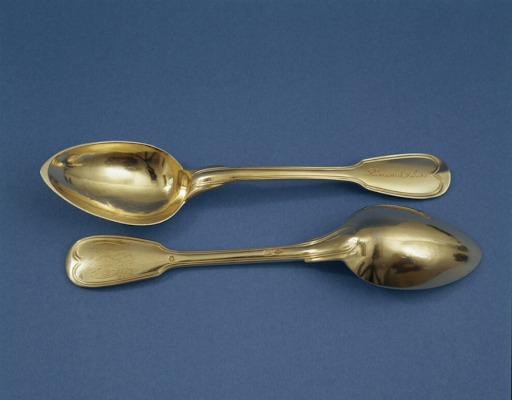
In a different decade, stylish eating might have just been read as good or pretentious taste. Instead, it became a five-alarm political problem. The Panic of 1837 hit almost the moment he sat down in office: banks collapsed, jobs vanished, food prices spiked, and people were rioting over flour. Against that backdrop, every gilded spoon read like a personal insult to the unemployed. Congressman Charles Ogle seized the moment with his now-legendary “Gold Spoon Oration,” pillorying Van Buren for his supposed taste for luxury foods like strawberries, raspberries, celery, and cauliflower—groceries that today wouldn’t raise an eyebrow at a farmers market, but in 1840 were basically code for “out of touch elitist.” The speech stuck, the narrative stuck, and that November, so did his defeat.
The irony, of course, writes itself: the man pilloried as a champagne-and-caviar aristocrat grew up eating fried dough and oysters above a tavern.
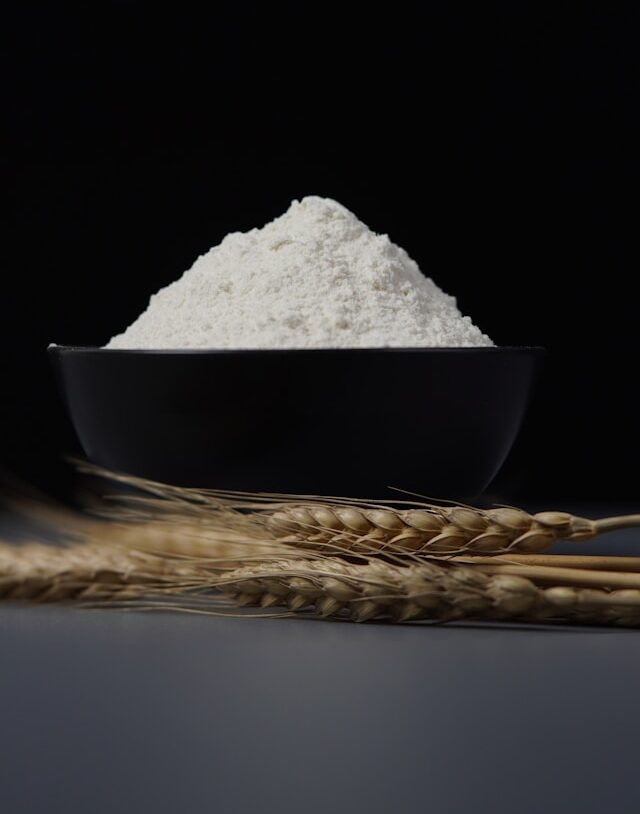
Van Buren’s policy response to all this was simple: do nothing. It was the prevailing belief that government should abstain from interfering with the economy, so Van Buren did nothing to alleviate the depression—even as the price of flour and meat doubled and hungry New Yorkers were sacking flour warehouses just weeks before he took office. His signature achievement, the Independent Treasury system, which fully separated the federal government from the banking system, was philosophically tidy and practically cold comfort to anyone who couldn’t afford bread. The man serving finger bowls at state dinners had, as a matter of policy, decided the market would sort itself out. It did—eventually, and not on his watch.
After losing reelection—and then losing two more times, because apparently he really wanted it—Van Buren retired to Lindenwald, his estate in Kinderhook, and traded the dinner table for the dirt. He threw himself into what he called “scientific agriculture,” turning his farm into a hands-on experiment with fruit trees, potatoes, wheat, cattle, and soil restoration, rotating crops and testing grasses like clover, Timothy, and Redtop. The man once mocked for his cauliflower spent his golden years thinking very seriously about soil health—proof that you can take the politician out of the dining room, but apparently not out of obsessing over where the food comes from.
Try it at home
Martin Van Buren’s Steamed Oysters
If Van Buren had a go-to bar snack, oysters were almost certainly it. This simple steamed oyster recipe is a low-effort, high-reward taste of nineteenth-century staple food—no gold spoon required.