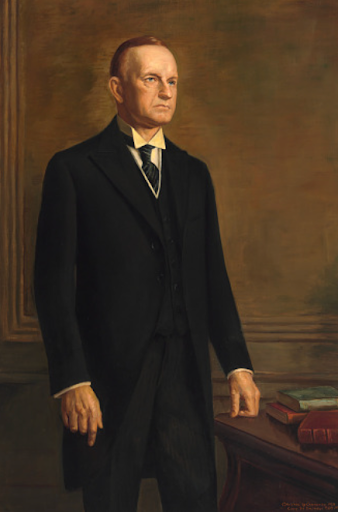


August 2, 1923–March 4, 1929
Born: July 4, 1872, in Plymouth Notch, Vermont
Died: January 5, 1933, in Northhampton, Massachusetts
Republican Party
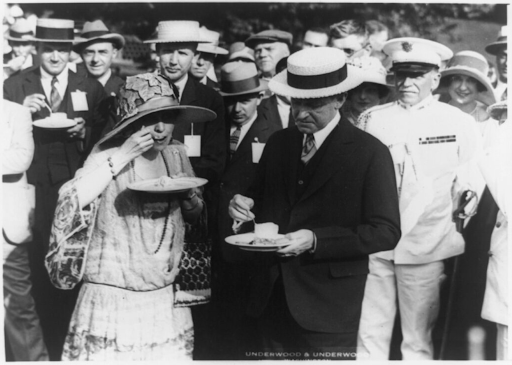
Coolidge often invited members of Congress to breakfast because their schedules made lunch inconvenient. He preferred informal breakfasts to more formal dinners and used them to mix social conversation with political business. As a lagniappe, Coolidge got to bill the meals to the government as “official business.”
“Silent Cal” earned his nickname honestly—he disliked crowds, avoided small talk, and preferred quiet to conversation—but he was famously sharper and funnier than his nickname implied.
That quietness announced itself the moment he took office. Coolidge became president at 2:47 in the morning, in his father’s sitting room in Plymouth Notch, Vermont, with no electricity and no Chief Justice anywhere nearby. Word had reached him by messenger that Warren Harding had died suddenly in San Francisco. Rather than wait for anyone official to arrive, Coolidge simply had his father—a notary public—administer the oath by kerosene lamp, using the family Bible, then went back to bed. Coolidge was president for several hours before most of the country even knew Harding was gone.
As far as his food habits went, Coolidge was, above all, a nibbler. Accounts describe bowls of nuts, preserves, crackers, and jam within easy reach around the White House. Despite the constant snacking, he somehow kept his slim frame. Every morning after his walk, he fixed himself a cheese sandwich before even sitting down to breakfast—which often was hot cereal made from three parts whole wheat kernels and one part rye berries, left deliberately unground. He insisted on calling every meal “supper” and had a genuine soft spot for sweets, especially his mother’s pork-apple pie—apple pie studded with small pieces of salt pork—which he swore he’d never tasted anything to rival. Roast beef was another weakness. Waiters learned to quietly slip him a plate of it at official functions no matter what was actually on the menu that night.
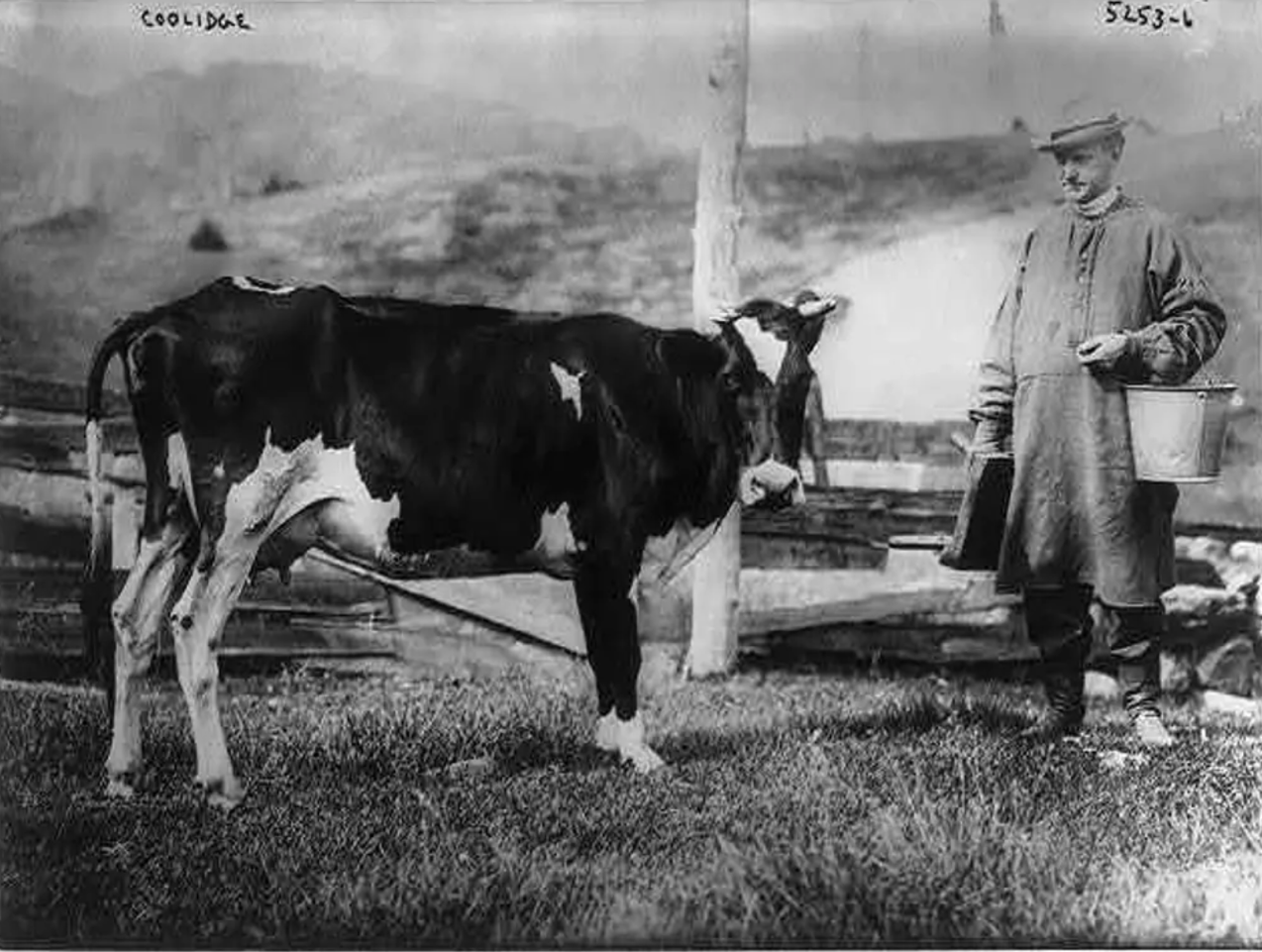
Frugality ran through everything Coolidge did with food, sometimes almost comically so. He famously complained that six Virginia hams seemed excessive for sixty dinner guests, and later called the absence of leftovers one of the “greatest disappointments” of his presidency. He also kept a small flock of Vermont chickens in a yard behind the White House, convinced—as any good New Englander would be—that a chicken raised right outside the kitchen door simply tasted better. It did, as it turned out, though not for the reason he assumed. According to Poppy Cannon, who wrote a 1968 book on presidential dining, the chicken coop had been built directly on top of Teddy Roosevelt’s old mint bed, accidentally giving the birds an unusually fragrant flavor. That same frugality followed him out the door: When he left the White House at the end of his presidency, he’s said to have gathered up all the partially-eaten jars of preserves scattered around the house and packed them along to Northampton, apparently unwilling to let a good jar of jam go to waste.
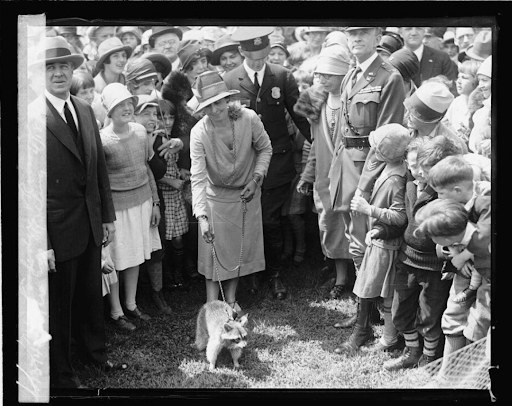
Coolidge’s fondness for animals wasn’t limited to the birds destined for his dinner table. In 1926, a supporter from Mississippi sent the family a raccoon, with the not-so-subtle suggestion that she be served for Thanksgiving. The Coolidges took one look at her and fell in love, adopting her as a pet named Rebecca rather than as a holiday main course. That Christmas, Coolidge gave her an embroidered collar reading “White House Raccoon,” and she became something of a minor celebrity, even joining Grace Coolidge on a leash at the annual Easter Egg Roll. Rebecca had a habit of slipping her handlers to climb trees and disappear for hours—a fitting pet, perhaps, for a president who valued a bit of peace and quiet himself.
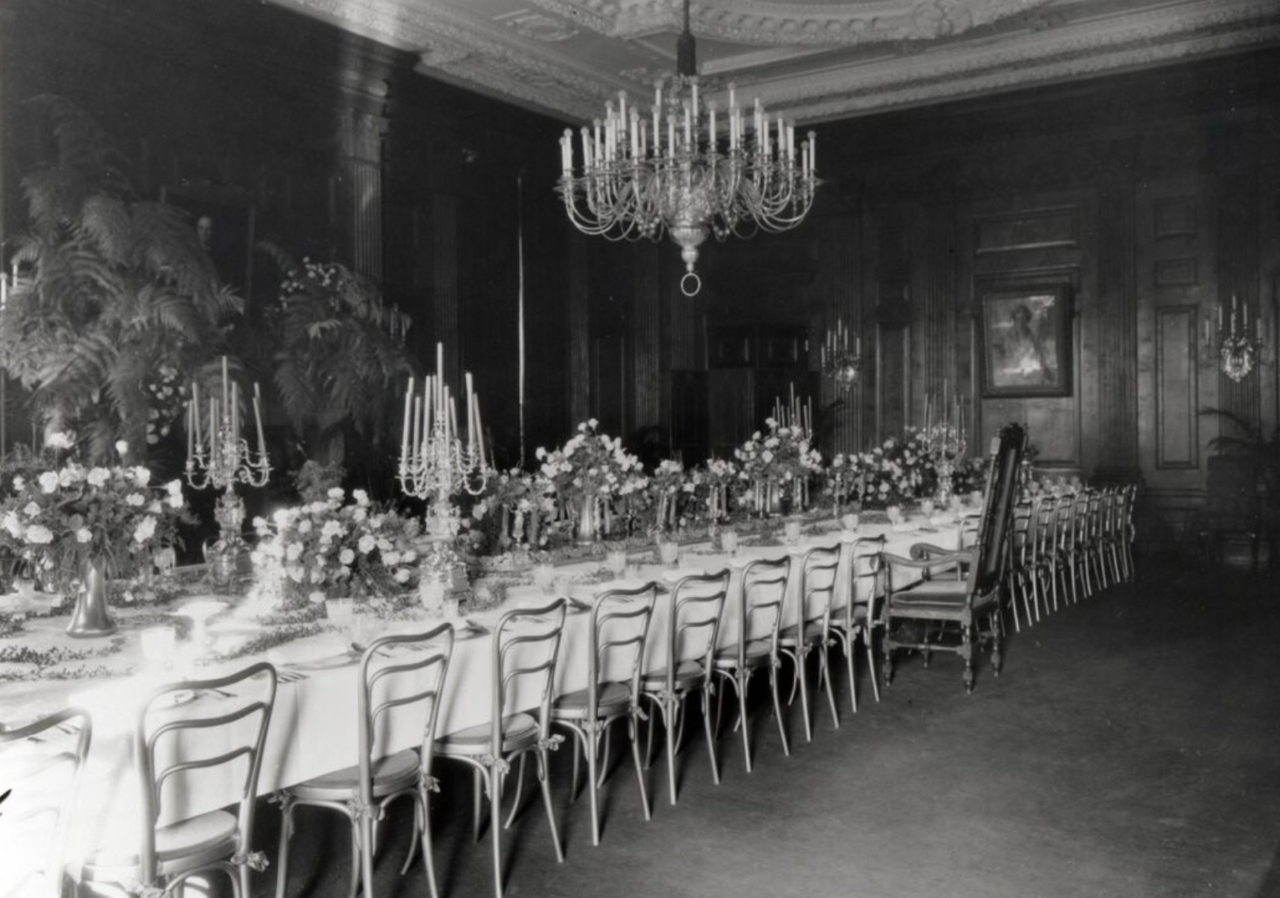
Not every White House meal went smoothly. A dinner honoring Cuban President Gerardo Machado reportedly became something of a legendary disaster—a guest’s bowtie fell into the soup, an aide lost a false tooth, another lost an epaulette, the chimney caught fire, and one unlucky guest fell clean through his chair and had to be pulled out by two other men. Grace Coolidge, meanwhile, more than made up for her husband’s reserve, hosting evening receptions for crowds as large as thirty-five hundred with a warmth Coolidge himself openly credited, calling her his “mistress of the White House,” an old-fashioned term for the woman who managed the household and social life of the presidency.
Coolidge’s food and agriculture legacy extended well past the family table. As farm prices sagged through the 1920s, Congress twice passed the McNary-Haugen bill, which would have had the federal government buy up surplus crops and market them abroad to prop up domestic prices. Coolidge vetoed it twice, in 1927 and 1928, arguing that it amounted to government price-fixing that would only encourage farmers to overproduce and deepen the very surpluses it was meant to fix. He backed less controversial alternatives instead—expanding rural electrification, promoting better seeds and farming equipment, and encouraging farmer cooperatives.
Apple pie studded with small pieces of salt pork—an old New England combination of sweet and savory that Coolidge insisted, to his dying day, no other version could touch.
We use cookies to improve your experience on our site. By using our site, you consent to cookies.
Manage your cookie preferences below:
Essential cookies enable basic functions and are necessary for the proper function of the website.
Google reCAPTCHA helps protect websites from spam and abuse by verifying user interactions through challenges.
Statistics cookies collect information anonymously. This information helps us understand how visitors use our website.
Google Analytics is a powerful tool that tracks and analyzes website traffic for informed marketing decisions.
Service URL: policies.google.com (opens in a new window)
Marketing cookies are used to follow visitors to websites. The intention is to show ads that are relevant and engaging to the individual user.
A video-sharing platform for users to upload, view, and share videos across various genres and topics.
Service URL: www.youtube.com (opens in a new window)
You can find more information in our Cookie Policy and Private: Privacy Policy.
Please join our email list to occasionally hear our views on timely issues and learn about The National Food Museum’s progress. We promise we won’t clutter your inbox!